Leadership 2.0: Notes From the University of the Aftermarket 2026 Leadership 2.0 Program at Northwood University
Key Highlights
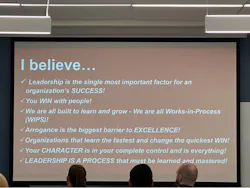
- Clint Longenecker's final session tied the entire week together, reinforcing that leadership is a process—not an event, title, or destination—and that character is the one thing leaders have complete control over.
- "We are all works in progress" emerged as one of the week's most important messages, emphasizing that intellectual growth begins at birth and ceases only at death. Leadership development is about continual improvement, not reaching a final destination.
- Clint's core message: "You win with people." In a world obsessed with technology and automation, people remain the ultimate competitive differentiator, and leadership is the single most important factor for organizational success.
- Five Absolutes for High Performance: Get everyone on the same page, prepare for battle with the right tools and talent, stoke the fire of performance, build bridges on the road to results, and keep the piano in tune through continuous renewal.
What Is Leadership 2.0?
The University of the Aftermarket's Leadership 2.0 program at Northwood University in Midland, Michigan, is a week-long leadership development program. It's designed for automotive aftermarket industry professionals—including parts manufacturers, warehouse distributors, retailers, shop owners, service providers, and industry association leaders—looking to grow and expand their executive and management skills through advanced training.
Participants engage in sessions covering emotional intelligence, financial literacy, strategic decision-making, adaptive leadership, organizational culture, team dynamics, and networking—all designed to help them become more effective leaders in an evolving automotive aftermarket landscape.
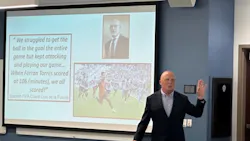
This is the fifth and final installment in a five-part series as Chris Messer, executive vice president of Transportation at EndeavorB2B, chronicles his journey through the University of the Aftermarket's Leadership 2.0 Program at Northwood University. Read the series here: Part 1, Part 2, Part 3, and Part 4
Talk about saving the best for last. Hats off to all of the outstanding presenters who invested their time with us throughout the week, but something was solidifying about Day 5.
It may have been because we knew Leadership 2.0 was coming to an end, and we had spent four full days thinking about leadership from nearly every angle imaginable. Or maybe it was because the final session brought all of those lessons together in a personal and practical way. Whatever the reason, the final day felt less like another session and more like a challenge: you have the information, now what will you do with it?
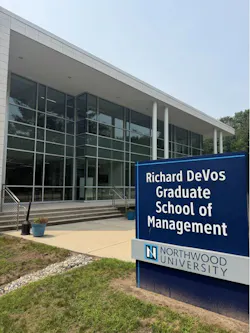
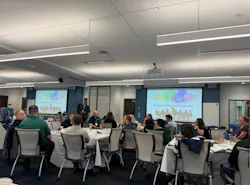
We returned to the Richard DeVos Graduate School of Management at Northwood University for the final day of discussion, reflection, and leadership development. By this point in the week, the room felt different than it had on Sunday. People were more comfortable speaking up, more willing to challenge each other, and more open about what they were taking away from the experience.
In a matter of days, a room full of people from different companies, different roles, and different corners of the aftermarket had become a learning community.
Today's focus: delivering great results.
The Industry in One Room
James O'Dell kicked off the morning, allowing several classmates to share more about what they do, the organizations they represent, and the impact those organizations have on the automotive aftermarket.
Cat from MEMA, The Vehicle Suppliers Association, shared perspective from the association side of the industry. Logan from Auto Care Association discussed the important role suppliers play in supporting the broader aftermarket ecosystem. Several others offered insights into their companies, markets, and responsibilities.
James was kind enough to allow me to speak on behalf of EndeavorB2B and the incredible team I have the privilege of working with every day.
I appreciated the opportunity because it gave me a chance to talk about something I think about often: the role our team plays in connecting this industry. Across EndeavorB2B's Vehicle Service & Repair Group and Commercial Vehicle Group, we touch many of the same audiences represented in that classroom, including manufacturers, distributors, repair shops, tire dealers, quick maintenance operators, commercial vehicle professionals, training providers, fleet leaders, and industry partners.
Our work helps tell the stories, share the insights, support the marketing objectives, and elevate the conversations that move the industry forward. As I listened to classmates describe their organizations, I was reminded again how interconnected the aftermarket is.
Associations advocate. Suppliers innovate. Manufacturers produce. Distributors move products. Service providers keep vehicles on the road. Media companies help connect the people, ideas and opportunities that keep the industry informed and moving. Different missions, different business models, and different areas of focus, but a shared commitment to serving an industry much larger than any one company.
Inspiring Innovation
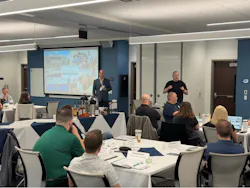
James transitioned the group into a roundtable discussion on innovation. The central question was straightforward: How can leaders inspire innovation inside their organizations?
Like many of the best conversations we had throughout the week, there was no single answer. Some participants talked about creating psychological safety so team members feel comfortable offering ideas, even if those ideas are not fully developed. Others discussed curiosity, experimentation, and giving people room to test new approaches. A few talked about the need to remove the fear of being wrong, because innovation rarely happens in environments where people are afraid to make mistakes.
That conversation felt like a natural bridge from everything we had discussed during the previous four days. Innovation requires trust, culture, relationships, and leadership. Most importantly, though, it requires intentionality.
Organizations don't become innovative by accident. Leaders create the conditions that allow innovation to happen, or they unintentionally create conditions that prevent it.
How to Get Better Results
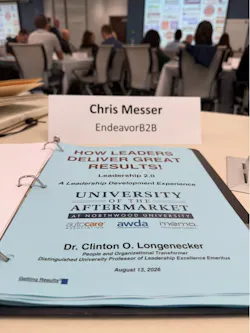
Then Clint Longenecker, Ph.D., Distinguished University Professor of Leadership Excellence Emeritus, took the stage. For the next seven-plus hours, he owned the room.
That's not an exaggeration. By the final day of an intensive leadership program, it would have been understandable if people were mentally drained. We had already spent the week discussing authentic leadership, team decision-making, financial fluency, networking, culture, communication, and emotional intelligence. There was a lot to absorb.
But Clint brought an energy that immediately changed the room.
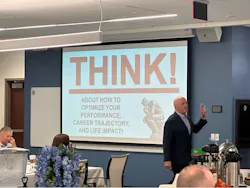
His presentation was titled How to Get Better Results, but the title only begins to describe what we experienced. This wasn't a lecture. It was part leadership workshop, part coaching session, part personal challenge, and part wake-up call.
What made it effective wasn't just the content, but the way Clint delivered it. He had every person engaged. He asked thought-provoking questions. He told stories that made the lessons memorable. He used humor, vulnerability, discipline, and directness in a way that made the entire session feel personal, even in a room of more than 40 people.
He challenged us to think about how we lead, how we spend our time, how we develop people, and whether our daily actions are truly aligned with the results we are responsible for delivering. By the end of the day, it was clear why this session closed the week. Everything we had learned up to that point was no longer theoretical. It had to become action.
We Are All Works in Progress
One of Clint's first messages was one of his most important: we are all works in progress.
That idea gave the session a different tone from the start. Leadership development is not about reaching a final destination where everything suddenly makes sense. It's about continuing to grow, continuing to learn, and continuing to challenge yourself to improve.
Clint shared the Albert Einstein quote, "Intellectual growth should commence at birth and cease only at death." That mindset fits perfectly with the purpose of Leadership 2.0. No one in that room came to Northwood because they believed they were finished developing as leaders. We came because we wanted to get better, and because there are people, teams, customers, and organizations depending on us to get better.
Being a work in progress does not mean you are behind. It means you are still growing.
You Are the Competitive Advantage
Another message Clint returned to throughout the day was that people are the competitive advantage. Not tools alone. Not technology alone. Not systems alone. People.
One slide made his perspective crystal clear: "Leadership is the single most important factor for an organization's success." He followed that with another statement that appeared repeatedly throughout the day: "You win with people."
In a world obsessed with technology, automation, and artificial intelligence, it was a refreshing reminder. Tools matter. Processes matter. Technology matters. But people are the ultimate differentiator.
That idea connected to so many conversations we had throughout the week. Jeff Paul told us on Day 1 that people come first. Ted Hughes reminded us on Day 2 that the aftermarket is more complex than most people realize and leadership has to account for the entire system. James O'Dell showed us on Day 3 that our networks are only as powerful as our willingness to help others. Bill Hanvey, Cheryl Scalione, and Tammy Tecklenburg reinforced on Day 4 that culture, trust, and emotional intelligence shape the way people experience leadership.
Clint brought it all together by making it clear that leaders are responsible for results, but results are delivered through people. That's both the opportunity and the responsibility of leadership.
Character Is the Only Thing We Control
One of the notes I took during the day was a statement that may have stayed with me the most: your character is really the only thing you have complete control over.
That line hit hard because it's true. Markets change. Customers change. Teams change. Strategies change. Economic conditions change. Competitors change. Technology changes. Character, however, is a choice. Character shows up in how we respond under pressure, how we treat people when things are difficult, and how we make decisions when easy answers don't exist.
Clint talked about guarding your character, continuing to grow your skills, and investing in your people. He also shared a meaningful quote from his dear friend Dave Stratso: "Your career and life are going to go fast. Make each day count and invest in your people and help them win. Guard your character and keep growing your skills, and don't forget to take care of yourself."
That message brought the room back to something leaders often overlook. Leadership isn't just about driving results. It's about becoming the kind of person others can trust while those results are being pursued.
Randomness Is the Enemy of Excellence
One of Clint's strongest points was on the danger of randomness. Without a well-defined leadership process, randomness can and will take over. Clint described randomness as the enemy of excellence, and that message resonated because it reflects the reality many leaders face every day.
It's easy to get caught up in busyness. Meetings pile up. Inboxes fill. Problems appear. Priorities shift. Teams need decisions. Customers need support. Before long, the day can become a series of reactions rather than intentional choices. Clint challenged us to be mission-centric, which means understanding the purpose of the organization, identifying the most important work we do to support that mission, and being honest about what we personally need to improve to perform at a higher level.
A Process for Improvement
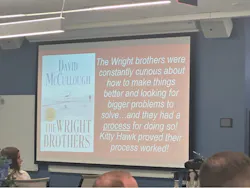
One story Clint shared that sat with me involved the Wright brothers. Referencing David McCullough's book The Wright Brothers, Clint explained that their success wasn't simply the result of intelligence or luck. They were relentlessly curious, constantly experimenting, constantly learning, and consistently improving.
Most importantly, they had a process. Kitty Hawk proved that their process worked.
That lesson tied directly into Clint's broader message for leaders. Organizations and individuals that consistently improve rarely rely on chance. They create systems, build habits, and establish processes that allow continuous learning, adaptation, and growth.
In many ways, that idea mirrors leadership itself. Without a process, randomness takes over. With a process, improvement becomes intentional.
What Results Are You Being Paid to Deliver?
If there was one question that sat at the center of Clint's presentation, it was this: What results are you being paid to deliver?
It's a simple question, but it's not an easy one to answer. Clint defined a result as something that comes about as a consequence, effect, or conclusion of an activity or action. In other words, results are not the same as effort. Results are not the same as meetings, emails, conversations, or intentions. Results are outcomes.
That distinction matters. Leaders can be busy without being effective. Teams can work hard without being aligned. Organizations can have activity without progress. Clint challenged us to think clearly about the outcomes we are responsible for creating and the leadership behaviors required to produce those outcomes.
For me, that question provided clarity. What results am I responsible for delivering? What does my team need from me to deliver those results? What is currently getting in the way? What do I need to do differently when I return? Those aren't questions to answer once and move on from. They're questions worth revisiting constantly.
Why Leaders Fail
Clint also walked through common reasons leaders fail, and the list was hard to ignore because every item was practical and recognizable.
- Poor communication
- Lack of emotional intelligence
- Failure to clarify direction and expectations
- Lack of integrity, character, or trustworthiness
- Inability to influence and motivate others
- Lack of situational awareness
- Failure to develop teamwork and cooperation
- Poor planning and reactionary behavior
- Failure to coach and develop people
- Failure to remove performance roadblocks
What stood out was that few of those failures are technical. Most are relational. Most involve communication, trust, clarity, coaching, awareness, and emotional intelligence. In other words, the same themes we had been discussing all week.
That was one of the most powerful parts of Day 5. Clint didn't introduce a new concept disconnected from the rest of the program. He reinforced the same fundamentals we had been exploring since Sunday evening.
Five Absolutes for High Performance
Clint offered a framework for high performance built around five absolutes.
- First, get everyone on the same page by focusing on the purpose of the organization
- Second, prepare for battle by equipping the team with the right tools, talent, and technology
- Third, stoke the fire of performance by creating a climate where results can flourish
- Fourth, build bridges on the road to results by focusing on the relationships most important to achieving desired outcomes
- Fifth, keep the piano in tune through continuous renewal
That framework was simple without being simplistic. It gave structure to the work leaders should do every day: create clarity, equip the team, build the right environment, strengthen relationships, and keep improving.
Those five absolutes summarized the week's lessons: Leadership is a disciplined set of behaviors practiced consistently over time.
The Power of STOP
Toward the end of the day, Clint introduced a tool for being more intentional: STOP—Sit. Think. Optimize. Purpose.
The message was relevant because many leaders spend their days racing from one obligation to the next. Clint asked a question that everyone already knew the answer to: Can you squeeze more than 24 hours out of a day? Of course not. The challenge isn't about finding more time. The challenge is using the time we have with greater purpose. That means stopping long enough to think, away from the noise, to evaluate priorities and ask whether our actions are aligned with the outcomes we are trying to achieve. In a world that rewards speed, stopping can feel counterintuitive. But sometimes stopping is what allows leaders to move forward effectively.
Bringing It Home
As the afternoon began winding down, Clint tied together many of the themes he had been reinforcing throughout the day. Leadership is the single most important factor in an organization's success. You win with people. Organizations that learn the fastest and change the quickest win. Arrogance is the biggest barrier to excellence.
Looking around the room, it struck me that none of those ideas are revolutionary on their own. Most leaders have heard some version of them before. The challenge is not understanding them. The challenge is consistently applying them.
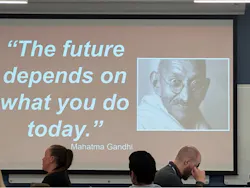
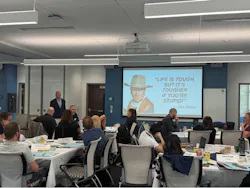
One slide featured a quote from Mahatma Gandhi: "The future depends on what you do today." Another featured a quote often attributed to John Wayne: "Life is tough, but it's tougher if you're stupid." The room laughed at the second one, but the underlying message was serious: learn from mistakes, stay curious, stay humble, and keep growing.
Clint emphasized that leadership is a process. Not an event, a title, or a destination. A process.
That message connected back to one of his earliest observations that morning: we are all works in progress. For me, that may have been the most important takeaway from the entire week. Not because leadership requires perfection, but because leadership requires continual improvement.
This is also where Clint's message connected to a motto I have tried to live by as a leader: I take care of my tribe.
That's not something Clint said. That's something I believe. For me, leadership has never been about titles, authority, or organizational charts. It's about creating an environment where people can succeed. It's about removing obstacles, helping people grow, building trust, supporting those who depend on you, and doing everything possible to leave people better than you found them.
Clint's session reinforced that philosophy by challenging all of us to become more intentional about our results, our character, and the way we invest in people. If leadership is a process, then taking care of your tribe is part of the daily practice.
The Drive Home
Following a few closing remarks from James O'Dell, Week 1 of Leadership 2.0 officially closed. Photos were taken. Handshakes were exchanged. Plans were already being made for Raleigh next spring. The classroom emptied.
The two-hour drive back from Midland, Michigan, left plenty of time to reflect on everything the week delivered. I thought about Jeff Paul's discussion on authentic leadership. I thought about the Subarctic Survival exercise and the power of collective decision-making. I thought about Ted Hughes explaining the complexity of the aftermarket. I thought about Bill Hanvey discussing culture on the same day he announced his upcoming retirement. I thought about Tammy Tecklenburg reminding us that our teams experience our behavior, not our intentions. And I thought about Clint Longenecker challenging us to get better results by becoming more intentional leaders.
I felt tired but energized at the end of the drive. I was ready to get back to work, get back to my business, get back to my tribe, and apply what I learned.
Until Raleigh
Thank you to James O'Dell, the University of the Aftermarket, Northwood University, Auto Care Association, AWDA, MEMA, and every presenter who poured into our class throughout the week.
Thank you to my classmates for your openness, honesty, perspective, and willingness to contribute. The value of the program wasn't only in the presentations. It was also in the conversations around the tables, during breaks and after class.
Week 2 of Leadership 2.0 will take place in Raleigh next March. Honestly, it cannot come soon enough, because if Week 1 taught me anything, it's that leadership isn't something you achieve. It's something you practice every day with intention, humility, character, and a commitment to taking care of your tribe.
About the Author
 Chris Messer
Chris Messer
Executive Vice President | Transportation
Chris Messer is the Executive Vice President for Endeavor Business Media's Transportation Group.