Inside the GM Gen 5 LT1/LT4 Piston Design
Key Highlights
- GM's Gen 5 LT1 and LT4 engines feature a new design with direct injection, higher compression ratios, and supercharging options, marking a significant evolution from the LS series.
- The pistons incorporate a 'sugar scoop' DI bowl to optimize fuel atomization, achieving up to 98% combustion efficiency, with aftermarket options offering enhanced strength and coatings.
- Manufacturers like JE, Wiseco, MAHLE, and Ross provide forged pistons with features such as thermal coatings, asymmetric skirts, accumulator grooves, and high-strength pins for performance and durability.
- Pistons are designed with features like oil reliefs for squirters, relief grooves for compression adjustments, and coatings to reduce heat and deposits, supporting both stock and high-performance builds.
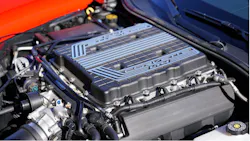
GM's Gen 5 LT1 and LT4 V8 OHV engines debuted in 2014. While many aspects of the platform seem similar to the LS series, the Gen 5 engine represents a "from scratch" design with a number of evolutionary changes. The most significant advancement is the direct-injection system, where fuel injectors install directly into the cylinder heads, spraying a high-pressure fuel feed directly into the combustion chamber instead of into the intake stream. This allows a slight bump in OE compression, with 11.5:1 in the naturally aspirated LT1 and 10:1 in the supercharged LT4. The LT4 features a 1.7L Eaton supercharger. Taking boost to a higher level is the LT5, which is aided by a 2.65L supercharger that pushes 14 psi (specifically for the ZR1 Corvette).
The variants within the Gen 5 series include the L83, a 5.3L version for truck applications featuring a 3.800" bore and 3.622" stroke, and the L86 LT1/LT4 with a 4.065" bore and 3.622" stroke. All Gen 5 blocks are cast aluminum with cast-in iron sleeves.
Rather than delving into the engine design as a whole, here we'll take a look at the piston design, which was developed specifically for the GDI (gasoline direct injection) platform. This article will concentrate on the new breed of 6.2L LT1/LT4 pistons.
5.3L (L83) Light-Duty Trucks
Bore: 3.80"
Stroke: 3.622" (overbores: 3.780", 3.790", 3.800")
Rods: 6.125" or 6.098"
LT1 6.2L Specifications
| Stock Bore | 4.065" (possible oversizes: 4.070–4.075"; 4.125–4.185" with sleeve change) |
| Stock Stroke | 3.622" (aftermarket option: 4.00") |
| Stock Rods | 6.098" |
| Piston CD (for stock rods) | 1.331" |
| Pins | 0.927" |
| Block Deck Height | 9.240" (same as LS) |
| Bore Spacing | 4.400" |
| LT1 Stock Cylinder Head Chamber Volume | 59.02cc |
| LT4 Stock Cylinder Head Chamber Volume | 65.47cc |
| OEM Valve Angles | 12.5 degrees intake; 12.0 degrees exhaust |
| OEM Valves | 2.13" intake / 1.59" exhaust |
| OEM Compression Ratio | LT1 11.5:1 / LT4 10.0:1 |
| OE Oil Rings | 1.2mm, 1.2mm cast iron second, and 3.0mm oil ring |
Direct Injection "Sugar" Scoop
The first thing you'll notice when examining an OEM piston for the Gen 5 engine is the presence of a center-located trough path that leads into a radiused "bowl" cavity in the dome. Often referred to as a "sugar scoop" or DI bowl (direct injection bowl), this is located in the aiming point of the fuel injector. When fuel is released, it travels along this trough and hits the radiused walls of the scoop. This causes the fuel to whip down the angled pathway into the bowl, rising in a wave form, creating a swirling "ball" of fuel that, when ignited, creates a uniform flame front over the entire piston dome for superb fuel atomization, placing pressure more uniformly upon the entire surface area of the piston top. In addition, the quench area of the piston dome mimics the profile of the combustion chamber.
According to Keith McWilliams, Race Winning Brands Piston Group Engineering manager (JE and Wiseco), the multi-million-dollar investment in development by GM—a reported over 6 million hours of CPU time—resulted in the highest combustion efficiency of any small block to date.
The level of efficiency is rumored to be in the 98% range, which you must admit is pretty impressive. The piston dome design is so efficient that most aftermarket piston makers stick with this design, as there doesn't appear to be much in the way of design improvement that would result in substantial performance gains (aside from altering bore diameter and compression ratio). Note that the scoop is oriented at a slight angle relative to the perpendicular at the wrist pin. The angle of the scoop interacts with the offset angle of the injector that delivers fuel into the chamber. The injector-to-scoop angle is one of the aspects that resulted from GM's in-depth design program for the Gen 5 engines as they strove to maximize the fuel swirl effect.
However, some aftermarket piston makers also offer a " flat top " approach, essentially eliminating the DI bowl, likely to address high-boost forced induction applications where the dome is being slammed so hard that the edges of the DI bowl might present potential hot-spot pre-detonation issues.
It's been argued by some that the primary role of the DI bowl is to aid in heating the catalytic converter more quickly during cold starts in terms of emissions reduction. While this may indeed be a side benefit, the primary purpose of the bowl or "scoop" is to create a highly efficient and atomized combustion plume with regard to performance. Bear in mind that this "scoop" approach isn't unique to the Gen 5 GM engines, as other carmakers have adopted similar piston dome shape concepts in their gasoline direct-injected engine platforms as they pursue optimized fuel atomization.
Since the OE dome design is so efficient, with no substantial performance gains to be had by modifying the design, what does the aftermarket offer that's superior to the OE piston? Plenty. First of all, aftermarket manufacturers offer 2618 forgings that offer superior strength compared to OE hypereutectic construction. Aftermarket standard and/or optional features include thermal barrier coatings and plating, hard anodized ring lands, superior and/or thicker anti-friction skirt coatings, double-pin oiling, accumulator grooves, lateral gas porting, asymmetric skirts, ranges of piston compression height to accommodate stroke and rod length options, higher quality wrist pins for added strength and reduced friction, refined crown machining, and a wide range of oversizes and compression ratios intended for both OE and aftermarket cylinder head combustion chamber volumes, and more.
Donut Relief
Since the near-center fuel scoop is a predominant feature, in order to reduce compression in certain applications, milling a radiused "donut" groove is commonly applied, biased along the inboard (intake) side of the piston top, the width and depth of which are tailored to achieve any specific increase in cubic centimeter volume.
Coatings and Treatments
While common anti-friction skirt coatings (generically referred to as "moly," though variations of formulas and names vary among piston makers) are in the 14-micron thickness, which adds roughly 0.0005" per skirt for a total of about 0.001", some makers offer thicker 30-micron coatings which can increase total skirt diameter by about 0.002" for quieter engine operation, to further reduce the possibility of engine knock sensors picking up any tap or tick noise.
Coating, plating, or other surface treatments can be applied (usually as an option) to create a slicker surface that greatly reduces the chance for carbon deposits on the dome and to reduce heat absorption. Wiseco's Armor Plating is an example of a chemically applied, built-up coating treatment that is applied to the entire piston (dome to prevent deposits and reduce heat, ring lands to eliminate micro-welding, pin bosses for quicker oil release, and pin bores to reduce pin-to-bore friction). This reduction of detonation provides a wider "safety margin" window for the builder to run a few more degrees of advance if desired. Makers may also offer REM (chemical polishing) finishing and/or heat deflection coatings such as ceramic on dome surfaces, hard anodizing ring lands, etc.
While a forging is inherently stronger than a casting, it's interesting to note that JE Pistons has recently introduced a proprietary forging process used in their new Ultra series that orients the grain structure towards the crown and pin boss areas for improved strength, which makes it possible to reduce weight while simultaneously enhancing piston strength.
Skirt Cutout for Oiler
Since the LT1/LT4 blocks feature piston oil squirters, a notch-out provision is needed on the skirt to clear each cylinder's squirter tube. This feature is found on OE and aftermarket pistons. When fitting pistons, you'll need to pay attention to oil tube clearance, just in case the oiler tubes need to be slightly bent for proper piston clearance.
Bore Sizes
Standard bore on the aluminum 6.2L LT1/LT4 block is 4.065". The OE cast-in cylinder liners may be oversized to accept up to a max of 4.080", with 4.065", 4.070", 4.075", and 4.080" available. Some aftermarket piston makers also offer 4.125" and 4.130", which require boring out the existing OE sleeves and installing aftermarket sleeves from sources such as Darton, offering dry sleeves for installation to OE blocks that will accept a max of 4.187" bore (P/N 300-026-SF—single flat flange for cylinders 1, 7, 2, and 8; and 300-026-DF—double flat flange for cylinders 3, 5, 4, and 6). For aftermarket billet blocks, wet sleeves are available that allow as much as 4.200" bores. According to Darton, a max bore of 4.150" is recommended for high-boost forced induction applications.
Piston Manufacturer Offerings
If an engine rebuild is planned, be aware that aftermarket forged performance pistons for both "drop-in" and overbore/stroker applications abound. Current sources include (but aren't limited to) Diamond, JE, Wiseco, Ross, MAHLE Motorsports, Manley, and Icon (note: Icon currently stocks pistons only for the 5.3L L83, with 6.2L LT1/LT4 to be released).
Diamond Racing Pistons (6.2L LT1/LT4 Applications)
| Bore | Stroke | Rod | CD | Pin | CCs | CR |
|---|---|---|---|---|---|---|
| 4.065 | 3.622 | 6.125 | 1.304 | .927 x 2.250 | -8.2 | 11.5 |
| 4.070 | 3.622 | 6.125 | 1.304 | .927 x 2.250 | -8.2 | 11.5 |
| 4.065 | 3.622 | 6.125 | 1.304 | .927 x 2.250 | -20.0 | 10.0 |
| 4.070 | 3.622 | 6.125 | 1.304 | .927 x 2.250 | -20.0 | 10.0 |
| 4.065 | 3.622 | 6.125 | 1.304 | .927 x 2.250 | -24.5 | 9.5 |
| 4.070 | 3.622 | 6.125 | 1.304 | .927 x 2.250 | -24.5 | 9.5 |
| 4.065 | 4.000 | 6.125 | 1.115 | .927 x 2.250 | -16.0 | 11.5 |
| 4.070 | 4.000 | 6.125 | 1.115 | .927 x 2.250 | -16.0 | 11.5 |
| 4.065 | 4.000 | 6.125 | 1.115 | .927 x 2.250 | -24.5 | 10.5 |
| 4.070 | 4.000 | 6.125 | 1.115 | .927 x 2.250 | -24.5 | 10.5 |
Ratios figured for 4.125 x 0.050" head gasket; offset pins for quiet operation; moly skirt coating; top ring down 0.300"; premium 1.2mm x 1.2mm x 3.0mm ring package included. 8620 180-wall wrist pins chamfered for roundwire locks; valve pocket depth: 0.200" intake / 0.200" exhaust; 2618 material for high HP/boost; 3D milling on piston crowns and ready-to-install finish; designed for OEM direct injection.
JE Pistons (6.2L LT1)
| CID | Bore | Stroke | Rod | CD | CR | Dome Vol (cc) |
|---|---|---|---|---|---|---|
| 376 | 4.065 | 3.622 | 6.098 | 1.326 | 10.0 | -13.9 |
| 377 | 4.070 | 3.622 | 6.098 | 1.326 | 10.0 | -14.1 |
| 378 | 4.075 | 3.622 | 6.098 | 1.326 | 10.0 | -14.3 |
| 376 | 4.065 | 3.622 | 6.125 | 1.304 | 10.0 | -15.0 (Ultra) |
| 377 | 4.070 | 3.622 | 6.125 | 1.304 | 10.0 | -15.1 (Ultra) |
| 378 | 4.075 | 3.622 | 6.125 | 1.304 | 10.0 | -15.3 (Ultra) |
| 376 | 4.065 | 3.622 | 6.125 | 1.304 | 10.0 | -15.0 |
| 377 | 4.070 | 3.622 | 6.125 | 1.304 | 10.0 | -15.1 |
| 378 | 4.075 | 3.622 | 6.125 | 1.304 | 10.0 | -15.3 |
| 376 | 4.065 | 3.622 | 6.125 | 1.304 | 12.3 | 2.5 |
| 377 | 4.070 | 3.622 | 6.125 | 1.304 | 12.3 | 2.3 |
| 378 | 4.075 | 3.622 | 6.125 | 1.304 | 12.3 | 2.2 |
| 415 | 4.065 | 4.000 | 6.125 | 1.115 | 10.0 | -23.9 (Ultra) |
| 416 | 4.070 | 4.000 | 6.125 | 1.115 | 10.0 | -24.2 (Ultra) |
| 417 | 4.075 | 4.000 | 6.125 | 1.115 | 10.0 | -24.5 (Ultra) |
| 415 | 4.065 | 4.000 | 6.125 | 1.115 | 10.0 | -23.9 |
| 416 | 4.070 | 4.000 | 6.125 | 1.115 | 10.0 | -24.1 |
| 417 | 4.075 | 4.000 | 6.125 | 1.115 | 10.0 | -24.3 |
| 415 | 4.065 | 4.000 | 6.125 | 1.115 | 12.3 | -4.6 |
| 416 | 4.070 | 4.000 | 6.125 | 1.115 | 12.3 | -4.8 |
| 417 | 4.075 | 4.000 | 6.125 | 1.115 | 12.3 | -5.0 |
All above based on 9.240" deck and 59cc cylinder head chamber volume. Ring package is 1.2, 1.5, and 3.0mm. Stock rods must be honed to accept 0.927" pins. All pistons listed above feature JE's asymmetrical FSR (forged side relief) design, with major thrust side skirts wider than minor thrust side skirts, accumulator grooves, double pin oilers, and offset pins. The "Ultra" versions combine all of JE's premium features with the addition of forged grain flow optimization, ceramic crown treatment, lateral gas ports, skirt coating, and thick-wall pins. JE also offers a complete line of pistons specifically for the supercharged LT4, based on 65.5cc cylinder head chambers, 10.0:1 compression, to accommodate 376 to 417 CID and stock 3.622" stroke to 4.000" stroke.
MAHLE Motorsports (All versions 2618 alloy, hard anodized top ring groove, designed for aftermarket rods)
LT 6.2 Flat Top
| CID | Bore | Stroke | Rod | CD | Pin | Crown Vol | CR 60cc | CR 65.5cc |
|---|---|---|---|---|---|---|---|---|
| 376 | 4.065 | 3.622 | 6.125 | 1.304 | 0.927 | -4.5cc | 11.6 | 10.8 |
| 377 | 4.070 | 3.622 | 6.125 | 1.304 | 0.927 | -4.5cc | 11.6 | 10.8 |
| 415 | 4.065 | 4.000 | 6.125 | 1.105 | 0.927 | -4.3cc | 12.7 | 11.9 |
| 416 | 4.070 | 4.000 | 6.125 | 1.105 | 0.927 | -4.3cc | 12.7 | 11.9 |
| 428 | 4.125 | 4.000 | 6.125 | 1.105 | 0.927 | -6.1cc | 12.7 | 11.9 |
| 429 | 4.130 | 4.000 | 6.125 | 1.105 | 0.927 | -6.1cc | 12.7 | 11.9 |
LT1 6.2 Inverted Dome
| CID | Bore | Stroke | Rod | CD | Pin | Crown Vol | CR 60cc | CR 65cc |
|---|---|---|---|---|---|---|---|---|
| 376 | 4.065 | 3.622 | 6.125 | 1.304 | 0.927 | -16.0cc | 10.1 | 9.6 |
| 377 | 4.070 | 3.622 | 6.125 | 1.304 | 0.927 | -16.0cc | 10.1 | 9.6 |
| 416 | 4.070 | 4.000 | 6.125 | 1.105 | 0.927 | -21.6cc | 10.5 | 9.9 |
Manley
| Bore | Rod | Stroke | CD | CR | Dome |
|---|---|---|---|---|---|
| 4.065 | 6.125 | 3.622 | 1.304 | 11.7 | -2cc |
| 4.070 | 6.125 | 3.622 | 1.304 | 11.7 | -2cc |
| 4.075 | 6.125 | 3.622 | 1.304 | 11.8 | -2cc |
| 4.080 | 6.125 | 3.622 | 1.304 | 11.8 | -2cc |
| 4.065 | 6.125 | 3.622 | 1.304 | 10.5 | -12cc dish |
| 4.070 | 6.125 | 3.622 | 1.304 | 10.5 | -12cc dish |
| 4.075 | 6.125 | 3.622 | 1.304 | 10.6 | -12cc dish |
| 4.080 | 6.125 | 3.622 | 1.304 | 10.6 | -12cc dish |
| 4.065 | 6.125 | 4.000 | 1.115 | 11.7 | -10cc dish |
| 4.070 | 6.125 | 4.000 | 1.115 | 11.7 | -10cc dish |
| 4.075 | 6.125 | 4.000 | 1.115 | 11.8 | -10cc dish |
| 4.080 | 6.125 | 4.000 | 1.115 | 11.8 | -10cc dish |
| 4.125 | 6.125 | 4.000 | 1.115 | 12.0 | -10cc dish |
| 4.130 | 6.125 | 4.000 | 1.115 | 12.0 | -10cc dish |
| 4.065 | 6.125 | 4.000 | 1.115 | 10.5 | -20cc dish |
| 4.070 | 6.125 | 4.000 | 1.115 | 10.5 | -20cc dish |
| 4.075 | 6.125 | 4.000 | 1.115 | 10.6 | -20cc dish |
| 4.080 | 6.125 | 4.000 | 1.115 | 10.6 | -20cc dish |
| 4.125 | 6.125 | 4.000 | 1.115 | 10.8 | -20cc dish |
| 4.130 | 6.125 | 4.000 | 1.115 | 10.8 | -20cc dish |
2618 alloy; 1.2, 1.2, 3.0mm rings; moly coated skirts; roundwire locks. Compression ratio calculated at 0.00 deck with 9.240" deck height, 60cc combustion chamber, and 0.051" head gasket.
Ross Pistons (6.2L LT1/LT4 Dome)
| Bore | Stroke | Rod | CD | Vol | CR 59cc | CR 65cc |
|---|---|---|---|---|---|---|
| 4.065 | 3.622 | 6.125 | 1.299 | 0.00 | 11.8 | 10.0 |
| 4.070 | 3.622 | 6.125 | 1.299 | 0.00 | 11.8 | 10.0 |
| 4.075 | 3.622 | 6.125 | 1.299 | 0.00 | 11.8 | 10.0 |
| 4.080 | 3.622 | 6.125 | 1.299 | 0.00 | 11.8 | 10.0 |
Ross Pistons (6.2L LT1/LT4 Dish)
| Bore | Stroke | Rod | CD | Vol | CR 59cc | CR 65cc |
|---|---|---|---|---|---|---|
| 4.065 | 3.622 | 6.125 | 1.299 | -9.80 | 10.5 | 9.85 |
| 4.070 | 3.622 | 6.125 | 1.299 | -9.80 | 10.5 | 9.85 |
| 4.075 | 3.622 | 6.125 | 1.299 | -9.80 | 10.5 | 9.85 |
| 4.080 | 3.622 | 6.125 | 1.299 | -9.80 | 10.5 | 9.85 |
| 4.065 | 4.000 | 6.125 | 1.110 | -7.63 | 11.8 | 11.0 |
| 4.070 | 4.000 | 6.125 | 1.110 | -7.63 | 11.8 | 11.0 |
| 4.075 | 4.000 | 6.125 | 1.110 | -7.63 | 11.8 | 11.0 |
| 4.080 | 4.000 | 6.125 | 1.110 | -7.63 | 11.8 | 11.0 |
| 4.125 | 4.000 | 6.125 | 1.110 | -9.68 | 11.8 | 11.0 |
| 4.130 | 4.000 | 6.125 | 1.110 | -9.68 | 11.8 | 11.0 |
| 4.065 | 4.000 | 6.125 | 1.110 | -18.40 | 10.5 | 9.90 |
| 4.070 | 4.000 | 6.125 | 1.110 | -18.40 | 10.5 | 9.90 |
| 4.075 | 4.000 | 6.125 | 1.110 | -18.40 | 10.5 | 9.90 |
| 4.080 | 4.000 | 6.125 | 1.110 | -18.40 | 10.5 | 9.90 |
| 4.125 | 4.000 | 6.125 | 1.110 | -20.78 | 10.5 | 9.90 |
| 4.130 | 4.000 | 6.125 | 1.110 | -20.78 | 10.5 | 9.90 |
All Ross data based on 9.235" finished block deck height and 0.927" wrist pins. Compression figured with 0.051" gaskets and zero deck. Material: 2618 aluminum, strut forgings with internal and external bracing, broached and forged double pin oilers, performance ring set, accumulator groove, anti-detonation grooves, heavy-duty pins and lock removal indents. Options include 3D profiling, vertical and horizontal gas porting, pin upgrades, skirt and crown coatings, and Total Seal rings.
Wiseco Pistons (6.2L LT1)
| Bore | CD | Stroke | Rod | Dome Vol (cc) | CR |
|---|---|---|---|---|---|
| 4.065 | 1.331 | 3.622 | 6.098 | -12 | 10.4 |
| 4.070 | 1.331 | 3.622 | 6.098 | -12 | 10.4 |
| 4.075 | 1.331 | 3.622 | 6.098 | -12 | 10.4 |
| 4.065 | 1.331 | 3.622 | 6.098 | -2 | 11.7 |
| 4.070 | 1.331 | 3.622 | 6.098 | -2 | 11.7 |
| 4.075 | 1.331 | 3.622 | 6.098 | -2 | 11.7 |
| 4.065 | 1.304 | 3.622 | 6.125 | -12 | 10.4 |
| 4.070 | 1.304 | 3.622 | 6.125 | -12 | 10.4 |
| 4.075 | 1.304 | 3.622 | 6.125 | -12 | 10.4 |
| 4.065 | 1.304 | 3.622 | 6.125 | -2 | 11.7 |
| 4.070 | 1.304 | 3.622 | 6.125 | -2 | 11.7 |
| 4.075 | 1.304 | 3.622 | 6.125 | -2 | 11.7 |
| 4.065 | 1.115 | 4.000 | 6.125 | -20 | 10.5 |
| 4.070 | 1.115 | 4.000 | 6.125 | -20 | 10.5 |
| 4.075 | 1.115 | 4.000 | 6.125 | -20 | 10.5 |
| 4.125 | 1.115 | 4.000 | 6.125 | -20 | 10.75 |
| 4.065 | 1.115 | 4.000 | 6.125 | -10 | 11.7 |
| 4.070 | 1.115 | 4.000 | 6.125 | -10 | 11.7 |
| 4.075 | 1.115 | 4.000 | 6.125 | -10 | 11.7 |
| 4.125 | 1.115 | 4.000 | 6.125 | -10 | 12.0 |
All feature 2618 alloy, ArmorGlide skirt coating, ArmorPlating thermal protection, 0.200" wall pin and Spirolox, anti-detonation and pressure seal grooves, and rings at 1.2, 1.2, and 3.0mm. Compression ratios above determined at zero deck with 0.051" gasket.
Wiseco 6.2L LT4 Pistons (Supercharged)
| Bore | CD | Stroke | Rod | Dome Vol (cc) | CR |
|---|---|---|---|---|---|
| 4.065 | 1.331 | 3.622 | 6.098 | -9 | 10.0 |
| 4.070 | 1.331 | 3.622 | 6.098 | -9 | 10.0 |
| 4.075 | 1.331 | 3.622 | 6.098 | -9 | 10.0 |
| 4.065 | 1.115 | 4.000 | 6.125 | -18 | 10.0 |
| 4.070 | 1.115 | 4.000 | 6.125 | -18 | 10.0 |
| 4.075 | 1.115 | 4.000 | 6.125 | -18 | 10.0 |
About the Author
 Mike Mavrigian
Mike Mavrigian
Motor Age Editor
Mike Mavrigian has written thousands of automotive technical magazine articles involving a variety of specialties, from engine building to wheel alignment, and has authored more than a dozen books that crisscross the automotive spectrum. Mike operates Birchwood Automotive, an Ohio shop that builds custom engines and performs vintage vehicle restorations. The shop also features a professional photo studio to document projects and to create images for articles and books.