Most techs know the 0.002-inch runout number. What gets missed is where it applies. That's the assembled limit, measured at the friction surface with the rotor mounted. The hub on its own has to be tighter. If you see 0.002 at the hub, you're already out of spec.
That's why brake pedal pulsation two weeks after a job usually isn't due to a bad part. Runout lets a high spot drag against the pad every rotation, and over a few thousand miles, it wears into disc thickness variation. By the time the customer feels it, the damage is done.
This front brake service walk-through treats the rotor-to-hub interface as the most critical link. Check bearing play first, clean the hub to bare metal, and put the dial indicator on the hub before the rotor goes on. Over spec? Rotor indexing, one bolt hole at a time, fixes most cases in about two minutes.
Watch this Tech Tip to see what the rest of a zero-comeback brake job looks like.
About the Author
 Noah Nelson
Technical Editor | Motor Age
Noah Nelson is the Technical Editor for Motor Age Magazine. As an ASE Master Certified Automotive Technician (A1–A9) with 25 years of hands-on industry experience, Noah specializes in advanced electrical systems, vehicle communication networks, and physics-based diagnostic workflows. He is currently documenting his pursuit of the prestigious ASE/AutoCare Association World Class Technician registry.
Related
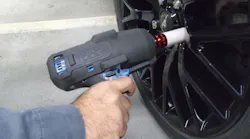 Figure 1 – The Matco Tools impact wrench being used along with the Sunex Custom Wheels Socket.