Your Shop's Highest-ROI Investment Might Not Be in the Bay
Key Highlights
- Shop owners rank scan tools and lifts as their highest-ROI buys, a ranking that's correct but incomplete.
- Shop management software gets undervalued because its return is diffuse, showing up across every job, not one invoice.
- Software isn't another line item, it's a multiplier on the yield of every bay, tech, and tool you already own.
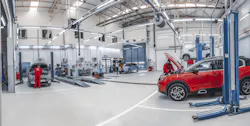

Ask a shop owner which investment has paid off best over the years, and the answer comes fast. According to PTEN's 2026 Aftermarket Profile, a survey of more than 500 technicians and shop owners, the highest-ROI equipment ranks in a clear order: scan tools first, then lifts, then diagnostic test equipment, followed by undervehicle tools and tire and wheel service tools.
That ranking is hard to argue with. A scan tool earns its keep on the first no-start it cracks. A lift earns its keep every hour a bay is turning. These are tangible, in-the-bay investments with a return an owner can feel.
But notice what is not on that list. The same survey separately tracks shop management software as a planned 2026 investment, and when it shows up alongside hand tools, scan tools, and lifts in the purchase-plans data, it sits near the bottom of the equipment ranking. It is on the radar. It is just not in the same conversation as the hardware.
That is worth a closer look, because of every dollar a shop spends, software may be the one that quietly changes the return on all the others.
Why the hardware ranking is right but incomplete
There is a reason equipment dominates the ROI conversation. The return is visible and direct. You buy the scan tool, you bill the diagnostic, you can point at the invoice. The Aftermarket Profile shows just how seriously shops take that math: technicians plan to spend around $4,000 each on scan tools alone in 2026, and the report tracks tool and equipment budgets down to the category.
Hardware ROI is easy to picture because each tool does one job and you can see it doing that job. The trouble is that this clarity is exactly what makes software easy to undervalue. Software does not turn a wrench or read a module. Its return does not appear on any invoice. It shows up across all of them, which makes it harder to see and easier to push down the list.
That does not make the return smaller. It makes it diffuse. And "diffuse" is not the same as "small".
Software is a multiplier, not a line item
Here is the reframe. A scan tool raises the ceiling on what one technician can diagnose. Shop management software raises the ceiling on how many of those diagnoses turn into approved, scheduled, completed, and paid work without friction.
Think about what sits between a tech's diagnosis and the shop getting paid for it. The job has to be written up. The customer has to be reached and has to approve. Parts have to be ordered against the right vehicle. The bay has to be scheduled so the tech is not idle waiting on authorization or parts. The invoice has to go out and get collected. Every one of those steps is a place where the value the technician created can leak out: a customer who never calls back to approve, a bay that sits empty an extra hour, a part ordered for the wrong VIN, a follow-up service that never gets booked.
That is the gap software closes, and the size of it is measurable. AutoLeap partnered with independent ROI research firm Hobson & Company to study the results its customers achieved. The Hobson Driving ROI study found shops cut the time spent drafting estimates and invoices by 60%, cut admin and internal communication time by 50%, and reduced lost revenue from no-shows by 30%. Customers reported revenue gains averaging up to 30% after adopting the platform. None of those numbers come from a new tool in the bay. They come from closing the leaks between the bay and the bank.
62% of technicians already use a tool that requires a smart device, so shops are not starting from zero on the digital side. A complete shop management platform like AutoLeap connects the booking, the estimate, the digital inspection, the parts order, the repair order, and the invoice into one flow, so the work a tech generates in the bay does not stall in the office. The expensive scan tool produces more billable diagnostics when the results move cleanly to an approved repair order instead of waiting on a phone tag. The lift turns more hours when the schedule keeps it full.
In other words, software does not compete with the scan tool and the lift for ROI. It compounds theirs.
A good time to make the calculation
The timing favors the argument. The Aftermarket Profile found that almost half of shop owners anticipate higher overall revenue in 2026, and the report's own "shop management investments for 2026" category puts shop management software, technician recruiting and training, marketing, and customer retention tools on owners' planning lists.
Growth is precisely when the office workflow gets tested. More car count means more estimates to chase, more parts to stage, more schedules to juggle, and more places for technician-created value to leak before it is billed. A shop adding hardware capacity in a growth year without addressing the workflow that monetizes that capacity is buying a faster engine and leaving the transmission alone.
How to weigh software against a tool purchase
The fix is not to spend less on equipment. The hardware ranking in the Aftermarket Profile is correct, and shops should keep investing in the scan tools and lifts that drive their core work. The fix is to stop evaluating software in a separate, lesser category and start asking a single question of every investment, hardware or software alike: Does this increase the yield on what we already own?
A second scan tool increases capacity only if there is a technician free to use it and a schedule that keeps it busy. Shop management software increases the yield on every tech and every tool already on the floor by making sure the work they produce actually converts to revenue. These software ties scheduling, estimates, digital inspections, parts, the repair order, and invoicing into one system precisely so that the value created in the bay does not stall on the way to the customer. The point is not the brand. The point is the category, and the category deserves to be measured by the same ROI yardstick as the equipment it amplifies.
The bottom line
Shop owners are right that scan tools, lifts, and diagnostic equipment deliver strong, visible returns. But the investment that determines how much of that return a shop actually captures is the one that rarely gets ranked next to them. Hardware sets the ceiling on what a shop can do. Software determines how much of that ceiling turns into revenue. Weigh them in the same conversation, and the highest-ROI investment might not be in the bay at all.