I spend a lot of my time throughout the day helping other technicians decipher the root cause of some very strange symptoms. Many times, I receive a compliment from the people I have assisted, “Dang, you are a very smart man.” My response is always the same. After a quick chuckle I reply with: “My friend, I’m not smarter than you; I just have a lot of experience pushing myself further than most are willing to go on their own.”
It's true, the assistance I provide to the diagnosticians seeking it has nothing at all to do with my intelligence (In fact, my closest friends may argue that word ‘intelligence,’ being used with my name adjacent to it). I simply have taken the time to understand how each component of each system functions. After that, I’ve taken the time to learn to use the proper tools to evaluate these components/systems.
One of the most important aspects of a diagnostician’s approach is realizing what the tools can do and cannot do (their limitations). But that cannot come from reading a book. It comes from experience. This experience should not be derived from approaching broken vehicles, though. If that were the case, the implementation of each new tool or new testing technique may lead to confusion. If a test result indicated a ‘failure,’ we may never know if it was due to a botched test or an actual failed component.
As mentioned above, growth comes from pushing oneself past their current depth of understanding. My advice to anyone trying to improve their diagnostic skillset and grow their array of testing tools and techniques is to add a 'new test' to the ones which you have already implemented.
Lean heavily on the “tried-and-true” tests that you’ve grown to rely upon, over the years. However, after a diagnosis is derived, add another new test/new tool, and see if you derive the same result. Save all your captures in an organized format (like in the cloud, or on an external hard drive). Keep a journal of your tests and future experiments you’d like to conduct. Implement strategies that include action/reaction testing techniques.
For example:
• “What happens to the MAP signal when the EGR valve is opened?”
• “What will be the results if the EGR ports are partially clogged, within the intake manifold?”
The questions you choose to write down (along with your hypotheses) will lead to organized experiments. As the scientist that you will become, you will grow your knowledge, over time.
Don’t take my word for it, try it! You will be pleasantly surprised at how fast your rate of growth increases, as well as your confidence. After all, no one is going to make you better. It’s up to you to push yourself further than anyone else will. Always shoot for the stars, it’s never crowded up there.
About the Author
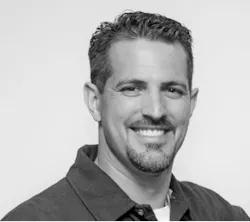
 Brandon Steckler
Technical Editor | Motor Age
Brandon began his career in Northampton County Community College in Bethlehem, Pennsylvania, where he was a student of GM’s Automotive Service Educational program. In 2001, he graduated top of his class and earned the GM Leadership award for his efforts. He later began working as a technician at a Saturn dealership in Reading, Pennsylvania, where he quickly attained Master Technician status. He later transitioned to working with Hondas, where he aggressively worked to attain another Master Technician status.
Always having a passion for a full understanding of system/component functionality, he rapidly earned a reputation for deciphering strange failures at an efficient pace and became known as an information specialist among the staff and peers at the dealership. In search of new challenges, he transitioned away from the dealership and to the independent world, where he specialized in diagnostics and driveability.
Today, he is an instructor with both Carquest Technical Institute and Worldpac Training Institute. Along with beta testing for Automotive Test Solutions, he develops curriculum/submits case studies for educational purposes. Through Steckler Automotive Technical Services, LLC., Brandon also provides telephone and live technical support, as well as private training, for technicians all across the world.
Brandon holds ASE certifications A1-A9 as well as C1 (Service Consultant). He is certified as an Advanced Level Specialist in L1 (Advanced Engine Performance), L2 (Advanced Diesel Engine Performance), L3 (Hybrid/EV Specialist), L4 (ADAS) and xEV-Level 2 (Technician electrical safety).
He contributes weekly to Facebook automotive chat groups, has authored several books and classes, and truly enjoys traveling across the globe to help other technicians attain a level of understanding that will serve them well throughout their careers.