Addressing the technician shortage: finding and keeping technicians
The technician shortage is an often-discussed, widespread issue facing the automotive repair industry. But, Bill Haas of Haas Performance Consulting points out that it is not truly a shortage of technicians, but a shortage of qualified technicians.
Shops have trouble finding top-level technicians because they are more focused on poaching the top-level technicians from each other, than on growing their own technicians in-house. Established talent has usually already found a culture of appreciation, good work environment and benefits. The shortage of technicians means that shops highly value their top techs, so few top-level techs are going to be job hunting (and there is stiff competition for the few that are).
Haas suggests that the ‘trick’ to recruiting new talent in the automotive repair industry is to change the way shops invest in new employees. He explains that there is a relatively steep investment for young people to enter the industry: often, they pay the up-front cost of attending an automotive program through a tech school, then graduate and have to invest in approximately $10,000 worth of tools before they are even able to work on vehicles, and the median income for an automotive technician in 2015 was only $37,850. Those numbers just don’t add up. Add to that the frustration of being paid flat rate for the hours they book, not the hours they work, and the steep learning curve of trying to work up to speed to actually make money on repairs, and it’s no wonder young people are reluctant to enter the automotive repair industry.
If shop owners want to recruit new talent, Haas suggests that they will need to make it worthwhile for young people to work there by offering higher starting wages and competitive benefits. (In a room full of shop owners, this was met with a lot of “But, millennials won’t stay in one job long enough to be worth investing in!”) Haas offered an interesting breakdown of workers per generation, and what qualities they looked for in a job—essentially, what factors entice each generation to stay in a job:
- Baby Boomers- money, primarily. They tend to be motivated by monetary rewards, but also rewards such as flexible retirement planning and peer recognition.
- Gen-X- prefers to work independently. They value opportunities to grow and make choices. They are motivated by flexible schedules, benefits, bonuses and monetary rewards.
- Millennials-have no problem jumping from one organization to another if they don’t feel like there’s a “fit” with their current company. They tend to value culture and working in a collaborative team environment, flexible schedules, time off and embracing new technology. They are highly motivated by “meaningful work.”
- Gen Z- just starting to enter the workforce. This generation is motivated by social rewards, mentorship and constant feedback. They want to their work to be meaningful and want to be given responsibility.
By 2020, 50 percent of the workforce is projected to be Millennials, so Haas emphasized the importance of focusing on the Millennials and Gen Z when recruiting new talent. These are generations that are driven by the idea of meaningful work, so it is important that shop owners help these employees understand how their work makes positive contributions to the shop.
This means that shops should look at hiring entry level technicians, and mentor them to become the top-level technicians the shop needs. To ensure shops are investing their time in the right people, it is important to recruit based on character, not necessarily on experience. If shops are having trouble drawing the right fit for their job openings, Haas suggests revisiting job ads (and where the company is advertising those jobs) to ensure that the job description reflects the position. It should not be a wish list of all the qualifications the shop wishes a prospective employee would have. Rather, it should demonstrate the value that the right employee would add to the shop, and provide to their customers (remember, millennials and Gen-X are motivated by meaningful work). If a young technician is a good fit for the company and willing to invest the time into training, they are a bigger asset to the shop than a more experienced employee who just wants to do the bare minimum.
A lot of shops are reluctant to invest in paying for their employees to attend training, because they don’t feel like their employees get enough out of it, and because they don’t want to invest in employees that won’t stay with the company long-term. Haas says that what shops should remember is that this viewpoint misses out on a key incentive for investing in training: customers. Well-educated employees are better able to serve customers, providing high-quality repairs efficiently.
Shops should make continuing education a requirement of the job, ensuring that applicants are willing to participate in training during the pre-employment interview. Create a performance standard for the required number of training hours the technician is expected to attend each year, and offer compensation as incentive for training attendance. After training is completed, Haas suggests having employees write three things they learned in the class that they can immediately apply to their job, three questions they still have on the subject, and what type of training they would like to attend in the future.
To fully address the industry-wide technician shortage, the industry will have to consider how it can motivate more of the younger generations to become technicians, and stay in the industry long enough to provide value to shop owners. At the shop level, higher starting wages, mentorship relationships and continued training opportunities can help shops grow their own qualified technicians.
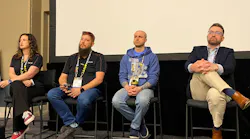
Information provided by Bill Haas during an Automechanika training session
About the Author
 Stefanie Von Rueden
Assistant Editor - Vehicle Repair Group
Stefanie Von Rueden is assistant editor for the Vehicle Repair Group.
Von Rueden’s background includes professional writing and publishing. Previously, she worked in the Continuing Education department at UW-Whitewater. She has covered the vehicle maintenance and automotive aftermarket since 2016.