Key Highlights
- Modern cooling systems incorporate electronic components such as electric water pumps, thermostats, and active grille shutters to manage engine temperature for improved efficiency and emissions.
- Diagnosis now relies heavily on interpreting scan data, system commands, and responses, making comprehensive diagnostic tools and understanding system strategies essential for technicians.
- Stricter regulations and performance demands have driven innovations such as electric pumps and dynamic cooling strategies, improving cold start emissions and turbocharger longevity.
- Active grille shutters help optimize aerodynamics and engine warm-up times by controlling airflow through the radiator based on cooling needs.
- Technicians must adapt to a data-driven diagnostic approach, understanding how hardware and software interact within modern thermal management systems to accurately identify faults.
For decades, engine cooling systems were relatively simple and largely mechanical. A belt-driven water pump circulated coolant through the engine and radiator, while a wax-pellet thermostat regulated minimum operating temperature. If a vehicle overheats, technicians typically look for a failed thermostat, clogged radiator, slipping fan clutch, or leaking water pump. Diagnosis focused almost entirely on preventing excessive engine temperature.
Today's engines use sophisticated thermal management systems designed not only to prevent overheating but also to precisely control temperature throughout the entire powertrain. Modern vehicles actively manage engine heat to improve fuel economy, reduce emissions, enhance drivability, protect turbochargers, accelerate cabin heating, and extend component life. Maintaining consistent and specific operating temperatures is just as important as preventing excessive temperatures.
This has transformed cooling systems into electronically managed thermal networks. Components such as electric water pumps, electronically controlled thermostats, active grille shutters, variable-speed cooling fans, and multiple coolant temperature sensors now operate together under the control of the powertrain control module. In many vehicles, thermal management strategies constantly adjust based on things like engine load, ambient temperature, vehicle speed, transmission temperature, HVAC demand, and battery temperature on hybrid and EV platforms.
A partially failed electric water pump, for example, may not immediately cause the vehicle to overheat. Instead, it may create intermittent cabin heat loss at idle, reduced fuel economy, or a reduced-power condition during highway acceleration. Similarly, an electronically controlled thermostat that fails to respond properly may keep the thermostat closed too long, causing overheating during heavy load. Active grille shutters introduce another layer of complexity. A shutter assembly stuck closed can reduce airflow through the radiator at highway speeds, while shutters stuck open may increase aerodynamic drag and slow engine warm-up times.
As a technician, this means cooling system diagnostics now require a broader understanding of electronic controls, scan tool live data, and system strategy. Simply checking coolant level and thermostat operation is no longer enough. Accurate diagnosis increasingly depends on understanding how these components interact and how the PCM uses thermal management to balance performance, emissions, efficiency, and durability.
Driving Factors Behind Cooling System Evolution
Modern thermal management systems didn't emerge simply because engineers wanted to justify their jobs by designing more sophisticated cooling systems. The change toward electric water pumps, electronically controlled thermostats, and active grille shutters was largely driven by increasingly strict fuel economy and emissions requirements, combined with the demands of forced induction and electrified powertrains.
For decades, engineers designed cooling systems primarily around worst-case operating conditions. Mechanical water pumps continuously circulated coolant based on engine speed, thermostats operated at fixed temperatures, and airflow through the radiator depended mostly on vehicle speed and mechanical or single-speed electric fans. These systems were reliable and relatively simple; they were also inefficient. Modern engines require much tighter temperature control to meet performance, emissions, and efficiency goals.
Government regulations played a major role in accelerating thermal management development. Standards established by organizations such as the Environmental Protection Agency and the California Air Resources Board forced automakers to find every possible improvement in fuel economy and emissions reduction.
One of the largest emissions challenges occurs during cold starts. Engines operate inefficiently when cold, and catalytic converters can't effectively convert emissions until they reach operating temperature. By controlling coolant flow more precisely, engines could warm up faster and bring the catalyst online sooner.
This strategy reduces hydrocarbon emissions, carbon monoxide emissions, and cold-start fuel enrichment duration. At the same time, tighter Corporate Average Fuel Economy standards pushed manufacturers to reduce parasitic losses throughout the drivetrain. Traditional accessory belt or timing chain-driven water pumps consume engine power continuously, even when maximum coolant flow is unnecessary. Replacing them with electric pumps allows coolant flow to match actual system demand, reducing wasted energy. For years, the performance industry has used this strategy to squeeze every available horsepower out of an engine; this is the same concept but for economy reasons. And while the individual gain is small, even a 3% improvement in fuel economy becomes significant when you scale it across millions of vehicles.
The Shift Toward Precise Temperature Control
Older cooling systems generally operated around a single target temperature. Modern engines, conversely, often operate across multiple temperature ranges depending on driving conditions. Under light-load cruising conditions, higher engine temperatures improve combustion efficiency. During heavy acceleration, towing, or under boost, lower temperatures may be desired to reduce combustion chamber temperatures and prevent detonation. This created the need for dynamic cooling systems capable of rapidly adjusting engine temperature based on operating conditions.
Engine design has also played a significant role in shaping the way engineers have thought about thermal management. Widespread adoption of forced induction is a prime example. Turbochargers generate substantial heat, particularly after prolonged boost events. Traditional cooling systems often struggled to manage localized heat buildup after engine shutdown, which could contribute to oil coking and reduced turbocharger life. Electric pumps solved part of this problem by allowing coolant circulation to continue after engine shutdown. Many modern turbocharged vehicles now use after-run cooling strategies that keep coolant moving through the turbocharger and cylinder head even when the engine is no longer operating. Electronically controlled thermostats also help turbocharged engines by allowing the PCM to proactively lower engine operating temperature before high-load conditions create excessive combustion temperatures.
Aerodynamics and Active Grille Shutters
Because of seemingly ever more restrictive fuel economy standards, the need for improvements in vehicle aerodynamics has been as much of a key focal point for engineers as optimizing cooling efficiency and control. Active grille shutters were developed to reduce aerodynamic drag by limiting airflow through the front grille when cooling demand is low.
At highway speeds, open grille areas create turbulence and increase drag. By closing grille shutters during low cooling demand conditions, manufacturers can improve aerodynamic efficiency while also helping engines warm up faster during cold operation. And once additional airflow is required, the shutters open automatically to maintain cooling performance.
The Diagnostic Impact on Technicians
One of the biggest challenges with modern thermal management systems is that failures don't always show up as obvious overheating problems anymore. Many vehicles can maintain what appears to be a normal coolant temperature while still dealing with serious thermal management issues behind the scenes. With so many of these systems now software-controlled and tightly integrated with other vehicle systems, diagnosis has become much more data-driven than it used to be. Technicians often need to interpret scan data, sensor information, and system behavior to pinpoint the real fault. For technicians who still just throw parts at an issue rather than take a diagnostic approach, intermittent complaints are much easier to misdiagnose.
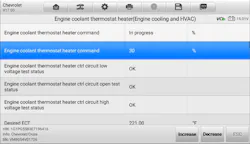
A common mistake is immediately suspecting the thermostat or water pump anytime a temperature-related DTC appears. Modern cooling systems require technicians to first understand what the PCM is attempting to accomplish. Having access to good, complete repair information is just as important for diagnosing thermal management issues as any other complaint in a modern vehicle. Just as important as being able to have access to good repair information is having access to as much scan data as the vehicle will provide. I'm a big proponent of using the Global OBDII side of a scan tool for engine performance diagnostics when applicable. But when it comes to system diagnostics like this, the manufacturer's specific side of the tool is your friend. And this is also where having multiple scan tool brands, or better yet, access to the manufacturer's OE-level diagnostics, can come in handy. Having access to items like desired versus actual coolant temperature, water pump command percentage, thermostat heater command, grille shutter position, and cooling fan requests becomes invaluable.
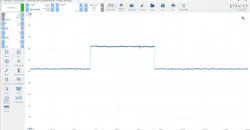
Modern diagnostics rely heavily on command versus system response. Being able to evaluate how quickly the system responds to PCM commands is a very useful diagnostic approach. When looking at systems like an electric thermostat, if the desired temperature drops during acceleration but the actual temperature remains elevated, that's going to give a technician a pretty good indication of where to go in their diagnostics. Many intermittent drivability complaints become much easier to diagnose when viewed through commanded-versus-actual system behavior.
Time Marches On
Twenty years ago, when vehicles exhibiting a P0128 DTC showed up in your bay, often the issue was directly related to the thermostat. If set in a cold climate, this DTC was frequently accompanied by a complaint of poor heater performance. Electrically assisted thermostats, regularly referred to as MAP-controlled thermostats, still use a traditional wax element, but there's also a heating element built into the assembly. This allows the PCM to influence when the thermostat opens based on what the engine is doing. What that means is while the thermostat will still operate like a traditional thermostat, the heating element will allow the PCM to heat the element and open the thermostat manually when additional cooling is needed. The manufacturer is now able to run a much hotter thermostat and keep the coolant in the block longer to improve emissions and reduce engine wear, but commands that the thermostat open when additional cooling is needed.
While this is a departure from what technicians—especially ones who had been in the industry for some time—are used to seeing, for years, technicians have been used to seeing thermostats that open in the 195-degree range. Now we're seeing thermostats that don't begin to open until 220 degrees and beyond. It also changes the diagnostic strategy needed by the technician. The P0128 is no longer as straightforward a repair. While the mechanical thermostat could still be the culprit, the technician needs to look at everything that affects warm-up performance, including command and response for heating elements, active grille shutters, and electric water pumps. Again, making comprehensive service information and adequate tooling an absolute must-have.
A New Diagnostic Mindset
Cooling systems are no longer simply responsible for preventing overheating. Today, thermal management has become a critical strategy for improving fuel economy, reducing emissions, enhancing performance, and protecting increasingly complex powertrains. Electric water pumps, electronically controlled thermostats, active grille shutters, and other thermal management components allow manufacturers to control engine temperature with a level of precision that was unimaginable just a few decades ago.
For technicians, this evolution requires a shift in diagnostic strategy. Components can no longer be looked at in isolation. Traditional symptom-based diagnosis can lead a technician in circles. Understanding system strategy, analyzing scan data, and comparing commanded values to actual system response have become fundamental skills. As thermal management systems continue to evolve alongside turbocharging, hybridization, and electrification, the technician who embraces a data-driven diagnostic approach will be far better equipped to identify faults accurately and avoid unnecessary parts replacement.
The good news is that the fundamentals of diagnosis haven't changed. Successful technicians still rely on understanding how a system is supposed to operate before determining why it isn't. The difference is that today's cooling systems are no longer purely stand-alone mechanical devices. They're electronically managed systems and demand a deeper understanding of both hardware and software. As vehicle technology continues to advance, mastering modern thermal management will become an increasingly important part of effective drivability and emissions diagnostics.
About the Author
 Erik Screeden
Erik Screeden
Technical and Multimedia Content Director
Erik Screeden is the Technical and Multimedia Content Director for the Vehicle Service & Repair Group. Erik is an ASE Master Automobile Technician with L1, and L4 credentials, who has been in the industry for over 25 years in various capacities. During that time, Screeden was a technician. He started out at a Ford dealership and continued to several independent repair facilities as well as spent time in the specialty aftermarket at a GM-specific performance shop. After his time as a technician came to an end, Screeden transitioned into a role providing scan diagnostic and J2534 tool support. He was then able to parlay his experience as a technician and a support specialist and use that in several technical sales roles.
Don't miss any of Screeden's video content sign up for Autoplay.