AASA increasing awareness of safely being a direct importer
LAS VEGAS (Oct. 30, 2007) — Parts today are made in countries on every continent but Antarctica. North American distributors need to be careful to protect themselves when it comes to direct importing, a protection that the Automotive Aftermarket Suppliers (AASA) Association is making efforts to focus on.
The AASA kicked off Industry Week by releasing a special report, “Direct importing: Do the risks outweigh the rewards?” on Monday morning. The special report looks at why distributors directly import products and dives into category management, quality control, product liability, intellection property protection and more.
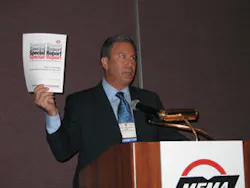
One event that played a part in implementing this special report is the situation New Jersey-based Foreign Tire Sales has gone trough this year. The importer went to the National Highway Transportation Safety Administration (NHTSA) with problems it was having with tires, and subsequently implemented a recall. The recall put a tremendous financial strain on the company. Problems like this can be much more common if distributors are not careful.
Handschuh said that instance was a defining moment following the problems with dog food, toothpaste, seafood and lead-based paint used in toys. Problems with automotive fuses produced in low-cost countries also have surfaced. “Clearly, the microscope of this issue is turning onto our industry,” he noted.
“AASA published this special report to address the concerns rising from today’s trend of distributors and others bypassing brand name manufacturers of popular automotive replacement parts from places like China, India and other low-cost countries around the world,” Handschuh said. “This trend has its roots in the quest for competitive advantages and higher profits that drive all of our business, so it’s understandable why many would be looking at direct importing.”
The campaign also includes advertising and a member conference at the end of February in Orlando. The release of the special report also was tied into a seminar Monday afternoon by AASA and the NHTSA.
To view the special report, click here.
About the Author
 Tschanen Brandyberry
Tschanen Brandyberry is Special Projects Editor for the UBM Americas – Automotive Group, moving into the position following roles as managing editor of Motor Age and associate editor of Aftermarket Business World. She joined the Automotive Group in 2006 after working in editing and writing positions at The Morning Journal in Lorain, Ohio, and The Daily Chief-Union in Upper Sandusky, Ohio, in addition to public relations agency experience. Tschanen is a graduate of the E.W. Scripps School of Journalism at Ohio University in Athens, Ohio.