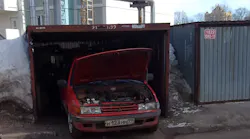
Although an obvious exaggeration, this joke contains a great element of truth about life in the USSR at that time. Some 25 years later, post-communist Russia is a world apart from its former self. The fall of communism and rise of a more Democratic government was followed by the increasing exploitation of Russia's vast gas, oil and mineral reserves. This has brought considerable wealth to the heart of the former USSR. However, reliance on income from these resources can be volatile. The worldwide recession in 2008 and the resulting drop in oil and gas prices forced the Russian government to attempt to revitalize its decayed manufacturing industry. Among these industries were Russia’s antiquated car production companies. One of these was the Gorky Automobile Plant (GAZ) located in Nizhny Novgorod. Founded in 1929, GAZ is now owned by the Oligarch, Oleg Deripaska. Having tried and failed to revive Russian branded cars, GAZ is now attempting to use its leading position in commercial vehicle production to exploit the potentially profitable specialist buses, lorries, ambulance and rescue vehicle sector. In 2010, only 16 percent of GAZ’s output of vans coming off the production line was fit to be sold without remedial work. Bo Andersson, a former GM man, was brought in three years ago to turn GAZ around. By 2012, the percentage of satisfactory vehicles had risen to 64 percent. Russia’s entry into the World Trade Organization (WTO) will result in it having to follow WTO rules with regard to reducing import restrictions and duties. GAZ will then have to compete in the Russian market with cheap Chinese commercial vehicle imports.
Like this article? Sign up for our enews blasts here.
This entrance of Russia into the WTO should make trading with the US simpler, cheaper and fairer, but there still remains a lingering relic from the past in the form of the Jackson-Vanik Amendment. This addition to the US Trade Act of 1974 was designed to put pressure on the Soviet Union to address human rights abuses in that country. Restrictions to trade with Russia imposed by this amendment have been waived every year since 1989 with legislation passed by the House of Representatives in November 2012 expected to finally cancel it. Lifting of the application of this amendment will then enable Permanent Normal Trade Relations with Russia.
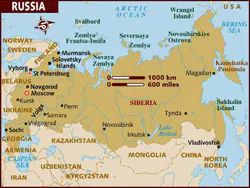
Increased confidence in the future profitability of the Russian car industry has resulted in foreign carmakers building new and revamping old vehicle production facilities. Among these is the Renault-Nissan alliance, which now has a controlling stake in AvtoVAZ, the producer of Lada, Russia's dominant car brand. The thinking behind this investment is that Lada will secure sales of lower-end vehicles while more expensive vehicles will be represented by foreign brands. Ladas are produced in Russia’s very own motor city Tolyatti, located 500 miles southeast of Moscow. Tolyatti is a one-industry town or — as it is called in Russian — a “Monogorod.”
The dominance of Lada in new car sales is a strong indicator of the level of the average Russian’s disposable income. Lada produces mostly low-end budget cars such as the boxy 4x4 Niva, whose design dates back to the Brezhnev era, as well as the Kalina compact, Priora and Samara. The cheapness of design and construction has led to Ladas being the subject of countless jokes, “The new Lada Kalina can go up to 100 kilometres an hour…if you push it off a cliff;” “Why do Ladas have heated rear windshields? To keep your hands warm when you have to push them!” It should be remembered that not so many years ago these very same jokes were applied to the cheap, basic cars produced by the Skoda factory. Since then, following a takeover by VW, the Skoda car brand has gained strength with vast improvements in style, reliability, design and, most importantly of all, sales.
While Ladas are basic in their construction, they are still a source of pride for their Russian owners, whose chances of owning their own car during the Communist era were very slim. The basic nature of these cars does, however, lend itself to further customization. Much work can be carried out to individualize them to an owner’s requirements, providing a great opportunity for the aftermarket in areas such as sports wheels, in-car entertainment systems, custom seats, tune-up items, servicing materials and more. In fact, Ladas are such a blank canvas that they lend themselves to all aspects of aftermarket customization. There is a high regard in Russia for “Made in USA” aftermarket products. Among these are automotive chemicals, lubricants and off-road accessories with many US brands being well known and having very strong sales.
The US Commercial Service is ready and willing to assist US companies get a foothold in the Russian marketplace. They also accompany Russian buyers to US trade shows to encourage meetings with potential exporters. Trade with Russia already means big business for some US states. Texas topped the list for exports to Russia in 2011, followed by Illinois, California, New York and Washington. In Washington state alone, 40 percent of all jobs are now linked to international trade, with exports to Russia jumping 80 percent between 2010-2011.
While there is undoubtedly a market for genuine US aftermarket components, supplies and expertise, exploiting the production capabilities of countries such as China and India should not be ignored. Where Russia has become wealthy from its exploitation of natural resources, its fellow BRIC countries have concentrated their efforts into manufacturing industries. These countries, and others like them, now manufacture many quality motor trade aftermarket components. With the burgeoning of car sales in Russia there is an increased market for aftermarket parts. The vast majority of aftermarket components produced by China and India are not branded items. This leaves the way open for enterprising US companies to rebrand these items under their own logos and sell them directly to the public in Russia via trade outlets.
No article about Russia would be complete without mentioning bribery and corruption. It is an unfortunate fact of life that both of these vices are endemic in the former Soviet heartland. When Bo Andersson took over the running of GAZ, one of the first things he insisted on was a zero tolerance for corruption. He did this by getting rid of various managers who ran side businesses selling supplies stolen from GAZ. He also brought in bonus systems for workers who stay sober and refrain from stealing, while firing those who didn’t abide by these rules.
There is a vast potential for enterprising US companies and individuals to take advantage of Russia’s burgeoning automotive aftermarket. These two countries, who were once great enemies, now have the chance to be great trading partners.
About the Author
Andy Adams
Related
 Alex Gruzdev