EV maintenance in the independent shop
Key Highlights
- Ensure your shop is equipped with proper high-voltage safety gear, tools, and up-to-date training before servicing EVs and hybrids.
- Invest in essential diagnostic tools like OEM access subscriptions and aftermarket scan tools that provide comprehensive EV data and fault diagnostics.
- Regularly perform battery health and thermal system inspections to prolong vehicle longevity and prevent costly faults, especially during warranty periods.
- Market your EV service capabilities through your website and social media, showcasing expertise and building credibility in the growing electric vehicle market.
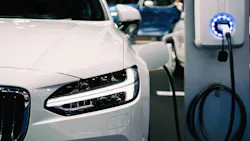
Looking back at my June 2025 article on this subject, I talked about the electrified future arriving faster than many shops expected. Well, for shops in certain regions, that future has arrived. Out-of-warranty BEVs and hybrids are showing up at independent shops across the country. The question isn’t whether we’ll service them; it’s whether we’ll do it safely, profitably, and without comeback-killing margins.
Safety first — No second chances!
Although many of the maintenance routines don’t require you to don high-voltage (HV) personal protective equipment, your knowledge and awareness of these systems must be current. HV systems don’t forgive mistakes. I can’t stress this enough — if your shop isn’t equipped and trained for HV work, which begins with safety, don’t touch it until you are. Always refer to the latest service information procedures during service.
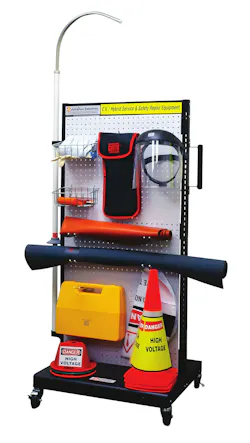
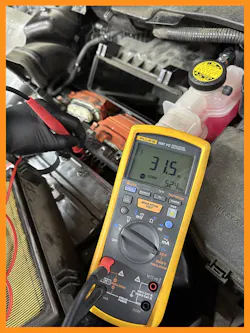
When HV work is required, you’ll need to be equipped with the basics. Class 00 insulated gloves (tested and certified), insulated hand tools, CAT IV-rated multimeters, test leads, probes, etc., are mandatory (Figure 1). Lockout/tagout (LOTO) procedures are for everyone’s protection. Leveraging the power of mega- and milli-ohmmeters is also a top priority. Developing an understanding of the dynamics here is extremely important. Consider loss-of-isolation faults and how contaminated drive units or refrigeration loops could present faults under certain conditions that may not be present after being towed into the shop.
Credentialing
Getting up to speed will take dedication, and proudly displaying those certifications, accomplishments, and capabilities will go a long way towards discovery. We pick up new clients every month, and a common theme I’m hearing is “I used AI to find a competent shop.” That should tell you a lot about how you need to think about marketing your skills and capabilities. Posting your credentials, such as ASE L3 (Light Duty Hybrid/Electric Vehicles), on your website and social media sites should help feed the AI brain about your company and capabilities.
The right tools for the job
Couple yourself with the right tools for the vehicles you service. You don’t necessarily need every new scan tool on day one, but you do need tools that provide actionable data on EVs such as faults, cell balancing, pack voltage, thermal data, charging information, and more.
- OEM Access — Tesla: A Tesla Toolbox subscription (Figure 2) provides a wealth of access and embedded diagnostics. Service Mode, detailed data logs, remote diagnostics, and procedures that aftermarket tools often can’t match. In my opinion, the remote access is a game-changer, and I would welcome other manufacturers to do the same.
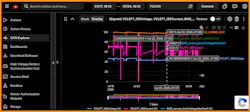
- Aftermarket scan tools: Look for platforms with strong EV coverage, such as battery pack data, bidirectional controls, and thermal management diagnostics. The Autel EV Diagnostic Kit (Figure 3) is one that I have, and I have found that it can provide battery pack data above and beyond what is offered elsewhere.
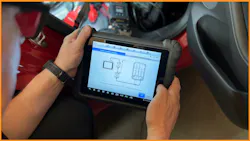
- Specialized gear: Megohmmeters, milliohmmeters, motor testers, and oscilloscopes will be required at some point (Figure 4). Training to leverage their power is essential. Some of the tools you already have can likely serve in this space, but beware: you will need certain insulated tools to perform some service and repair routines. Battery lift and support tools will also be needed. And let’s not forget, proper personal protective equipment will be required as called out in service procedures.
Battery health and thermal management — The core of EV longevity
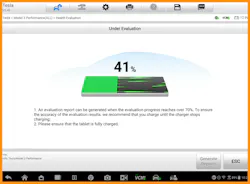
The battery is the most expensive component on the vehicle, so keeping it healthy is priority one for customers and your reputation. Some aftermarket tools offer state-of-health (SOH) test routines that will provide a health assessment. My recommendation is to start performing these tests for your clients while the vehicle is within its warranty period. Doing so will help you understand what the data is revealing, what’s normal, and what's not. Also, keep in mind that BEVs and scan tools are software-defined, and things can and will change over time (Figure 5).
Thermal management
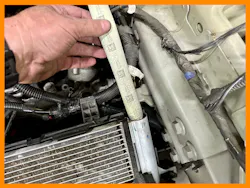
HVAC, cooling systems, and drive units often work together depending on the vehicle platform, so each subsystem must be fully understood. For example, the radiator on many EVs is not mounted perpendicular to the ground plane and is therefore more susceptible to debris accumulation, which can significantly reduce cooling performance. The same applies to non-liquid-cooled condensers. Regular inspection (and cleaning when needed) of these areas is recommended.
The refrigeration system also requires periodic maintenance. The desiccant filter (Figure 6) package is typically replaced every five years, but you should always confirm the exact interval in the manufacturer’s service information. The desiccant absorbs moisture; if it becomes saturated and is left unchecked, excess moisture can contribute to high-voltage isolation faults. Regular visual inspections of hose routing, quick-connect fittings, compressor mounts, and piping supports help ensure long-term reliability of BEV thermal systems.
The rest of the EV maintenance checklist
EVs aren’t maintenance-free — they’re just different.
- Brakes: Regenerative braking means pads and rotors last much longer, but fluid still needs regular attention, along with caliper sliders, especially in harsh wet/snow environments. Always be sure to check the required brake fluid specifications. Most modern vehicles — particularly those equipped with advanced ABS, ESC/ESP, and ADAS systems, including the majority of new EVs — require or specify low-viscosity (LV) brake fluid (typically DOT 4 LV / ISO 4925 Class 6). Always verify the exact OEM material standard for the vehicle being serviced.
- Tires and alignment: Higher curb weights and instantaneous torque delivery in EVs commonly accelerate tire wear. Periodic suspension inspections are recommended, as the increased mass and torque often cause premature wear of lower control arms, compliance arms, and associated bushings — problems also frequently seen on non-EV vehicles.
- Low-voltage systems: In EVs, the DC-DC converter in the power conversion system replaces the alternator found on conventional ICE vehicles, stepping down high-voltage battery power to supply and charge the low-voltage (LV) system. Its performance can be quickly validated with a carbon-pile load tester when battery posts are accessible. While Tesla LV systems perform automated background health monitoring, Service Mode and Toolbox provide diagnostic routines that assess LV battery status and DC-DC support; becoming familiar with these procedures is valuable during vehicle inspections.
- Drive units: Although many manufacturers list drive-unit fluid as a “lifetime” fill. Clean, fresh fluid consistently delivers better long-term protection and service life than fluid that has been neglected. On Tesla vehicles, the stator is frequently energized as a resistive heater (“toaster”) to warm the drive-unit oil, which in turn helps precondition the battery for supercharging. Vehicles that supercharge regularly subject the fluid to more thermal cycles and should have the drive-unit fluid (and filter, if equipped) replaced more frequently than those that primarily use Level 2 charging.
The bottom line
The first step is to determine your addressable market. Applying AI tools to credible DMV data can be an effective way to start. Once you have confirmed that BEV service is viable for your business, actively market your capabilities and certifications. Share case studies on your website and social media channels and highlight testimonials from satisfied EV owners — these go a long way toward building brand credibility.
Never stop learning. Invest in your team and their ongoing education.
Look at the vehicles in your own fleet. If you offer loaners, consider cycling in hybrids and BEVs. Driving these vehicles regularly can provide valuable hands-on perspective that strengthens your service business. In our front office, conversations about BEVs have grown steadily, and clients are consistently pleased to learn that we can properly care for and maintain them.
About the Author
 Scott Brown
Scott Brown
Founder - Diagnostic Network
Scott is an ASE Master Certified Automobile Technician with L1, L3, & L4 credentials and has over 39 years of professional service industry experience. As an independent shop owner in Southern California and with his engagement at various levels of within our industry, he continuously strives to move the industry forward through networking, education, communications, and training. Scott is a founder of the Diagnostic Network (https://diag.net/) which was born in 2018 after he retired after 22 years at iATN, where he served as company president.
Brown is also the host of Professional Tool and Equipment News (PTEN) and VehicleServicePros.com podcast, Torque Factor. The podcast addresses the latest automotive service technologies while focusing on expanding knowledge and awareness around tools, equipment, education, and industry trends.