Lucky Trucks and Lazy Techs
Key Highlights
- The 2020 Ford F-150 features a 5.0L engine that balances power and fuel efficiency, averaging 22 mpg overall and 25 mpg on highways.
- Despite high mileage, the truck has remained flawless, requiring only routine maintenance, and continues to deliver excellent handling and comfort.
- The story illustrates how sometimes, even in complex systems, automakers can achieve near-perfection, making the experience of ownership truly rewarding.
- The author shares a pet peeve about misusing wrench sizes to describe bolt sizes, emphasizing the importance of correct terminology in automotive work.
- Understanding proper bolt and fastener terminology is crucial for technicians and enthusiasts to avoid confusion and ensure proper repairs.
Imagine once in a while the stars align, and you get lucky. Lucky, as if you woke up one morning and found yourself in a bed of four-leaf clovers. You stumble out of bed and trip over a foot locker filled with cash. You take a shower and step onto a scale, only to find that you've somehow managed to lose 25 lbs, and your favorite jeans now fit perfectly. You get dressed, get into your ride, and cruise toward your workplace.
A few blocks down the road, you get pulled over by a local sheriff's deputy. You roll your window down and grab your license as the officer approaches. The officer's wearing a grin, and he informs you that because of your excellent driving, you've been selected to receive a $500 gift card, and he offers to provide a police escort to your destination (blue lights and siren—the whole nine yards).
You arrive at your shop to find that a home remodeler TV show crew had been working all night to repave your parking lot, repaint the building, and install a gorgeous landscaping treatment, all free of charge. An hour later, a lawyer shows up to inform you that you've inherited three million bucks from an uncle you never knew existed. The next weekend, you decide to go fishing, and you nail a record largemouth bass on the very first cast.
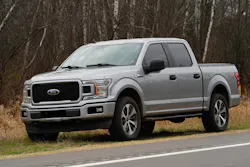
You get the drift. That's (almost) how I feel about my 2020 Ford F-150. Yep, even automakers sometimes get it right. Equipped with a 5.0L naturally aspirated engine, the truck manages to average 22 mpg and squeezes 25 mpg on the highway. It does everything right—handles great, ideal steering response, braking is always confident, interior is ultra comfy, and the 400-plus horsepower gleefully hooks up and mashes me into the seat whenever I tell it that it's time to get up and go.
Even after stacking up almost 95,000 miles, not one glitch—nada, nothing. Aside from simple preventative maintenance (oil change every 3,500 miles, tire rotation, brake pads, transmission flush, etc.), nary a peep of doom and gloom, unlike every one of my previous trucks. After owning about a dozen trucks over the years, this puppy makes me smile every time I plop into the seat and fire up the torquey 5.0. Best truck I've ever owned. Sure, maybe this one is a fluke, but it makes me realize that even with today's increasingly complex systems and potential for issues, it's possible for automakers to achieve near-perfection. Sometimes you simply get lucky.
Things That Bug Me
Every once in a while, I feel the need to vent. I know that I'm not alone in this. Everyone has one or more "pet peeves"—things that people say or things that occur that just bug the willies out of you. One of mine is how some folks constantly refer to fastener sizes by the wrench size required to service a bolt or nut. This mistake regularly rears its head on internet posts and videos, even in posts made by so-called experts. The bolt head has nothing to do with bolt size. While head-driver style may vary in terms of design and size (hex head, 12-point, flat top, socket head cap screws, etc.), thread size and driver size are two separate issues.
Any experienced tech knows full well that 1/2" bolts required for a typical intake manifold would be a ridiculously massive overkill for the application. Such a reference instantly recognizes that the person making the statement is actually referring to the wrench required. Nonetheless, statements like that can make a pro tech's toes curl up. Bolt, stud, and nut sizes are identified by thread diameter. Period. The size of the required wrench should never be used to identify bolt size.
Do you agree? Or am I too nitpicky? Let me know.