Smarter roadside assistance: video support allows technicians to help remotely
The auto industry is under pressure. Ongoing supply chain issues continue to drive up manufacturing costs – and the sticker price for new units.
At the same time, inflation and an impending recession mean consumers are starting to spend less. If consumers are going to splurge on a new car, they’ll want more than a simple buy-and-drive. They’ll need a suite of after-sale services that makes their investment worth their while.
To adapt to supply constraints and consumer demands, dealers and automakers need ways to cut costs while providing a full-service after-sale experience. One solution: use video tech to enhance traditional roadside support.
With remote video software, auto technicians can quickly assist customers at a fraction of the cost. Here, I’ll explain how techs can use video support to more efficiently deliver value – and how one automaker is already reaping the benefits.
Higher customer satisfaction
Traditionally, tech-forward premium vehicles have had the most maintenance problems. But as more mass-market automakers incorporate advanced vehicle tech, more customers are calling in with issues.
Infotainment systems, for example, are the most problematic feature in today’s vehicles. Other features, like advanced driver-assistance systems (ADAS), require frequent support to ensure safe vehicle operation. And with an expected boom in electric vehicle (EV) sales, more customers will likely experience issues with battery cooling and charging ports.
With so much room for malfunction, customers need higher-quality roadside support. In fact, it’s an expectation: 60 percent of customers have higher service standards than they did pre-pandemic.
That’s where app-free video support comes in. With video support tools, auto techs can reach customers and help them get back on the road more quickly.
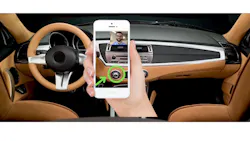
Here’s how video support works:
1. A driver uses his or her smartphone or tablet to call an auto tech support number.
2. The driver receives an SMS text with a video call link – no app download needed.
3. The tech easily looks at the problem feature via the driver’s device camera.
4. Together, the tech and driver troubleshoot the problem with tools like on-screen markup and optical character recognition.
5. A tech dispatch only happens if video support can’t resolve the issue.
App-free, frictionless video communication fosters something I call “visual empathy.” In an audio-based roadside support model, there’s a lot of room for miscommunication. A customer might struggle to describe a battery issue, making it hard for the tech to identify a solution. These challenges can be frustrating for everyone and slow the overall time to resolution.
But app-free video support changes things. When techs and customers talk face-to-face, they start to see each other as people and partners. Together, they can reduce friction and collaborate to find a solution.
Tapping into the power of visual empathy can lead to faster issue resolution, too. With lower-friction interactions, auto techs can easily focus on solving the problem at hand. The result: efficient, high-quality support that keeps customers coming back.
Technician capacity is improved
The traditional roadside support model typically requires a phone call and a tech dispatch. The problem: with a nationwide tech shortage, dealers and automakers might not have the staff on hand to complete every field job.
From 2018 to 2020, there was a 12.5-percent dip in the number of newly certified techs. In an auto tech shortage, techs have to optimize their work to continue delivering high-quality assistance to every customer. And with rising service demands, techs need ways to limit their time in the field so they can maintain job capacity.
With video support tools, techs can efficiently triage customers’ auto problems to determine whether a dispatch is necessary. For example, let’s say a customer is calling about an infotainment system issue. Over video, the tech might realize that the problem can be solved with a simple reset code. The customer receives efficient support – and the tech doesn’t have to waste valuable time commuting to and from the customer.
At scale, these time savings add up. Without lengthy commutes, video-enabled techs can deliver quality support to more customers. The boost in job capacity will lead to more revenue generation over time.
App-free video support saves money
For auto techs, field dispatches aren’t just a time suck. They create often-unnecessary costs that can impact revenue generation – a problem as the industry faces steeper manufacturing costs and tougher sales.
With each in-person assistance call, techs spend on fuel, equipment, and vehicle wear and tear. In our research, we’ve found that these costs total about $130 per truck roll. Such expenses can quickly snowball.
Video support tools can help techs keep dispatch costs low. For example, if a customer’s conventional car has an engine overheating issue, a tech can point them to the right coolant and avoid a costly field visit. With the money saved, they can dedicate more resources to completing dispatches for major vehicle breakdowns or EV battery issues.
App-free video support in practice: BMW’s recipe for success
Video-assisted roadside support isn’t a hypothetical. This year, BMW of North America worked with Blitzz to equip their auto techs with powerful video tools to further enhance roadside their roadside assistance program. They’re already seeing the benefits.
Before this partnership, BMW provided customers with an audio-based roadside assistance program. This service was effective and well-received – but BMW saw room to further enhance their customer service offering.
With Blitzz’s app-free software, BMW customers can use their smartphone to remotely connect with a certified auto tech. Troubleshooting is simple from here. Over video, one tech spotted a pebble blocking a customer’s EV charging port – something tough to identify using voice calls alone. In minutes, the customer removed the pebble and recharged their EV. The customer didn’t have to wait for in-person assistance, and the tech could use the time saved to help more customers.
The benefits of video tech are clear. Nearly two years into the partnership, BMW techs have improved their time to resolution while boosting capacity – up to several hundred calls per month. The result: fast roadside assistance that boosts customer satisfaction and limits field dispatches.
The future of auto depends on top-of-class support
A 2021 McKinsey report shows that automakers and dealers are competing in a new space: the customer experience. As part of a larger convenience service package, industry leaders must deliver quality and efficient roadside support throughout the entire customer lifecycle.
An all-inclusive support suite can boost revenue by as much as 30 percent over the next 10 years. With a video-enhanced support model, auto leaders can stay competitive in this next phase of industry.
About the Author
 Rama Sreenivasan
Rama Sreenivasan is cofounder and CEO of Blitzz, a live, remote video support and inspection platform. Sreenivasan has led the company through its initial inception, launch, and subsequent growth to several million video support minutes per month. Major customers include BMW, Sealy, Fedex, and Rogers telecommunications. Before founding Blitzz in 2017, Rama spent several years working as a scientist and educator. His biggest joy comes from helping others solve their problems and he is passionate about finding effective ways to disseminate knowledge. Sreenivasan has a PhD and MS in chemical engineering from the University of Maryland, College Park. He also did his post doctoral research at MIT in Cambridge, Boston.