This Week's Recalls: July 13-17
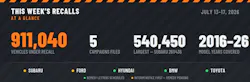
Key Highlights
- Subaru is mailing overlay labels to owners to correct incorrect Gross Axle Weight Ratings, preventing potential overloading risks.
- Ford will inspect and replace broken roof rail clips to prevent covers from detaching and causing road hazards.
- Hyundai is replacing rear center seat belt buckles due to manufacturing defects that could impair occupant safety.
- BMW is replacing electrical relays in plug-in hybrid models to prevent corrosion-related electrical failures and overheating.
- Toyota will inspect and replace affected rear axle carriers to avoid breakage and maintain vehicle stability.

Subaru of America
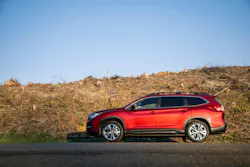
Subaru of America, Inc. is recalling 540,450 vehicles: 383,800 model year 2019–2026 Ascents, 77,504 2025–2026 Forester Hybrids, 49,849 2025–2026 Foresters, and 29,297 2026 Crosstrek Hybrids. The affected vehicles were manufactured with an incorrectly stated Gross Axle Weight Rating (GAWR) on the Part 567 certification label, a noncompliance with FMVSS No. 110, "Tire selection and rims." An incorrectly stated GAWR may lead to vehicle overloading, increasing the risk of a crash.
NHTSA notified Subaru of the potential issue on May 12, 2026, prompting an investigation of calculated GAWR ratings on Subaru vehicles dating back to 2003. Subaru decided to conduct a noncompliance recall on June 30 and has received no technical reports, and is not aware of any crashes or injuries, resulting from the condition. Production labeling was corrected on June 9, 2026.
Rather than requiring a dealer visit, Subaru will mail owners a corrective certification overlay label with instructions for applying it over the existing label. Owners who prefer can have the label affixed by a dealer, free of charge. Owner notification is expected within 60 days, with interim letters mailing Aug. 25 through Sept. 1, 2026. The recall is being conducted under NHTSA Campaign ID 26V436 (Subaru recall WRH-26).
Ford Motor Company
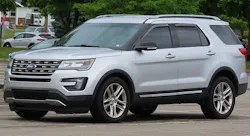
Ford Motor Company is recalling 288,314 model year 2016–2019 Ford Explorer vehicles whose roof rail covers may loosen over time and detach from the vehicle while in motion, creating a road hazard for other drivers and increasing the risk of a crash. The population covers Explorers not included in prior safety recall 21V316/21S22: vehicles with satin- or chrome-plated covers in their original condition, and vehicles of any cover type previously repaired with two-part epoxy under customer satisfaction program 20N11. That epoxy repair proved technician-sensitive; in some cases damaged retention clips were not replaced, or the correct adhesive location, quantity, or cure conditions were not achieved. Plated covers, originally excluded from 21V316 based on stronger pull-force data, have also loosened as retention clips aged through repeated heat cycles. Vehicles repaired with push-pin fasteners under 21V316 were found to be performing as intended.
Warning signs include increased wind noise, squeaks and rattles, and a visible gap or misalignment between the roof rail cover and the roofline. Ford is aware of one allegation of an accident involving a cover detaching from a vehicle previously repaired with epoxy, and no injuries.
Dealers will inspect the roof rail covers for the additional push-pin fasteners. If present, no further action is required; if not, dealers will replace any broken roof rail clips or damaged covers and secure the covers using four plastic push pins per side, free of charge. Interim owner letters are expected to mail Aug. 24–28, 2026, with remedy letters following Sept. 21–25, 2026. The recall is being conducted under NHTSA Campaign ID 26V448 (Ford recall 26S54).
Hyundai Motor America
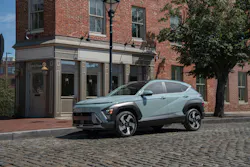
Hyundai Motor America is recalling 47,749 vehicles: 47,733 model year 2026 Hyundai Kona and 16 2025 Kona Electric vehicles. The rear center seat belt buckle assembly (part number 898B0-BE000, supplied by Joyson) may have been manufactured outside of specification because the supplier's stamping die was not maintained properly and wore from overuse. Reduced seat belt performance could increase the risk of injury to occupants in a crash. There have been no crashes or confirmed field incidents in the U.S.; Hyundai identified the condition through supplier dynamic testing and field-part recovery, and inadequate inspection controls that allowed the die to run beyond its service life were corrected in January 2026.
Dealers will replace the rear center seat belt buckle assembly, free of charge, and owners are advised to avoid using the rear center seating position until the repair is complete. Owner notification is scheduled for Sept. 11, 2026, and VINs become searchable July 15, 2026. The recall is being conducted under NHTSA Campaign ID 26V452 (Hyundai recall 306).
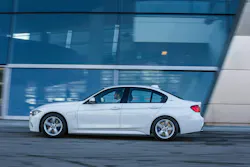
BMW of North America, LLC
BMW of North America, LLC is recalling 29,119 plug-in hybrid vehicles: 14,406 model year 2018–2020 530e iPerformance, 7,852 2016–2018 330e iPerformance, 5,803 2018–2020 530e xDrive, and 1,058 2017–2019 740Le xDrive sedans. Water can contact the electrical relay in the Valeo engine starter and cause corrosion over time, which can affect the electrical connection within the relay and the ability to start the engine. In certain cases, corrosion inside the relay could lead to a short circuit and overheating of the starter, and in an extreme case a thermal event, whether the vehicle is being driven or parked with the ignition off.
The action extends BMW's September 2025 starter recall (25V636) to four-cylinder PHEV configurations after continued field monitoring; roughly 150 starters were returned from the field, disassembled, and evaluated between January and April 2026. BMW is not aware of any accidents or injuries related to the issue. Dealers will replace the engine starter with one of a different design, free of charge, and owners are advised to park outside and away from structures until the remedy is complete. Owner notification is planned for Aug. 28, 2026. The recall is being conducted under NHTSA Campaign ID 26V441.
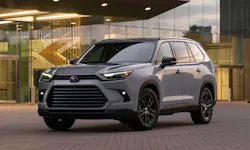
Toyota
Toyota is recalling 5,408 vehicles built April 10–27, 2026: 2,449 model year 2026 Toyota Grand Highlander Hybrids, 1,510 Grand Highlanders, 1,191 Lexus TXs, 212 TX Hybrids, and 46 TX Plug-In Hybrids. The vehicles are equipped with two forged-aluminum rear axle carriers (part numbers 42313-0E090 and 42314-0E130, supplied by Bharat Forge Aluminum USA); some production batches skipped the aging furnace process, leaving tensile and proof strength below specification. An affected carrier could break at its attachment to the toe control arm, resulting in loss of toe control and reduced rear stability, increasing the risk of a crash in some operating conditions. Toyota estimates 5% of the involved vehicles contain an affected part.
The condition surfaced when a tier 2 supplier observed abnormal machining behavior during routine work and hardness testing came back below design specification. Toyota reports no field technical reports or warranty claims related to the condition in the U.S. Dealers will inspect the rear axle carrier sub-assemblies for specific production codes and replace affected sub-assemblies, free of charge. Owner notification is planned for Aug. 23 through Sept. 6, 2026. The recall is being conducted under NHTSA Campaign ID 26V437.
About the Author
 Noah Nelson
Noah Nelson
Technical Editor | Motor Age
Noah Nelson is the Technical Editor for Motor Age Magazine. As an ASE Master Certified Automotive Technician (A1–A9) with 25 years of hands-on industry experience, Noah specializes in advanced electrical systems, vehicle communication networks, and physics-based diagnostic workflows. He is currently documenting his pursuit of the prestigious ASE/AutoCare Association World Class Technician registry.