Ontario, California — A unique variant of China's global trade campaign may have rounded a corner. InQbrands, a cross-border service broker, is securing any opportunity to land the best of Beijing's — and far beyond — manufactured car and truck parts on American soil.
InQBrands, a subsidiary of Focus Tech, a public internet company — with reportedly no funding by the Communist government — is bridging business opportunities for Chinese suppliers eager to win over U.S. buyers. Why would the industry benefit from one more source from China in a deeply saturated buyer’s marketplace of nearly every product category?
Unfazed about competing in an overcrowded market and even less rattled about end-user pushback on made-in-China vehicle components, Floria Xie, senior vice president of InQbrands, says unfettered access to available vehicle parts still is a genuine need. "Buyers have the same headache, no matter how many suppliers they have,” she said. “They need a backup and they risk losing points on margins if they work with local vendors who may charge more for the same products.”
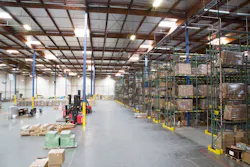
Connecting Chinese manufacturers to the U.S. mainland to keep auto parts flowing brings inherent challenges. Language barriers and cultural differences play into the supply chain dynamics with the factories unfamiliar doing business inside the states. Since opening its headquarters and distribution center in Ontario, California, says Xie, her team is busy sealing deals and growing the direct import program for NAPA, O'Reilly and AutoZone. "We understand the U.S. market, and we understand the buyers' needs and their compliance. We are working together to expand our partners into omnichannels," Xie said.
A piece of InQbrand's supply strategy stems from its narrow pick of product category. While much energy lately has been on obtaining high-demand brake systems, InQbrands sought joint ventures elsewhere with makers of engine management, namely oxygen sensors and variable valve timing solenoids. Further along, the company staked its claim in a curious mix of radiators, suspension, lighting, and body panels for the heavy truck segment.
Some stateside wholesalers, however, express doubt that this model can fix every logistical problem. Kyle Byrne, vice president of distribution for Arnold Motor Supply, a Midwest multistore outlet, intends to retain relations with its network of domestic vendors with overseas operations. "We work with a supplier that imports directly from China to us. We liked this plan until Covid took over the world. It was a very constant and reliable program that would allow us to capitalize on some cost savings," Byrne said in an email to AMBW.
Sourcing popular categories independently from a single outlet can be accomplished, but Xie forewarns about other risks linked to unpredictable costs. Additional fees, duties and compliance are likely to creep into the net cost of imports, Xie asserts.
Questioned about managing steel and aluminum tariffs imposed by President Trump in March 2018, governmental regulations were easy for InQbands, compared to the supply chain uncertainty upended by the ongoing pandemic.
Now Xie finds herself seated in the epicenter of the chaos, which she contends has been less painful for her native country's port operators and manufacturing facilities than what America faced. The 2020 shutdown that coincided with the Lunar New Year lasted one month, followed by a gradual ramp-up, then dumped on with massive orders in late spring. It would be unfair to say that InQbrand's services were immune from the global distribution difficulties, because they too, felt the weight of expense control fall onto the company like what the rest of China was experiencing.
Recalls Xie, a scarcity of West Coast-bound ships, limited container inventory and a lack of helping hands created a tradeoff between low-cost passage versus expensive on-time arrivals. Concerns about what InQbrands will do to mitigate the gummed-up distribution routes, Xie explained that the small size and light weight of oxygen sensors has given the company the choice of air freight. Xie added, "We work with multiple suppliers, so in that way, the risk is not that high because we can always work with different vendors to accomplish what we want."
One of the features of InQbrand's ability to transact beyond procurement, she further explained, is that the parent company, Focus Technology, has centralized resources, such as locating outbound ships or housing products when they are ready to leave the county. However, restraining prices from climbing higher has tested InQbrand's resilience as the most affordable direct importer, concedes Xie. "It's crazy," said Xie, reflecting on the pre-pandemic cost of a forty-foot container at $4,000. "We just shipped a container from China at $26,000."
2020 exports to the United States were down 19 percent to $434.7 billion. But through July, the flow of purchases grew by 22 percent compared to the same seven months last year. Overall, despite the political tensions between the two great economic powers, product shortages and inflationary pressures, InQBrands has prospered since setting foot in California six years ago.
"With most of the factories we're working with, business actually increased greatly since last year. I see more growth." Xie did not provide details of which categories grew the fastest and by how much in U.S. dollars.
No doubt, says Paul McCarthy, president of the Automotive Aftermarket Suppliers Association, that the industry has arrived at a turning point of reconsidering its ties with China. He said that transacting with the trading counterpart is evermore complex due to the trade agreements and tariffs between both countries.
McCarthy says that steep transport fares and shipment disruptions prompted several unnamed companies to scale back its import activities — but not entirely. "We do think this environment has created a renewed appreciation for what the best full-service suppliers bring to the table, including much beyond simply the product in the box," said McCarthy.
Predictions about what happens next between the two interdependent industries consumed by the relentless unpredictability gave Xie some pause, hedged with one insight: "I don't know how long the pandemic will last. Maybe a few years," said Xie.
"I think that the Covid pandemic has changed us a lot. Not just the consumer's habit but also the entire supply chain."
About the Author
 Alan Segal
Alan R. Segal specializes in project management for suppliers, consultants and retailers. He practiced category management for Sanel Auto Parts Co. and Advance Auto Parts before launching his own firm, Alan R. Segal-Best Business Practitioner. He has worked in the auto care industry since 1991. Connect with Alan on Facebook or LinkedIn.