Key Highlights
- Suellyn Sprague was one of the first professional women coders to work full-time from home, starting in 1992—decades before remote work became common.
- She had a hand in architecting Epicor's Vision ERP, now run by many of the largest distributors in the automotive aftermarket.
- Sprague later turned around a fractured catalog-modernization team that had been written off as unable to adapt—a project she still points to with pride.
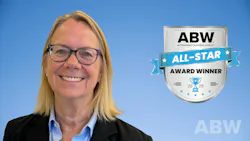
In 1992, Suellyn Sprague was ready to quit her job and go home to raise her kids. She was one of a small handful of women writing code professionally at the time—a rarity—working for a small woman-owned software company in Chicago. When the company was acquired, she told her boss she planned to leave; the response surprised her: Do you have a modem and a computer at home? She did. So, she went home and kept coding from there for almost a decade, long before remote work was a phrase anyone used the way it's used now.
"I was an early woman coder and a very early work-from-home, full-time person as well. (And) very fortunate to have a woman leader in a software company that early in my career," Sprague says.
Sprague didn't expect her career arc to land her in the automotive aftermarket, but admits she was "a bit of a warehouse geek." The software company she worked for built ERP software for distributors, and when an opportunity opened to move into automotive parts distribution specifically, Sprague spent one to two weeks a month onsite with a distributor, learning the business firsthand before she'd write a single line of code. "I would go back to our office, and I would be writing code and writing requirements and building this aftermarket distribution product," she says. "The more I got into it, the more I got to understand it: the industry, the people, and everything about the automotive aftermarket."
The more she learned, the more the industry pulled at her heart until by 2000 or 2001, she'd made a deliberate decision: this was the industry she wanted to build a career in, not just a project she happened to be assigned. "I became very passionate early on," she says. "I saw it as a real growth opportunity."
From Code to Culture Shift
In 2005, the company she worked for was acquired by Activant, an automotive- and retail-focused business that would merge with Epicor in 2011. She watched the industry itself flip during that time, from what she calls "a parts and service business" into "a technology and data business that just happens to sell parts and service." In the course of 20 years, Sprague says customers who were once resistant to touching a system and wading through the data eagerly crave it now.
"Our customers are hungry for what we can do and help them with technology and data," she says. "When I first started in this industry, that was a little bit harder of a conversation. Today, it's a fun conversation to have with customers because they're very excited about the opportunity to grow their business."
Sprague prefers to roll up her sleeves and get into the trenches with the team. As a first-time manager of developers, she was deliberate about never asking her team to do something she wasn't doing herself—staying up alongside them past midnight to fix a problem rather than waiting for a phone call. "I always made sure that I was there beside my team all along the way," Sprague says. As her responsibilities expanded to support teams, implementation teams, and eventually sales, she had to learn something harder: how to lead people whose expertise she didn't personally have, by hiring smart people and learning to actually listen to them.
"Being able to listen and allow your leaders or your people that are on your team to make their own decisions and to really empower them to take ownership of those decisions, I think makes everybody on the team better," she says.
About seven or eight years ago, her focus shifted decisively toward data—where she now spends most of her time. She describes the jump from writing code to working with data as less of a leap than it sounds: both are fundamentally about logic, about how pieces fit together in a system. "It's the same kind of skill set that you have when you're writing a program," she says. What keeps her excited, even three decades in, is seeing the fruits of her labor become something customers can act on—but only after trust is established. Her rule for helping auto repair shop owners adopt data-driven decisions is blunt: helping them first resolve security and ownership questions. "That's really the first, hardest conversation that we have to have with the customer before we can even get to how the data can help you," she says. Nobody adopts a mindset shift around data until they believe their data is safe. After that, she says, it's simple—show people insights drawn from their own numbers, not a generic industry example, and the value becomes self-evident.
"It's the old adage: proof is in the pudding," Sprague says. "Now the light bulb starts to go on. It's not just theoretical. It's, 'Oh, I can take action on the data that you're showing me, and it's data that I trust, and I know it's secure.' Then we slowly get to have people start to adopt."

Two Projects, One Philosophy
Two projects capture what that work has actually meant to her. The first is Epicor's Vision ERP, a product Sprague personally architected, back when, she says, people flatly told her certain major distributors would never move onto a new system. Today, many of the largest distributors in the aftermarket run that same product across hundreds of locations. The second, more recent project may say more about her as a leader: she inherited a catalog-modernization effort where a team of programmers had been written off as unable to think differently enough about the project to execute it. Sprague replaced the outgoing team leader and realized the fix wasn't reorganization; it was re-anchoring everyone around two shared questions: What are we trying to accomplish? What do our customers need? The project succeeded under her guidance, and four years later, she says, you'd never know the team had ever struggled. She still takes great pride in those victories. "Whenever somebody tells you you can't do something, or it won't happen, it's very gratifying when it does happen," Sprague says.
Ask Sprague to speak to her younger self, and she doesn't reach for an inspirational line. She admits, plainly, that she wasn't sure she'd have the resilience to keep being the only woman in a room full of executives, year after year—a position she still sometimes finds herself in today. She considered other industries, but believes she's where she belongs. Today, she supports scholarship programs aimed at helping other women not just enter the aftermarket, but feel like they belong in it.
"I want to get to know people at an individual level and not get so caught up in the day-to-day craziness that we forget that we're all human trying to get through every day."
Though she's often seen as intensely driven and task-oriented, Sprague insists that understanding and connecting with the person in front of her—whether that's a teammate, a customer, or a stranger at the grocery store—is what matters most to her. "And I think people are surprised when they see that side of me," she adds.
It circles back to the line she's repeated to her team for 30 years, often enough that they roll their eyes when they hear it coming: always know why you're doing what you're doing. It's not a slogan so much as an operating system—the same one that turned a dejected team into a functioning one, and the same one that's carried her from a Chicago home office to the top of her field.
About the Author
 Chris Jones
Editorial Director
Chris Jones is group editorial director for the Vehicle Service & Repair Group at EndeavorB2B.
A multiple-award-winning editor and journalist, and a certified project manager, he provides editorial leadership for the auto care industry's most trusted automotive repair publications—Ratchet+Wrench, Modern Tire Dealer, National Oil & Lube News, FenderBender, ABRN, Professional Distributor, PTEN, Motor Age, and Aftermarket Business World.
Subscribe to receive news and updates from any of these industry-leading brands.