How smart scan tools are changing vehicle repair
Key Highlights
- Smart scan tools streamline diagnostics by consolidating data, repair histories, and reference materials into a single interface, reducing time and errors.
- These tools help address the technician shortage by enabling less-experienced staff to perform complex diagnostics with remote expert support.
- Remote connectivity allows diagnostics to be performed while the vehicle is in use, providing more accurate data and faster troubleshooting.
- AI-driven decision support narrows down potential issues, making diagnostics more precise and reducing guesswork.
Imagine the following: you live in a relatively remote town, and you’re feeling ill. There’s a healthcare shortage, which means plenty of nurses are available to administer treatment, but no doctor is present to diagnose the actual issue. Telehealth bridges that gap by allowing a remote physician to review your symptoms and provide an accurate diagnosis, enabling the nurse to carry out the treatment.
The same thing is now happening in the automotive world. Smart scan tools, particularly connected or remotely connected systems, allow expert-level diagnostics to be delivered from anywhere, while local shops replace the part or perform the repair. In other words, the diagnostic “doctor” no longer needs to be in the building; the tool brings that expertise directly to the vehicle, wherever it happens to be.
In fact, smart scan tools dramatically assist technicians by speeding up the diagnostic process and bringing critical insights to the surface, allowing techs to apply their expertise more efficiently. Such tools have vast troves of data, are continuously updated, and can detect patterns that even seasoned technicians may miss. What’s more, as vehicles become increasingly software-driven, smart scan tools are non-negotiable. Static code readers can’t always keep up with the complexity of today’s repair landscape.
Let’s take a closer look at how smart scan tools are reshaping vehicle repair.
Greater accuracy in less time
Traditional diagnostic workflows require multiple steps. First, vehicle data is pulled using a scan tool. Then, that data is cross-referenced against repair manuals. Then, a multi-step flowchart is followed: If X code appears, check Y component; if yes/no, then proceed to Z, and so on. It’s effective, but slow. It requires experience and constant switching between tools, systems, and sources of information.
Smart scan tools streamline these steps. They can identify a trouble code, compare fuel pressure data, check sensor readings, and instantly reference databases containing decades of repair records, hotline calls, common fixes for the exact vehicle in question, and the repair manuals. The tool delivers the most likely culprit and the steps to verify it all on one screen.
This is particularly powerful when paired with structured diagnostic histories. Companies that provide hotline services or maintain extensive fix databases now integrate that knowledge directly with smart scan tools. The result: a technician can view live data and see the most likely repair based on thousands of similar cases. It eliminates a huge amount of monotony. No more bouncing between flowcharts or hunting through reference material.
Today, AI-driven medical diagnostics already help clinicians spot abnormalities that might otherwise be missed. Similar decision-support capabilities are emerging in automotive repair. A tech will still perform the final confirmation (checking fuel pressure manually, testing sensor voltages), but AI will narrow the field dramatically.
Addressing the talent gap
The automotive industry is also facing a well-documented shortage of skilled technicians, especially those qualified to perform advanced diagnostics. Smart scan tools help address this gap in two ways. First, they can boost productivity in understaffed shops. When a single diagnostic workflow can be cut from an hour to minutes, shops stretched thin get immediate relief. Techs spend less time deciphering data and more time completing actual repairs.
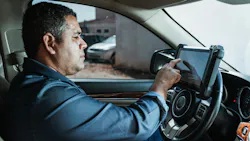
Remote connectivity pushes this efficiency even further. Traditionally, a technician had to ride along in a vehicle with a scan tool plugged in, waiting for an intermittent issue to surface. With remotely connected smart scan tools, that step is no longer necessary. A technician can access real-time diagnostic data while the vehicle is still being driven by the customer, often under more natural conditions than a shop test drive can replicate. It’s a better diagnostic scenario and a better use of time.
Next, smart scan tools also make it easier to onboard less-experienced techs.
A rookie technician may not yet have the intuition that comes from years of experience—but smart tools grant them access to the collective knowledge of thousands of experienced technicians. Instead of relying on previous knowledge, they can lean on data: known fixes, verified diagnostic paths, and real-time guidance.
It’s similar to how a nurse might follow a treatment plan developed by a remote physician. The “diagnosis” is largely handled by a system with deeper expertise; the human confirms and carries out the repair. This model could fundamentally reshape the technician pipeline. Shops (both dealerships and independents) can confidently hire greener techs because smart diagnostics help level the playing field.
From “nurses” to “doctors”: A new diagnostic model
Smart scan tools won’t replace technicians any more than remote medical diagnostic centers replace doctors, but they change who is able to perform accurate diagnostics. With remote diagnostic centers now capable of connecting directly to a vehicle, shops no longer need to call and verbally describe symptoms, removing one of the biggest sources of diagnostic error: incomplete or inaccurate information.
A centralized expert (human or AI-assisted) can see the car’s vitals, interpret the data, and deliver an immediate, accurate diagnosis. Local technicians then perform the repair. Given the technician shortage and the increasing complexity of vehicles, this shift may happen faster than expected. Shops need solutions, and smart scan systems provide one by making advanced diagnostics widely accessible, no matter how remote or understaffed a facility might be.
The bottom line
Smart scan tools are not just another upgrade to the repair bay. They are changing the very structure of automotive diagnostics. These tools go beyond reading fault codes by integrating real-time data, providing instant access to repair histories, and helping technicians trace problems faster and with greater accuracy. When used effectively, they don’t just save time. They reduce comebacks, support ongoing technician training, and enhance customer trust by providing clear data-backed explanations of repair decisions.
Just as AI is reshaping medicine by enhancing diagnostic capability, smart scan systems are bringing a new era of precision and efficiency to vehicle repair. In a world with far too few “doctors,” that shift couldn’t come at a better time.
About the Author
 Brad Gintz
Brad Gintz
Co-foudner and CEO of EZ LYNK
Brad Gintz is a trailblazer in the automotive industry, combining the hands-on expertise of a fourth-generation mechanic with the visionary thinking of a tech entrepreneur. As CEO and co-founder of EZ LYNK, Gintz has led the development of cutting-edge remote vehicle connection technologies that are reshaping how diagnostics and maintenance are performed across the industry.