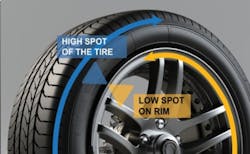
Balancing tires may not always be top of mind, but this service is essential for vehicle safety, performance, and tire longevity. Since tires are the only point of contact between a vehicle and the road, proper balance ensures a smoother ride, reduces wear and helps prevent costly repairs. When tires are unbalanced, motorists may notice uneven tread wear, vibrations or poor handling. Over time, this imbalance can strain suspension and steering components, compromise safety and shorten tire life.
Why tire balancing matters
Tire balancing is crucial for vehicle safety, comfort and performance. When weight isn’t evenly distributed across the wheel and tire assembly, vibrations can occur, especially at higher speeds, affecting overall stability and operation. Uneven wear patterns, such as cupping, often indicate imbalance or misalignment. Regular balancing helps prevent these issues, protecting both tires and mechanical components while improving fuel efficiency and ride comfort.
Signs tires need balancing
Common symptoms include vibrations in the steering wheel, floor or seats as well as unusual noises like humming or thumping. These signs typically worsen with speed. To avoid further wear, tires should be balanced whenever they are installed, rotated or repaired, typically every 5,000–6,000 miles.
How professionals balance tires
- Mounting: The wheel is securely attached to a balancing machine to ensure accuracte readings
- Spinning: The wheel rotates at a controlled speed while sensors detect weight inconsistencies.
- Measuring: The machine identifies the exact location and degree of imbalance.
- Correcting: Technicians apply clip-on or adhesive weights to counteract uneven weight distribution.
- Rechecking: The wheel is spun again to confirm precise balance.
Technicians should always follow the safety guidance contained in the equipment operator's manual and adhere to all shop safety protocols when performing any balancing procedure.
Modern balancing technology
Advancements in tire balancing technology have made the process faster and more precise. Features found on industry-leading Hofmann balancers, such as touchscreen operation, automatic wheel measurement and laser-guided weight placement, help ensure accuracy and efficiency. By investing in this type of state-of-the-art equipment and routinely balancing customers’ tires, shops can deliver faster, higher-quality service while customers enjoy smoother rides and longer tire life.