The importance of asking 'why?' during automotive diagnosis
What you will learn:
- Computers aren't smart; they simply respond to inputs
- Always reference wiring diagrams as part of your diagnostic approach
- Ask "Why" at least five times, to ensure you locate and repair the root-cause fault
Why ask why (or when or how)?
- Why are you performing poorly? (Are you lacking sufficient fuel supply, can you breathe?)
- When do you perform poorly? (Is it when you are idling, or when I force you to work hard?)
- How can I get you to reveal your fault to me? (Are there certain weather conditions you don't like?)
The bum
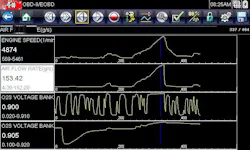
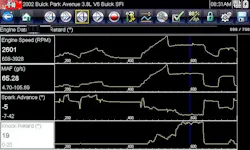
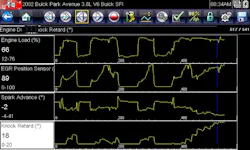
Brought in for questioning
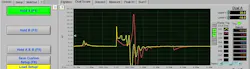
Just the facts
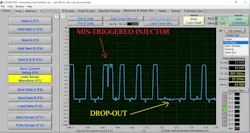
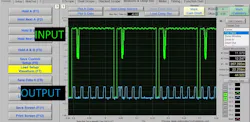
- Faulty CMP sensor
- Damaged CMP reluctor
- Poor connection or voltage drop within the signal circuit or the reference voltage circuit
- Shorted/loaded sensor signal circuit or the reference voltage circuit
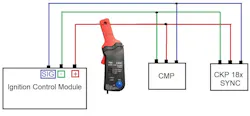
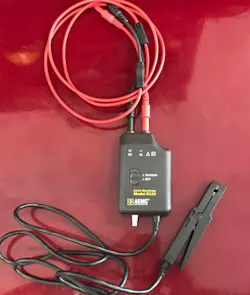
The final showdown
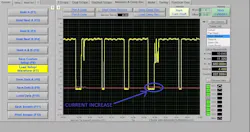
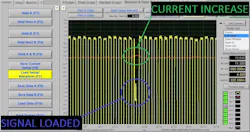
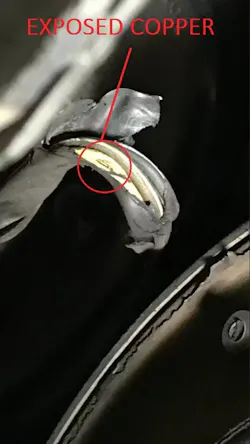
- Why is the engine "pinging"? (Lean condition)
- Why is the engine running in a lean state? (Not a fuel delivery issue but a fuel injector control issue)
- Why is the PCM failing to drive the injectors correctly? (The PCM operating with skewed inputs)
- Why are the CKP 18x, CMP and Sync signals skewed? (A loaded common reference voltage circuit)
- Why is the reference voltage circuit loaded? (Ref. voltage wire feeding CMP is shorting to ground)
About the Author

Brandon Steckler
Technical Editor | Motor Age
Brandon began his career in Northampton County Community College in Bethlehem, Pennsylvania, where he was a student of GM’s Automotive Service Educational program. In 2001, he graduated top of his class and earned the GM Leadership award for his efforts. He later began working as a technician at a Saturn dealership in Reading, Pennsylvania, where he quickly attained Master Technician status. He later transitioned to working with Hondas, where he aggressively worked to attain another Master Technician status.
Always having a passion for a full understanding of system/component functionality, he rapidly earned a reputation for deciphering strange failures at an efficient pace and became known as an information specialist among the staff and peers at the dealership. In search of new challenges, he transitioned away from the dealership and to the independent world, where he specialized in diagnostics and driveability.
Today, he is an instructor with both Carquest Technical Institute and Worldpac Training Institute. Along with beta testing for Automotive Test Solutions, he develops curriculum/submits case studies for educational purposes. Through Steckler Automotive Technical Services, LLC., Brandon also provides telephone and live technical support, as well as private training, for technicians all across the world.
Brandon holds ASE certifications A1-A9 as well as C1 (Service Consultant). He is certified as an Advanced Level Specialist in L1 (Advanced Engine Performance), L2 (Advanced Diesel Engine Performance), L3 (Hybrid/EV Specialist), L4 (ADAS) and xEV-Level 2 (Technician electrical safety).
He contributes weekly to Facebook automotive chat groups, has authored several books and classes, and truly enjoys traveling across the globe to help other technicians attain a level of understanding that will serve them well throughout their careers.