ADAS tooling in the repair shop
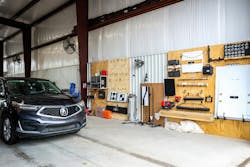
When I look at ADAS calibration from a practical standpoint, the first thing I think about isn’t theory or procedures, it’s tools. The reality is that the entire calibration process lives or dies on the quality, coverage, and accuracy of the equipment being used. Over time, I’ve found that no single system does everything perfectly, and the most effective setups are usually built around a combination of platforms rather than a single “all-in-one” solution.
Choosing the right system
One of the primary systems we use is the Autel IA900, which combines optical wheel alignment, ADAS calibration targeting, and really strong scan tool functionality into a single integrated platform. From a workflow perspective, that integration matters more than most people realize. Being able to perform alignments, position targets, and initiate calibrations inside one system eliminates a lot of the variables that normally exist when you’re bouncing between separate tools. Having worked extensively with more traditional alignment and calibration platforms in the past, what stands out to me about the IA900 is the overall vehicle coverage and how good the diagnostic side of the tool is. That becomes increasingly important as calibration work expands across domestic, Asian, and European platforms, especially in environments where mixed all makes and models are commonly seen.
Alongside full-size calibration frames, mobile calibration kits play a big role in how we approach ADAS work, as we have a mobile division that services collision shops as well. We rely heavily on the TOPDON Three-in-One Radar System, particularly in those mobile environments. In real-world repair scenarios, radar-based systems are simply more common than camera-based systems, as the glass installers are mostly tooled up for it. Blind spot monitoring, rear cross traffic alert, adaptive cruise control, and forward collision radar systems now exist on a massive percentage of vehicles on the road. Because of that, radar calibration makes up a large share of day-to-day ADAS work in the shop, and mobile systems give you a practical way to handle those calibrations without the footprint or investment of a full alignment rack.
A setup that keeps growing
One of the realities of ADAS tooling that becomes obvious pretty quickly is that calibration targets are never really a finished purchase. New vehicle models introduce new target designs, revised patterns, and different reference distances on a regular basis. Even within the same manufacturer, different model years or trims can require different target configurations. Over time, most calibration setups naturally turn into a mix of aftermarket and OEM targets. In many cases, I’ve found that OEM targets are simply more consistent, especially on systems that are sensitive to target design. Honda’s LaneWatch system is a good example of that, where the OEM target tends to produce more reliable results due to its unique color contrast when compared to most aftermarket alternatives, even if it’s less convenient to store — that thing is big.
Supporting tools
Beyond the major hardware systems and targets, there’s a plethora of supporting tools that end up doing a lot of the heavy lifting in ADAS calibrations. Measuring tools like tape measures, laser distance devices, plumb bobs, and digital angle gauges get used regularly. These tools are critical for verifying vehicle setup, target placement, and sensor orientation. Even simple digital angle gauges have become everyday tools, not just for calibration work but in general. ADAS calibration is fundamentally a measurement problem and solution, and without accurate measurement, it becomes difficult to confirm anything beyond the fact that a software function completed.
Specialty tools
Specialty tools also play an important role in bridging the gap between digital procedures and calibration reality. Blind spot detection and blind corner warning correction jigs are a good example. We use tools like the ADAS Blind Spot Measuring and Alignment Tool, CJM-908, from ADAS Aiming to measure the installation angles of blind spot radar sensors. Tools like this are useful both before calibration and after failed calibrations, because they help determine whether the system is dealing with a physical alignment issue that no scan tool can correct or just a repair or installation failure. In practice, these kinds of tools often answer questions that diagnostic software alone can’t.
Understanding fundamentals
Once the tooling side is in place, the process itself becomes easier to frame. There are two fundamental types of ADAS calibrations: static and dynamic. Static calibrations require a physical target setup, which can include radar reflectors, camera boards, or calibration mats. Dynamic calibrations are typically initiated through a scan tool and completed by driving the vehicle under specific operating conditions, such as specific speeds, road conditions, lighting conditions, and lane marking quality. The calibration process is far more than simply initiating a function in a scan tool and waiting for a completion message. The outcome of any calibration is entirely dependent on the vehicle being under the correct conditions, the targets being positioned accurately, and the entire system being repaired to the OEM procedure for that specific vehicle and option package.
That’s where service information starts to become just as important as hardware. Like most shops, we rely heavily on aftermarket service information platforms such as Identifix or Motologic, and they play a major role in everyday diagnostics and repair workflows. They provide fast access to procedures, wiring diagrams, both OE and aftermarket — if you're into that sort of thing. But when it comes to ADAS, I still find myself referencing OEM service information on a regular basis. Calibration procedures change frequently due to firmware updates inside camera and radar modules, revised target specifications, altered distances on updated components, or changes in environmental requirements. In some cases, entire procedures are replaced altogether. Aftermarket service information is getting better, but they don’t always reflect those changes in real time. OEM service information has become a core part of the calibration toolset, and the fact that most manufacturers offer short-term access for as low as twenty dollars makes it one of the most affordable tools in the entire process.
ADAS keeps evolving
As ADAS systems continue to expand across vehicle platforms, the number of repair scenarios that involve calibration keeps growing. Windshield replacements, wheel alignments, suspension work, steering component replacements, bumper repairs, body panel replacements, ride height changes, and tire size changes all interact with ADAS systems in some way. A lot of these requirements aren’t immediately obvious, and they continue to evolve as manufacturers refine their ADAS integration into the vehicle. What that creates is a landscape where ADAS calibration is no longer, and really never was, a standalone specialty, but something that affects a wide range of everyday repairs.
Another aspect of ADAS calibration that stands out to me is system validation, because there really is no tool to do this.
Modern vehicles can complete calibrations without setting warning lights or diagnostic trouble codes, even when system performance is compromised from an incorrectly performed calibration, or a vehicle that wasn’t repaired to exact OEM procedures. A camera may still detect lane markings, just with reduced accuracy. A radar sensor may still track objects, but with reduced range or incorrect angle. A collision mitigation system may still intervene, but later or less aggressively than designed. That’s why I tend to think of calibration less as a software task and more as a validation process. The goal isn’t just to complete a calibration, but to make sure the system is actually operating the way it was designed to, within the physical and environmental conditions outlined by the manufacturer.
Ultimately, the way I see ADAS calibration is that it isn’t defined by any single piece of equipment or service information. It’s defined by the combination of tools that support it. Scan tools initiate functions, targets provide reference points, service information defines requirements and procedures, and measuring tools validate the measurements. Each component plays a role, and the correctness of the calibration comes down to how well those components work together and how closely the service procedure is followed.
As vehicle technology continues to evolve, the calibration tool options will continue to evolve with it, and ADAS calibration will always live at the intersection of mechanical repair, diagnostics, and collision repair.
Tools mentioned
- Autel IA900
- TOPDON Three-in-One Radar System
- Honda LaneWatch ADAS Target System
- Aftermarket and OEM targets
- Tape measures
- Laser distance devices
- Plumb bobs
- Digital angle gauges
- ADAS Aiming ADAS Blind Spot Measuring and Alignment Tool, No. CJM-908
- Identifix
- Motologic
About the Author
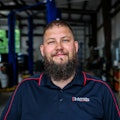 Keith Perkins
Keith Perkins
Keith Perkins has been in the industry for over 19 years, serving in various capacities, including engine machinist and assembler, dyno tuner, diagnostic technician, instructor, technical information specialist, repair technician, and many more roles through the years.
Currently, Perkins co-owns and operates the L1 Automotive Group with his wife. The L1 Automotive Group is comprised of three companies: L1 Automotive Diagnostics and Programming, Level 1 Automotive, and L1 Automotive Training.
Perkins currently holds the title of ASE Master Certified L1 Technician and ASE certifications A1-A9, L1, L4, X1, P2, xEV Level 2, and various other industry certifications. He also serves as a Subject Matter Expert for the ASE A1, A2, A7, A8, L1, and L4 tests.
Perkins has served on the Board of Directors for NASTF since 2023. He enjoys spending time with his wife of 18 years, Liz, and his two daughters, Rylynn and Bailey, in his off time. His favorite non-automotive activity is skydiving!