Integrating ADAS inspection and maintenance into vehicle service routines
Key Highlights
- ADAS systems depend on sensors, cameras, and software to detect hazards and respond appropriately, making calibration vital for safety and system reliability.
- Routine maintenance like camera cleaning and sensor checks can impact ADAS performance, highlighting the need for regular inspections and recalibrations.
- Implementing ADAS care plans with subscription models can reduce customer costs and promote preventive maintenance, extending system lifespan.
- Training and certification, such as ASE L4 ADAS Specialist and I-CAR courses, are crucial for technicians to safely diagnose, calibrate, and repair advanced systems.
- Shops that adopt innovative service approaches and invest in technician education will lead the industry in safety and customer trust.
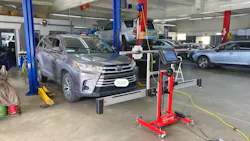
Professionals in the automotive service industry now carry heightened responsibilities due to the advanced technologies integrated into modern vehicles. Many of these systems perform critical safety roles, safeguarding vehicle occupants as well as vulnerable road users (VRUs). Accurate service and calibration are vital to ensuring these features operate as designed.
Although advanced driver assistance systems (ADAS) have become widely known, I don’t believe most of the service and repair industry realizes the importance of maintaining these systems. Some of the void here is that in the early days of ADAS feature introduction, the consumer had been underwhelmed by the value these systems offer. This was largely due to a lack of tangible and observable benefits, and the lack of understanding of what these systems were doing and or what they were capable of. When a consumer purchases a new vehicle, they are rarely educated properly about these systems. However, as technology has evolved, the operational benefits have become more apparent, and drivers have become highly reliant on their proper operation.
Today, there are vehicles on the road that can perform all the dynamic driving tasks (DDTs) required to execute a drive from one point to another without the operator touching the steering wheel, brake, or accelerator pedal, though the vehicle still requires supervision. Almost every day, I enjoy this experience and feel blessed to have been able to see these capabilities progress over the past five or so years. If you have yet to experience the power of these modern robots on wheels, I highly recommend pursuing the experience to see what’s on the horizon and what impact these capabilities will have on service (Figure 1).
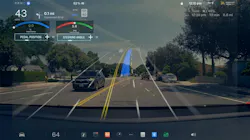
Figure 1—Highly capable ADAS vehicle
ADAS — including pedestrian automatic emergency braking (PAEB), lane-keeping assist (LKA), adaptive cruise control (ACC), blind-spot monitoring (BSM), and rear cross-traffic alert (RCTA) — depend on a sophisticated array of sensors, cameras, radars, and software to detect hazards, estimate volumetric space, process data in real time, and respond appropriately to mitigate risks. Having driven highly equipped ADAS vehicles for more than five years, I have observed these systems actively preventing incidents that would typically be recorded in crash data. For service professionals, this translates to an essential duty: maintaining the systems' accuracy and reliability through inspection, including sensor calibration, alignment checks, and post-repair validations, to preserve their life-saving potential.
ADAS are increasingly standard in North American vehicles. Backup cameras became mandatory on new light vehicles sold after May 1, 2018, with service needs ranging from lens cleaning to camera/harness repair or replacement. During wheel alignments, adhering to OEM procedures is critical. Omitting steering angle sensor calibration can lead to incorrect display or tracking of the backup camera's dynamic trajectory guidelines — reducing reversing accuracy — and impaired electric power steering operation, such as altered assist levels or system faults.
Adopting innovative service models for long-term ADAS care
A whitepaper published by Ascential Technologies in 2025 — The Importance of ADAS Calibration for Collision Prevention and Road Safety — has drawn new attention to vehicle safety systems and maintenance. In my opinion, service professionals have an opportunity to adapt and provide service options aimed at keeping their clients’ vehicle systems supporting object and event detection and response (OEDR) operations as capable as possible.
According to SAE J3016, OEDR refers to the subtasks of the dynamic driving task (DDT), which include:
- Monitoring the driving environment.
- Detecting, recognizing, and classifying objects and events (e.g., other vehicles, pedestrians, road signs, construction zones, erratic drivers, or sudden hazards).
- Preparing to respond as needed.
- Executing an appropriate response to such objects and events (i.e., as needed to complete the DDT and/or DDT fallback).
In late spring of last year, I was fortunate enough to have been invited to participate in the ADAS Symposium at SEMA Detroit, which was co-sponsored by MEMA Aftermarket. There were several work groups assembled, along with interesting presentations. What drew my attention the most was a presentation that focused on the technical findings on a 2024 Nissan Altima with approximately 12,000 miles on the odometer. They had the Transportation Research Center (TRC) out of East Liberty, Ohio, perform standardized ADAS performance testing on this vehicle. They performed several tests, including PAEB, which resulted in a poor performance grade.
Creating an ADAS or Technology Care Plan
As ADAS systems age with the vehicle, shops have a prime opportunity to innovate beyond one-off repairs typically triggered via collision repair, windshield replacement, etc. While I personally haven’t implemented what follows, I am seriously considering offering a service package that will help support proper ADAS service and maintenance.
While manufacturers' calibration requirements don’t necessarily call out periodic maintenance or calibration, if you remove a camera to clean the inside of the windshield, I’m certain that the OEM would call for recalibration. Inside Toyota’s diagnostic application, there is a statement that basically says that performing a calibration will raise the accuracy of the sensor by reducing its margin of error (Figure 2).
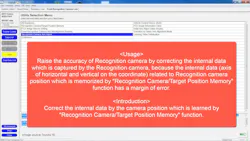
Figure 2—Toyota camera calibration explanation
Traditional models often leave customers facing high out-of-pocket costs for calibration services, but a subscription-based or maintenance program could redefine service delivery. Imagine a model where customers enroll in an ADAS or a Technology Care Plan, paying a monthly/annual premium that covers routine cleanings, adjustments, and calibrations over the vehicle's life — excluding component replacements to keep it focused on preventive care. One could consider offering a diagnostics and software updates “plus” level as well.
For example, consider a two-year-old vehicle arriving for service: The interior windshield area ahead of the forward-facing camera will ultimately require cleaning. Under a traditional model, this service typically involves the removal of the camera, cleaning, and recalibrating, which also includes a proper wheel alignment, plus testing and validating system performance, which could potentially cost hundreds out-of-pocket. We’ve performed several operations like this over the past few years, and this is one of the reasons I am exploring such options. In a program-enrolled scenario, the fee is reduced or covered entirely, as the plan amortizes costs across the vehicle's lifecycle.
When drafting up a contract, you’ll want to consider variables such as collision repair (especially if you’re not a collision shop), perhaps requiring a post-repair inspection to verify that the vehicle was properly repaired to maintain contract compliance. An inspection here ultimately offers additional peace of mind to the consumer as well. I have personally seen far too many vehicles with less-than-stellar repairs performed via a collision repair, leaving their driver assistance system in jeopardy (Figures 3 & 4).
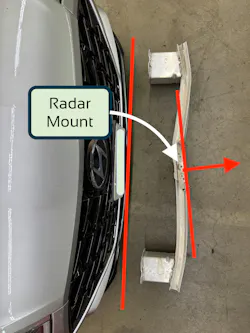
Figure 3—Radar mount error found during a post-collision repair inspection
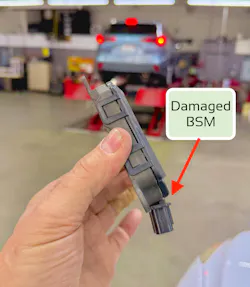
Figure 4—Damaged blind spot module
As you begin to explore models, also consider an EV model covering basic maintenance (tire rotations, alignment, cabin filters, inspections, etc.) that is often overlooked. By considering these models, shops can ultimately position themselves as forward-thinking partners, appealing to fleet operators and individual owners alike.
Staying ahead: The imperative of training and certification
No discussion of ADAS is complete without emphasizing professional development. As systems grow more complex, service personnel (both front counter and back shop) must commit to ongoing education to handle diagnostics, calibrations, and repairs safely. Certifications like the ASE L4 ADAS Specialist, which covers radar, camera, and ultrasonic systems, provide a benchmark for expertise. I-CAR's Platinum Path for ADAS Technicians includes ProLevel 3 training and hands-on static calibration courses, ensuring top-level skills.
Additionally, programs from Autel Academy offer in-depth, two-day courses on sensor principles and calibration fundamentals. There are many other programs out there able to provide equivalent. Emerging certifications, such as those from the Auto Glass Safety Council for ADAS-related glass work, further specialize knowledge. Shops should invest in these, as trained teams not only reduce errors but also build trust, which is critical within the transportation segment.
In conclusion, ADAS maintenance is imperative and isn't just about keeping pace; it's about leading the charge toward safer roads. By integrating these practices, adopting innovative models, and prioritizing training, service professionals can turn challenges into opportunities, ensuring every vehicle leaves the bay as capable as the day it rolled off the assembly line.
About the Author
 Scott Brown
Scott Brown
Founder - Diagnostic Network
Scott is an ASE Master Certified Automobile Technician with L1, L3, & L4 credentials and has over 39 years of professional service industry experience. As an independent shop owner in Southern California and with his engagement at various levels of within our industry, he continuously strives to move the industry forward through networking, education, communications, and training. Scott is a founder of the Diagnostic Network (https://diag.net/) which was born in 2018 after he retired after 22 years at iATN, where he served as company president.
Brown is also the host of Professional Tool and Equipment News (PTEN) and VehicleServicePros.com podcast, Torque Factor. The podcast addresses the latest automotive service technologies while focusing on expanding knowledge and awareness around tools, equipment, education, and industry trends.