15 tips for soldering
Related To:
Jan. 16, 2026
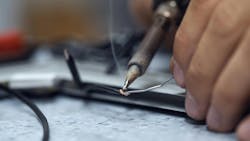
- Use a good soldering iron, preferably a cordless one like a Portasol Super Pro or Pro Piezo soldering iron.
- Use the correct type of vice or third hand; Play-Doh makes a useful third hand.
- Use the thinnest solder appropriate for your project.
- A 60/40 solder is recommended for beginners.
- Use the right-size tip for your project.
- Allow the soldering iron to reach the right temperature before use.
- Hold the soldering iron by the right end – the cool end.
- Apply the iron to the joint first and then the solder to the lead, and allow it to spread. Be sure to watch out for dripping solder.
- Don't put too much solder on – "The bigger the blob, the better the job" is not true here.
- Tin your wires by placing a small amount of solder on the iron and then wiping it off first, then solder the connection.
- Clean the tip often with iron wool, a wet sponge, and tip cleaner.
- Don't apply pressure on the soldering iron.
- Don't move the joint while it's cooling, and don't blow on it to cool it off.
- Practice on scrap before starting your project.
- Remember, practice makes perfect!
About the Author
 Tony Murphy
Tony Murphy
Tony Murphy is an experienced international distribution sales manager at Oglesby & Butler with a demonstrated history of working in the consumer goods industry. Skilled in marketing management, negotiation, business planning, operations management, and sales, Murphy is a strong sales professional who graduated from St Peters College, Wexford. He has worked extensively in the multi-national manufacturing sector as well as construction. Murphy is a director of two other companies Mfx Biotech European Limited and Airtear Aviation Limited, based in Wexford, Ireland.
Sign up for our eNewsletters
Get the latest news and updates