Diagnosing Today's 4WD and AWD Systems
Key Highlights
- Modern 4WD/AWD systems rely heavily on electronic controls, sensors, and software, making diagnosis more complex than traditional mechanical checks.
- Differences between part-time, full-time, and AWD systems influence diagnostic approaches, especially regarding transfer case and differential operation.
- Rear differentials now often participate in torque management and vectoring, requiring technicians to consider clutch control, hydraulic systems, and programming during repairs.
- Post-repair procedures like bleed cycles, module programming, and setup are critical to ensure proper system operation and prevent faults.
- External factors such as wheel speed sensor faults, tire size mismatches, and fluid condition can mimic driveline problems, emphasizing a holistic diagnostic approach.
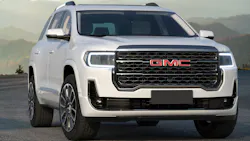
Four-wheel drive and all-wheel drive systems on domestic light trucks and sport utility vehicles have changed a lot over the years. What used to be a mostly mechanical driveline with a transfer case, propeller shafts, differentials, and axle shafts now depends much more on clutch packs, electric motors, hydraulic control, and software strategy. Because of that, diagnosis is no longer as simple as looking at the transfer case or rear differential and blaming those components. On these systems, component layout, control strategy, sensor data, and setup after repair can all affect how the vehicle works.
Where Today's Driveline Trouble Really Starts
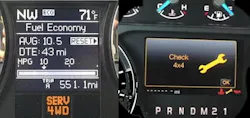
It helps to start by looking at an older traditional truck-based 4WD system because it shows the basic driveline problem these systems have always had to deal with. In a part-time 4WD system, the transfer case locks the front and rear drivelines together, so both axles are forced to pull at the same time. That works well on snow, mud, gravel, and other loose surfaces because the tires can slip enough to relieve driveline stress. On dry pavement, the problem shows up quickly. The front and rear axles don't turn at the same speed during normal driving, especially in a turn, so the stress stays in the driveline instead of being released through tire slip. That's when the technician may hear complaints about binding, crow hop, chatter, or a vehicle that doesn't want to turn smoothly.
Full-time 4WD, sometimes called permanent 4WD, was one of the first real ways around that problem. These systems still use a transfer case, but they also use a center differential or another method that allows front-to-rear speed difference. That lets the vehicle drive all four wheels continuously without forcing both drivelines to stay locked together on dry pavement. On truck-based sport utility vehicles, this made the system much more road-friendly while keeping the basic truck-style driveline layout of a transfer case, propeller shafts, and axle assemblies.
Just so the difference is clear: truck-style permanent/full-time 4WD uses a transfer case and usually includes 4-Lo, while AWD is generally on front-wheel-drive SUVs or crossover vehicles and doesn't have low-range gearing.
That difference in drivetrain design directly affects how the system is diagnosed. On a truck-style system, the technician is usually thinking about transfer case operation, shift motor function, encoder position, front axle engagement, range selection, and mechanical bind. On a FWD-based AWD system, the thinking has to change. Now the vehicle may have a power transfer unit bolted to a transaxle, a propeller shaft going to the rear, a rear drive unit, a clutch pack, a hydraulic pump, actuator motors, and a control module making decisions from wheel speed, steering angle, throttle position, and vehicle dynamics data.
Differentials Aren't Just Differentials Anymore
Differentials still sit in the middle of every 4WD and AWD system, and they matter more than many people give them credit for. A basic differential allows the left and right wheels on an axle to turn at different speeds in a corner. In newer systems, the rear differential assembly may also be part of the torque management strategy or torque vectoring system, with clutch packs, hydraulic control, and its own electronic logic. The rear axle in torque vectoring systems does more than just send power to both rear wheels. The system can change the torque from side to side based on things like wheel speed, steering angle, and yaw. This lets it send more drive force to the wheel that can use it best. That usually means sending more torque to the rear wheel on the outside to help the car turn more naturally and stop it from understeering. Some systems use clutch control inside the rear drive unit to do this, while others use a brake-based strategy to change the transfer of torque. The goal is the same in either case: to use rear axle torque as part of the vehicle's handling strategy to make it easier to grip the road, stay stable, and feel good when turning.
That means a rear differential complaint isn't always a simple gear or bearing problem anymore. It can also be a clutch apply problem, a hydraulic issue, a programming problem, or a control problem.
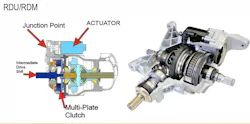
Modern FWD-based AWD systems now make up a large part of the domestic crossover and sport utility market. Under normal conditions, many of these vehicles operate mainly as front-wheel drive. When rear torque is needed, the PTU redirects torque from the transaxle to a propeller shaft, and the RDU applies that torque at the rear axle. That sounds simple until you get into how different these systems really are. Some use a single clutch pack to bring the rear axle online. Others use more advanced rear units that can control torque more precisely, including side-to-side control. Many are also predictive rather than purely reactive. In other words, the module may already be watching conditions and preparing the driveline before the driver ever feels wheel slip.
General Motors: When the Rear Axle Becomes Part of Handling
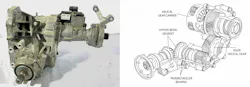
General Motors is a good example of how far these systems have gone. In the FWD-based layout, the PTU changes the direction of power flow from the transverse transmission to the propeller shaft, but the rear side is where the system gets much more involved. The rear differential clutch control module isn't just turning the rear axle on and off. It's watching the driving situation and deciding how much clutch application is needed to move torque to the rear wheels. That means the rear axle assembly is no longer just receiving torque. It becomes part of the vehicle's traction and handling strategy. When a system like this has a problem, the complaint may not sound like a driveline problem at all. It may show up as chatter, bind, poor traction, odd engagement feel, or even something that sounds more like a handling issue.
The rear drive side on these GM systems also shows why technicians now must think about both electrical control and hydraulic operation. Rear axle engagement isn't just an electrical command. The clutch control system uses a motor, pump, and solenoid to build hydraulic pressure so the clutch pack can apply correctly. Because of that, a weak or missing rear engagement complaint can be caused by many things besides the clutch pack itself. A pump problem, a motor fault, trapped air, a hydraulic issue, or a control problem can all create similar symptoms. This is where scan tool work matters. Looking at clutch motor data, clutch engagement data, and system commands can save a lot of guessing.
Service procedures matter as much as the parts
Service procedures matter just as much as the actual components on these units. If the hydraulic circuit has been opened or air has entered the system during differential service, the bleed procedure must be performed. On some units, clutch correction factors or classification values also must be programmed into the module after repair. The job isn't finished just because the unit is bolted back in and filled with the correct fresh fluid. If the special scan tool bleed is skipped, or the module isn't matched correctly to the hardware, the system can still set faults or operate poorly even when the mechanisms are fine.
That same shift away from purely mechanical thinking also helps explain why rear axle diagnosis on newer GM systems has become more complicated than it used to be. Rear axle faults can be misdiagnosed as a failed control module when the real problem is in the rear differential clutch valve or related clutch control hardware. There have also been cases where a highway-speed rear axle squeal or whine was corrected with a calibration update instead of hard parts replacement. On early Cadillac XT5 and GMC Acadia applications, rear clutch control strategy could even lead to excessive rear torque under the right conditions, enough to damage the rear propeller shaft. Those are good reminders that rear axle complaints on modern AWD systems aren't always caused by gears, bearings, or a worn clutch pack.
GM's active transfer case systems on its newer trucks are a good example of how much 4WD operation has changed. In Auto 4WD, the transfer case isn't acting like a simple locked system. The vehicle control systems are watching driving conditions and varying clutch torque to the front propeller shaft as needed. At low speed and light load, clutch apply stays lower, so the truck doesn't bind or crow hop in tight turns. At higher speeds, more clutch torque can be commanded to improve traction and stability. That's why Auto 4WD operation shouldn't feel the same as a traditional 4HI mode.
Ford: PTU and RDU Working as One Strategy
Ford FWD-based AWD systems use the same basic PTU, propeller shaft, and RDU layout, but the strategy is worth understanding because it explains a lot of the complaints technicians see. On vehicles such as the Edge and similar platforms, the PTU can work in connected and disconnected modes to reduce drag when AWD isn't needed. When rear torque is needed, the rear side is brought in first so the propeller shaft speed can be brought close to a match before the PTU dog clutch engages. That helps smooth the transition and reduce driveline shock. It also helps explain delayed or harsh engagement complaints, because if the rear side isn't doing its part first, the final engagement isn't going to feel right. On systems like this, it helps to stop thinking of the PTU and RDU as separate parts and start looking at them as one strategy.
Ford PTU service issues are also well known, especially on earlier units with no drain plug. Limited serviceability, high operating temperature, and fluid breakdown led to overheating, vent leakage, and strong odor complaints. By the time fluid is pushing out of the vent and the unit has been running on badly deteriorated lubricant, internal damage may already be there. That's why service history matters. What looks like a sudden PTU failure may be the result of long-term heat and fluid breakdown.
Ford also reinforces the point that the setup after repair matters. On some AWD systems, barcode entry, module setup, and required drive cycles are part of the repair. If those steps are skipped, the system may not respond properly even though the replacement work itself was done correctly. This is another area where modern driveline repair is no longer just mechanical work. Programming, calibration, and relearn procedures belong in the same conversation as gears, bearings, and clutch packs.
Jeep and FCA/RAM: Predictive AWD Meets True Low Range
Jeep and other FCA/RAM systems add another mix because some of them combine AWD-type operation with a true low range. A Jeep system with an active two-speed transfer case can run in a 4WD Auto mode during normal driving, but it can also shift into a real low range for steep grades and off-road situations. That separates it from many single-speed AWD systems. It also means the technician has to keep driver use in mind, because low range is still a specialized mode, and misuse can create complaints that aren't being caused by failed parts.
Jeep drivetrain strategy is also a good example of how predictive these systems have become. Multiple driveline modules can watch wheel speed, steering behavior, load, and other inputs, then decide when the rear driveline should be brought in. In systems such as the Renegade, the rear driveline module can begin clutch apply in a controlled way, so the driveline is already spun up before full engagement occurs. The system also watches temperature closely. If clutch or motor temperature gets too high, the module may reduce AWD operation or shut it down completely to protect the hardware. That gives the technician a much better explanation for intermittent AWD loss after hard use. Sometimes the system is protecting itself, not actually failing.
Jeep also shows that hard-part failures still matter. Certain Cherokee applications developed known PTU spline failures, which is a good reminder that not every driveline complaint is software, calibration, or bad input data. At the same time, Jeep systems can also set service messages because of actuator or control faults that make the problem sound worse than it really is. That's why it still makes sense to verify what the module is commanding before condemning the whole unit.
Don't Overlook the Outside-the-Box Causes
One thing that keeps showing up across GM, Ford, and Jeep/RAM systems is that many 4WD and AWD complaints are caused by something outside the transfer case, PTU, or RDU itself. Wheel speed sensor problems are a good example. If the system depends on wheel speed data to decide when slip is present, an Anti-lock Brake System (ABS) fault can create what feels like a transfer case or rear drive problem. Tire circumference is another major one. Even a small difference in tire size or tire wear can create the speed difference the module interprets as slip. Once that happens, the system may keep trying to correct a problem that isn't really a traction problem at all. That can lead to overheating, bind, chatter, warning messages, and premature part wear.
Fluid condition is just as important. Wrong fluid, contaminated fluid, or fluid left in service too long can cause chatter, bind, noise, overheating, and eventually hard-part damage. That applies whether the unit is a Ford PTU, a Jeep rear driveline module, a GM rear clutch system, or a truck transfer case. Modern systems may be controlled by software, but the mechanical side still depends on clean and correct lubricant if it's going to survive.
The Takeaway
Diagnosing today's 4WD and AWD systems takes more than knowing the major components. Transfer cases, differentials, PTUs, RDUs, and rear axle clutch systems still matter, but they're only part of the operational picture. The real challenge is understanding system operation well enough to separate a mechanical fault from a control issue, a setup problem, bad input data, fluid trouble, or something as simple as mismatched tires. The basic driveline principles are still the same, but solving these problems now requires a full driveline-system diagnostic approach.