The Customer-Supplied Parts Dilemma
Key Highlights
- Customer-supplied parts often come from unverified sources, increasing the risk of counterfeit or substandard components that can lead to failures and safety issues.
- Liability becomes complex when a part fails; shops may be held responsible if they install a customer-provided part without proper documentation or waivers.
- Implementing a clear CSP policy—such as refusing all, accepting with conditions, or case-by-case review—helps manage risk and set customer expectations upfront.
- Proper documentation, including signed waivers and detailed notes on the repair order, is essential to protect the shop legally and financially.
- Educating customers about the value of quality parts and the risks of online purchases can foster trust and reduce the likelihood of disputes or liability claims.
You already know how this one ends.
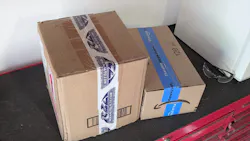
A customer walks in with a cardboard box, sets it on the counter, and says the words every service writer dreads: “I already got the parts. I just need you to put them in.” A wheel bearing bought online for $42 with free shipping came in a plain white box with no brand name, and the seller's address is somewhere overseas. Your tech installs it. Three weeks later, the car is back, the bearing is grinding, and the customer wants the repair done free of charge. He's talking about leaving a review. And you can tell by the way he's standing that the word “lawyer” is somewhere in the conversation, whether he says it out loud or not. Your shop never made a dime on that part. And now you're looking at losing labor, time, and maybe a whole lot more.
This is the customer-supplied parts dilemma, and if you work in automotive repair at any level, you've been here. The question isn't whether it'll happen again. It's whether your shop is ready when it does.
First, Let's Be Fair to the Customer
Before we dig into everything that can go wrong, it's worth taking a breath and acknowledging where the customer is coming from because most of them aren't trying to be difficult. They're trying to pay their bills.
When someone can pull up their phone and find a wheel bearing for $42 that your shop quoted at $120, that looks like a ripoff. It doesn't matter that your price includes a quality part, a supplier warranty, and the ability to make it right if something goes wrong. From the outside, it looks like a $78 markup on a part, and that's a hard sell in any economy. Add to that the general public distrust of repair shops, and you've got a customer who's already skeptical before they walk in the door. Some of them have had good experiences with this. They bought a part, a shop installed it, it worked fine, and they saved $60. From where they're standing, there's no problem to solve.
Others are genuinely brand loyal. They want OEM, or they've used a specific brand for years, and they don't trust that your shop will source the same thing. That's a reasonable concern, even if it isn't always accurate.
The point is that the customer's motivation is understandable. What they don't see is the risk they're handing you along with that box. And that's the conversation many shops avoid or handle poorly.
Where the Shop's Problems Actually Start
The numbers don't work
Parts markup isn't padding. That revenue funds the time your parts staff spends sourcing and receiving components, managing supplier relationships, handling returns when something's wrong, and administering warranty claims when a part fails. Strip that out, and you've got a labor-only job with full exposure and compressed margins.
And that's before the hidden costs kick in: time spent inspecting a part you didn't order; time tracking down the missing hardware the customer didn't know was sold separately; time figuring out, while the car is already disassembled and the old part is sitting on the bench, that the customer ordered the wrong application. That time isn't free. You're just not getting paid for it.
You don't know what you're installing
When your shop sources a part, there's a chain of accountability behind it. You know the supplier, you know the quality tier, and you stand behind what you sell. When a customer hands you a box they bought from an online marketplace, that chain doesn't exist. Counterfeit and substandard parts are genuinely common in the online retail space. Convincing knockoffs of name brands fail at dramatically higher rates than the real thing. Parts that are technically the right part number but manufactured to a standard that wouldn't pass your supplier's incoming inspection. And fitment problems are rampant. Customers order by year, make, and model without knowing about mid-year running changes, VIN-specific variations, or trim-level differences that affect which part actually fits their car.
The tech finds this out while the car is apart. The job stops. The bay is tied up. The customer gets a call they weren't expecting. And the whole afternoon evaporates while nothing billable is happening. A real example that happens every week: customer supplies a reman caliper. Tech unboxes it, gets it mounted, starts bleeding the brakes, and finds the bleeder screw threads are damaged. The caliper is junk. The car is apart. Reschedule. No charge for any of the time spent getting to that point.
The Legal Side of This Is Serious
Who's actually responsible when it fails?
This is the part that should keep shop owners and service managers up at night. When your shop installs a customer-supplied part, and that part fails, the liability question gets murky fast. The labor and the part are physically connected. In most failure scenarios, you can't cleanly separate the two. Plaintiff's attorneys know this, and they aren't shy about it.
A signed waiver helps. It isn't a guarantee. Depending on your state and the specific circumstances, a waiver may offer limited protection, especially if the claim involves professional negligence rather than simple product failure.
The duty of care problem
Here's the part that surprises a lot of shop owners: courts have found that repair shops have a professional obligation to refuse parts they knew or should have known were unsafe or defective. That standard of care doesn't disappear because the customer brought the part in. In some situations, it actually creates more exposure, because the professional in the room is expected to know better.
Work through the scenario: customer supplies a used rotor of unknown origin. The shop installs it. Six months later, it cracks at highway speed. Accident. The shop has a CSP waiver on file. The plaintiff's attorney argues the shop had a professional duty to refuse to install an unverifiable safety component on a vehicle's braking system. Whether that argument wins or loses, defending against it costs real money and takes real time.
Get your waiver right and know your policy limits
If your shop accepts CSP jobs, your waiver needs to be clear, specific, and signed before anything is touched—not buried in the back of a repair order, not mentioned verbally at pickup. Get it reviewed by a local attorney who knows automotive repair or warranty law. This isn't expensive relative to the protection it provides.
Also—and this one gets overlooked—call your insurer. Ask specifically how your garage liability policy handles customer-supplied parts jobs. Some policies have exclusions or complications in this area that shop owners don't discover until a claim is filed. That's a terrible time to find out.
The Warranty Situation Is a Trap
Your labor warranty gets tangled up in a part you didn't sell
A standard shop warranty: 12 months, 12,000 miles on parts and labor. Customer supplies a part with no warranty, or a warranty that only applies to the original purchaser buying direct from the seller. The part fails at eight months. The customer comes back expecting it to be covered.
Now what?
If you didn't explicitly exclude CSP components from your labor warranty in writing, you may be on the hook for the part and labor to pull and replace the part—even if the part is clearly defective, even if you can't recover anything from the supplier, and even if the customer no longer has the receipt to file a claim. Most of the time, the shop eats it.
The comeback will cost you more than you think
When a CSP part fails, and the customer returns, a technician gets pulled off a paying job. The bay is occupied. The scheduler is juggling. The service writer is managing an angry customer. Diagnostic time on a comeback is rarely compensated. The repair itself, if it falls under your warranty, is unbillable.
Budget three to five hours of unbillable time when a CSP comeback happens. That isn't the worst case. That's typical, once you count the initial diagnosis, the back-and-forth with the customer, the repair, and the administrative time cleaning up the paperwork.
Three Scenarios That Happen All the Time
These aren't hypothetical. They're composites of situations that happen in shops every week.
Scenario 1: The online deal that wasn't
A regular customer brings in his truck for a hub assembly replacement. Already bought the part ($28)—a white box with no markings from an online marketplace. Tech installs it. Job’s done.
Eleven thousand miles later, the bearing fails. The customer comes back furious and blames the installation. Shop reviews the repair order: CSP notation is there, but no signed waiver, and the shop's standard labor warranty is printed right at the bottom. The parts supplier's terms say the warranty is void once a shop installs it rather than the purchaser. The shop is holding the bag. Two and a half hours of labor, a damaged customer relationship, and a hard lesson about getting signatures before starting work.
Scenario 2: Wrong part, car already on the lift
Customer schedules an O₂ sensor replacement. Already has the part. Looked it up herself. Tech gets the car in the air, starts working, and the sensor is the wrong application. Her VIN is the 2.4L. She ordered the 2.0L fitment.
Tech spends 45 minutes confirming the mismatch. The customer gets called, is initially defensive, and then apologetic. The job gets pushed. Bay time is gone. Nothing was charged. The customer comes back three days later when the right part shows up—no hard feelings, but the shop lost the better part of a half-day on a job that never happened.
Scenario 3: When it goes to an attorney
The customer brings in brake pads and rotors that he bought online. “Got a great deal,” he says. They look OK. The shop installs them. No waiver was pulled. Three months later, the customer calls about brake fade and noise. A week after that, a letter arrives from an attorney citing improper brake service and an unsafe vehicle condition.
The shop's attorney reviews everything. There's a standard disclaimer on the RO, but no CSP-specific waiver. The argument from the plaintiff's side is that a professional shop had a duty to refuse to install unverifiable safety components. Whether the claim wins or not—and many of these settle regardless of actual fault—the shop's insurer opens a file. Premiums go up. The service manager is dealing with this for the next eight months. The original job was billed at $180 in labor.
How Good Shops Handle This
Pick a policy and stick to it
The shops that handle CSP jobs well have one thing in common: they've decided in advance how they're going to handle it. They don't wing it at the counter. There are three basic approaches:
- Refuse all CSP jobs. Clean, consistent, some customer friction. You lose a few jobs. The ones you lose are usually the ones that were going to cost you anyway.
- Accept CSP with conditions. Inspection fee, signed waiver, and explicit labor warranty exclusion on the supplied part. This is the most common approach among well-run independent shops, and it works if the policy is consistent.
- Case-by-case discretion. Only works if the criteria are written down and service writers are trained on them. Without documentation, every writer makes their own call, and the shop's exposure is all over the map.
Have the conversation before the appointment
The CSP conversation needs to happen when the appointment is booked, not when the customer walks in with the box. If a customer calls to schedule and mentions they already have the part, that's the moment. Service advisors should have a natural, practiced response, something like: “We can definitely take a look at what you've got. I do want to let you know that we charge an inspection fee on customer-supplied parts, and we don't warranty the labor on those components. That protects you as much as us; if the part turns out to be defective, you're not out the labor cost on top of it.” That framing is honest, it's professional, and it puts the customer's interests front and center. Most reasonable customers respond to it well.
Document everything
On any CSP job that moves forward: note the part brand, part number, and packaging condition on the repair order. Photograph the part and the box before installation. If the tech has concerns about quality or fitment, especially on safety-related components, those concerns go on the RO before the first wrench turns, and they get escalated to the service manager. “I had a bad feeling about it” doesn't hold up. “I documented my concern, and management made the call,” at least shows a professional process.
What This Is Really About
Most customers who bring their own parts aren't trying to take advantage of anyone. They're trying to get their car fixed without going broke. They looked up a part, found a price that seemed reasonable, hit buy, and they genuinely don't understand the difference between that and what your shop sources.
That's actually an opportunity. Shops that take five minutes to explain why professional parts sourcing matters—that the markup covers a real warranty backed by a real supplier relationship, that your tech is trained to spot a bad part before it goes in, that if something goes wrong, you can actually make it right—those shops build a different kind of customer loyalty.
Some customers won't hear it. They'll go down the street to whoever will install anything without asking questions. You'll lose the job. You won't lose the three hours of unbillable comeback time, the waiver argument, or the attorney's letter six months later.
Build the policy. Train the writers. Protect your techs. And keep this in mind: the parts you didn't sell can end up costing you more than the ones you did.
About the Author
 Noah Nelson
Noah Nelson
Technical Editor | Motor Age
Noah Nelson is the Technical Editor for Motor Age Magazine. As an ASE Master Certified Automotive Technician (A1–A9) with 25 years of hands-on industry experience, Noah specializes in advanced electrical systems, vehicle communication networks, and physics-based diagnostic workflows. He is currently documenting his pursuit of the prestigious ASE/AutoCare Association World Class Technician registry.