Fueling the Fire: Bernard and Michelle Tansey on Lessons from AAPEX's Engine-Building Competition, Classroom Leadership, and Building the Tomorrow's Technician Pipeline
Key Highlights
- The AAPEX engine-building competition successfully brought together student teams, emphasizing leadership, communication, and hands-on skills.
- Euro Clinic covered travel and prizes, making participation accessible and motivating students to pursue automotive excellence.
- Industry sponsors like Milwaukee Tool and Snap-on contributed tools and personalized outreach, reinforcing support for young technicians.
- Visiting the winning school showcased the importance of organized, well-equipped training environments and passionate instructors.
- The Tanseys believe industry involvement in education can inspire more youth, combat technician shortages, and elevate the profession’s image.
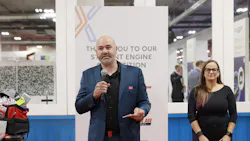
Bernard Tansey didn’t expect to end up on Capitol Hill. He wanted to turn wrenches. He went to tech school, earned his VW/Audi master certification and his ASE master certification, and eventually—with the encouragement of his wife, Michelle—opened Euro Clinic in Santa Clara, California, in 2011. Today, the boutique European and exotic repair shop is one of Silicon Valley’s most respected dealer alternatives. Their most recent effort—co-hosting an engine-building competition at AAPEX in Las Vegas—brought three student teams together and left an impression that neither of them has shaken. At VISION, in Kansas City, they had the opportunity to visit the winning team in their element, and it was yet another eye-opening event for the Tanseys.
Tell us about the engine competition at AAPEX—the concept and how you executed it
Bernard Tansey: Being in this industry, you never know where it’s going to take you. For me, it’s been about getting involved—the Auto Care Association, conferences, and shop coaching networks. It’s who you know and who you meet. One of the people I met was Mark (Bogdansky), who is connected to AAPEX and the Auto Care Association, along with Lisa Kellett from AutoZone. This was their vision. They had the idea to put something like this together, and when we started talking, they asked me to help get it off the ground—and then to host it.
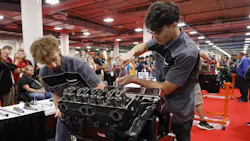
We started reaching out to tech schools across the country. Your first one is always the hardest to launch. We had four schools signed up and ready to go. Unfortunately, one couldn’t make it—flight delays kept them from getting out of their city. So we had three solid teams compete. One of them was a high school team from Kansas City. They ended up winning, which was incredible to see. The best part was watching the instructors lead their students—the direction they gave, the guidance. That made a significant difference across all the teams.
Michelle Tansey: What struck me most watching them compete wasn’t the mechanical skill—it was the leadership. Their communication, their relationship with their instructor—that separated them. They were set up for success before the competition even started.
The other big tech schools had skilled students. But the Kansas City kids hadn’t even had their engine module yet. They had been tearing down and rebuilding an engine for practice on the side—hadn’t taken an engine class—but they had done the repetition and had such great guidance that when they got on that stage in Vegas, nervous as they were, the muscle memory was there.
One of the competitors turned 17 the day of the competition. Imagine going back to school, and someone asks what you did for your birthday: I was in Las Vegas competing in an engine-building competition, and we beat schools that’ve been doing this longer than us.
How did you handle getting the schools there?
Bernard Tansey: We took care of everything. Getting to Vegas can be expensive. We covered hotels and airfare as needed. One school was local to Las Vegas, so that was simpler. For the others, the message was: get your team together and let us handle the rest. We wanted to take as much pressure off those instructors as possible. Just show up and compete.
The setup in Joe’s Garage was really well done. We had a strong content crew and a television crew. Now we have footage we can show other schools—here’s what you missed. And it’s already working. I’m getting emails from schools saying they’re coming for that title. We also had incredible sponsors who stepped up with prizes and goodie bags—we had so much left over that we were giving bags to schools that brought extra students just to watch. As technicians, you know that any tools or gear you can get your hands on helps your career.
What did the winning team take home?
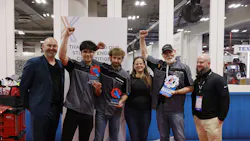
Bernard Tansey: Milwaukee Tool stepped up in a big way. First place received the packout system—socket sets, ratchets, a half-inch electric impact, and three-eighths electric ratchet kits—and each student on the team got a full set. They didn’t have to split anything between them. Second place received the ratchet and impact combo, also one per student.
I have to give a shout-out to Jody from Milwaukee Tool. When I was talking with Jack Stow—the winning team’s instructor from Kansas City—Jody sent the winners their prize packages and then sent two additional sets just for the school to keep in their curriculum. That’s going above and beyond.
Michelle Tansey: And Bernard is being humble. Before we even left for Vegas, our shop donated $1,000 in Snap-on gift certificates for the winners—before he even knew who was going to win. He sat at home and wrote personalized letters. The letters said something like: This is who I am now, but I was you. I went to tech school. I wanted to be the best. If I’d had a platform like this, my younger self would have been so fired up for you. If you ever need anything, reach out. He gave every team his cell number, his email, and all his social handles before the competition started.
At that point, it really didn’t matter who won. What mattered was that they put a team together, showed up, and competed. I told every team member: you have resources now. Between your instructors and the people you just met at AAPEX, there are big names all around you. Here’s my contact information. Whatever you need, we can find you an answer.
You visited the winning school after the competition. What was that like?
Bernard Tansey: We visited CTEC in Kansas City, and when I say it looks like a shop—it looks like a shop. Their tool room is meticulous. Numbered, organized at a level that would make most working shops look twice. We need more Jack Stows teaching these kids.
There’s a reason that team showed up and competed the way they did. Seventeen years old, fully confident. That comes from preparation—and it comes from their instructor. When we did a presentation at the school, the students surrounded us for nearly two hours, asking questions. One of them said, “I want to show you something.” They had found a broken piston in an engine. I’ve seen hundreds of broken pistons in my career—it’s routine. But watching their eyes light up? I completely nerded out. They found the problem. They fixed it. The car was back on the road. And you could see that feeling—we did this. Once you have that fire, you just need to keep fueling it.
These kids are already using Tekmetric software in high school. Jack is teaching them how to document like professional technicians—what’s the concern, what’s causing it, how are we going to correct it. Tekmetric offered the software to the school for free so students could learn on a real platform. I love this industry even more after seeing that. And I wish more programs across the country had an instructor building curriculum that way.
Michelle Tansey: I also found out that Jack sits on school district boards to get permission to take his students to SEMA every year—fighting for access because the show has an age restriction. He takes the whole program, every year, so those kids can see what’s out there. Networking, exposure, possibility. At this year’s AAPEX, Secret Service agents were set up right next to the engine-building competition. They came over and talked to the students—explained that agents who protect government officials have to be both protective drivers and certified technicians. They were actively recruiting. There is so much more available for these students than they know, and our job as shop owners is to put it in front of them.
Where did this passion for developing young technicians come from?
Bernard Tansey: It started later in my career, when I became one of the more senior technicians at the dealership, and younger people started asking me for help. I realized I genuinely loved giving them an answer—showing them something, building them up. Then I opened Euro Clinic, and my own techs started asking me questions. I still got that. But I started asking myself: can we take this further? Can we reach kids before they ever get to a shop?
AAPEX is one great way to do that. Make it attractive, make it competitive. Most kids want to beat the person next to them—do it faster, do it better. That’s enough to get someone to try this industry out. And once they try it and feel that fire, you’ve got them.
Gen Z often gets labeled negatively. Are you seeing something different in these future techs?
Michelle Tansey: It’s the power of environment and influence. Jack Stow is not messing around. He comes in and says: organization is non-negotiable, integrity matters, you show up, and you give everything you have. Those are things that, in theory, parents teach. But when we kept repeating things to the students that aligned exactly with what Jack tells them every day.
I genuinely believe this generation wants to be part of something bigger than themselves. It’s not only about money—though you have to be able to pay your bills. They want to feel like they’re contributing to something meaningful. Create an environment that reflects that, and you see a completely different kind of engagement.
Bernard Tansey: I’ve watched this shift over the last 10 years—especially the last five. We’re not just people who turn wrenches anymore. I’ve been on Capitol Hill talking to Congress about this industry. I would never have imagined that wanting to work on cars would put me there. This career can take you places you’d never expect. That’s the story we have to tell students—and their parents, who still think it’s a greasy, low-paying dead end (job). These kids are writing repair orders, running diagnostic software, and working on Lamborghinis. That’s not the industry their parents picture.
What has this work changed in you?
Bernard Tansey: Seeing it happen right in front of you. Anyone can write a check for a scholarship. But when I’m standing in that room watching students compete and grow—thinking I had a small part in that—that’s when you want to do it again, only bigger. We’re just at the tip of the iceberg, and we want to blow it up.
Michelle Tansey: About two years ago, we hired a shop manager and stepped out of day-to-day operations. I’ve been heavily involved in Women in Auto Care—speaking, teaching, giving back to people who gave to me. Bernard was working through what his next chapter looked like. When Mark reached out about AAPEX, the timing was perfect. He’s genuinely passionate about this, and I feel like that’s where his craft continues—giving back in the way he always wished someone had given back to him.
The thing I want every shop owner to hear is this: we cannot keep complaining about the technician shortage if we’re not doing anything about it. We can’t complain about the quality coming out of tech schools if we’re not in those schools helping shape what quality looks like. Our businesses will only scale if people are coming through the pipeline with the right skills and the right professional standards. That self-awareness is something every shop owner needs to sit with. Because right now, somewhere in a high school or a junior college, there is a kid who is going to be your next technician. Are you fueling that fire—or just waiting to inherit whoever shows up?
About the Author
 Chris Jones
Chris Jones
Editorial Director
Chris Jones is group editorial director for the Vehicle Service & Repair Group at EndeavorB2B.
A multiple-award-winning editor and journalist, and a certified project manager, he provides editorial leadership for the auto care industry's most trusted automotive repair publications—Ratchet+Wrench, Modern Tire Dealer, National Oil & Lube News, FenderBender, ABRN, Professional Distributor, PTEN, Motor Age, and Aftermarket Business World.
Subscribe to receive news and updates from any of these industry-leading brands.