Building the Pipeline: How WrenchWay and ASE are Rethinking the Technician Workforce
Key Highlights
- Jay Goninen’s background in the automotive industry inspired his mission to improve technician recruitment and retention.
- WrenchWay evolved from a job board to a comprehensive platform supporting schools, shops, and industry data collection.
- ASE Connects aims to identify every automotive program in the country, fostering sustainable relationships between shops and schools.
- Shop owners participating in ASE Connects contribute to industry data, support educational programs, and help shape a realistic view of technician salaries.
- Success is measured by fewer school closures, increased industry support, and a positive shift in the industry’s narrative about automotive careers.
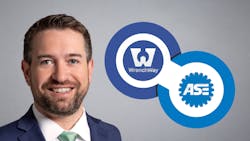
Jay Goninen didn’t plan on being a workforce advocate. He grew up sweeping the floors of his dad’s independent shop, became a technician—and by his own admission, a bad one—and eventually found his way into automotive aftermarket leadership. But the chronic struggle to find good people for shops like his family’s never left him. In 2017, he started a recruiting company. By 2020, it evolved into WrenchWay, a platform built to help the indusrty identify and cultivate new talent. Today, WrenchWay is the technology partner behind ASE Connects, a joint initiative launched in early 2026 to take that mission to a national scale.
Tell Me About WrenchWay—Who You Serve and What Drives the Work
Jay Goninen: I grew up in this industry. My dad started an independent shop, and from the age of 9 on, I was answering phones, filling out deposit slips, cleaning the shop—whatever I could do to help. Eventually, I became a technician, and I was really, really bad at it. The industry has a way of putting you where you’re supposed to be. So it took me down the road of different sales and management jobs, but always in the industry. Over time, I started seeing the need firsthand. I was having trouble finding technicians for myself. So in 2017, I started a recruiting company called Find a Wrench. We were basically just placing technicians, and there wasn’t much competition. But it was hard to execute because there just aren’t enough people in the industry.
Two things became clear. One, the shortage was real—shops were desperate. Two, when I grew up, it was a cardinal sin to steal a tech from your neighboring shop. Those rules went out the window when everybody got desperate. Here I was running a business built around doing exactly that. So we evolved. We launched WrenchWay in 2020 and sunset Find a Wrench, even though it was profitable. It just didn’t make sense to keep running it alongside WrenchWay.
We started WrenchWay as a job board—a place where technicians could do their due diligence on shops. That evolved into a school connectivity piece we eventually called School Assist. Our goal was always to be mission-based: bring more people into the industry and keep the ones we already have. Schools could ask for support—a guest speaker, a donation, a job shadow—and we would streamline that communication to shops. At the same time, we were educating shops about why getting involved matters. The funny thing about when we first launched School Assist? We thought it was such a cool tool, and we were giving it away free to schools. Crickets. Nothing happened. It wasn’t until we reallocated a lot of our team to focus on the school side that things started moving. Once we paid attention to it, schools started getting the help they needed, and programs started getting featured in the news—it was really cool. That’s ultimately what got ASE’s attention.
How Does the ASE Partnership Work, and What Does Each Organization Bring to the Table?
Goninen: ASE Connects is an ASE program that we’re running. We took elements of what we’d already built with WrenchWay and School Assist and plugged those into the platform. But then we laid out a six-step initiative to really attack this at its core. What stood out was the lack of foundational information. At ASE board meetings, one question kept coming up: How many schools in this country have automotive programs—at the high school and technical school level? You’d think you could just search for a directory. You can’t. That information is genuinely hard to find. So the very first step of this initiative is to identify every single school, go state by state, confirm whether they have a program, and get an accurate contact. As simple as that sounds, it’s really, really hard. Contacts change every year.
From there, we’re bringing back elements of the old education foundation infrastructure that went away when the recession hit in 2008. A lot of what we’re rebuilding was funded by OEMs at the time—and when the recession hit, the funding disappeared. Our approach is far more crowdsourced from shops, which makes it sustainable for the long haul. We’re not relying on one company or one funder.
The data component is huge. We want to understand enrollment, identify when a program is starting to struggle, and get out in front of that before a school cuts its automotive program. An expensive program with falling enrollment is always a target. We want to see that coming and respond before it’s too late.
On the Shop Side, What Does Joining ASE Connects Mean for a Shop Owner?
Goninen: A shop that joins ASE Connects is supporting the mission to fix this at its core. The membership is a small annual fee. In return, shops get direct access to schools, they can help with the data side, and they get access to our salary tool.
The salary tool is a good example of why the data matters. We’re gathering actual salary data from shops—not names of technicians, just annual salary information. That lets us give schools a realistic picture of what technicians actually earn, as opposed to the Bureau of Labor Statistics figure, which puts the average technician salary around $45,000 a year. That’s just not accurate. Schools need real numbers so they can have honest conversations with students and parents about what a career in this industry actually looks like.
How Much Does the Program’s Success Depend on Shop Owner Involvement?
Goninen: A lot of it. We need shops involved—not just for ASE Connects, but for schools in general. Even if you weren’t using a platform like this, we need shops in schools. We need them talking to students and instructors, and doing it in a way where they’re not always asking for something.
Where shops really go wrong is in expecting a one-sided relationship. The shop expects the school to produce technicians for them. But a lot of instructors don’t want to feel like they’re being used as a pipeline. They don’t want to carry the relationship. What we’re pushing shops to do is view it as networking—as building a genuine relationship with the school. Take the focus off the one kid you’re going to hire and put it on the school itself. Partner with a few schools and actually invest in making those programs not just survive, but thrive. That’s a mindset shift, but it’s the right one.
What Do Students Get Out of the Program?
Goninen: They get a better-supported school and more resources in the program, along with more opportunities—job shadows, youth apprenticeships, and tools to connect with shops. We have features in development that aren’t released yet that will make it even easier for students to raise their hand and say they’d like to get into a shop.
What’s most important to me is that a student gets to see multiple environments. I want that young person to go see an independent repair shop, a dealership, a collision center, a diesel operation—a range of places—so they can find out what actually fits them. We can’t just say a kid’s interested in cars and throw them in a shop. We have to be more intentional about finding people who are a genuine fit for this industry.
What Does ASE Connects Do for Instructors and Schools?
Goninen: It addresses a set of pain points instructors deal with every day. One of my favorite instructors is Randy Golding at a technical high school in the Phoenix area. Wonderful program, gorgeous facilities. But he told me something I hear constantly: “Jay, it’s always the same three people who show up to my advisory committee meetings. The same three people who help when I need something. I need more.”
Randy might get one independent shop at an advisory committee meeting once in a while. Meanwhile, how many independent shops are in the greater Phoenix area? Why aren’t we flooding that program with people who want to help?
ASE Connects addresses that directly. Schools can post what they need—and it might be something as simple as a case of brake cleaner or some shop towels. A lot of programs don’t have the budget for consumables, so instructors pull it out of their own pockets. We have shops that can easily send over supplies like that. If we can take that burden off an instructor, they can stop worrying about resources and put their energy back into education. That’s the whole point.
When You Picture This Program Fully Ramped Up, What Does Success Look Like?
Goninen: Success starts when the narrative about this industry begins to move in a more positive direction. There’s no single KPI I can point to and say, “It’s better now.” This will be a long-term effort. But a few things I want to see:
- Fewer schools closing their automotive programs. Every program that closes is a loss for everyone.
- More industry support means fewer programs have to shut down. Instructors who feel genuinely supported—not like they’re out there alone trying to keep a program alive on consumables they bought themselves.
- And a growing sense across the industry that we’re moving forward on the technician shortage rather than just chasing our tail, which is where we’ve been for the better part of 20 to 30 years.
That’s what I’m working toward. Not one moment where we declare victory—but a direction that’s clearly different from the one we’ve been heading in.