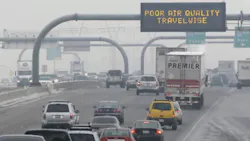
When I was asked by the EPA to show up with a camera crew to film my shop regarding hazardous waste, I said, "Yes." Why? Have you been following the national effort to clean up tailpipe emissions? Do you work in a state that still requires some form of vehicle emissions testing? Some states focus on specific urban counties rather than statewide programs. Here's a list of states that are serious about clean air: California, Arizona, Colorado, Connecticut, Delaware, Georgia, Illinois, Indiana, Maryland, Massachusetts, Missouri, Nevada, New Hampshire, New Jersey, New York, North Carolina, Ohio, Pennsylvania, Texas, Utah, and Wisconsin. Other states have partial areas. Here's a brief history of how we got here.
The First Federal Environmental Laws
The first federal legislation to address air pollution in the United States was the Air Pollution Control Act of 1955, which provided research funds. The first Clean Air Act was signed into law on December 17, 1963, authorizing federal programs for pollution control. The U.S. Environmental Protection Agency was established on December 2, 1970, by President Richard Nixon to consolidate federal research, monitoring, and enforcement activities into one agency. It was created in response to growing public concern over pollution, following the first Earth Day in April 1970. The Clean Air Act Amendments of 1990, signed by President George H.W. Bush, were comprehensive changes to the 1970 Act. Technicians had to go back to school to get up-to-speed on newer cars, soon to be equipped with a 16-pin connector. These revisions to the U.S. Clean Air Act were designed to address four major environmental threats: acid rain, urban air pollution (smog), toxic air emissions, and stratospheric ozone depletion (known today as global warming). America was going after sulfur dioxide, tighter auto emission standards, and enhanced enforcement. Lobbyists were heading to every state capital and Washington, D.C., to make sure our collective voices were heard. The Automotive Service Association led the way.
California vs. the EPA
The 1990 requirements weren't robust enough to clean up the air as fast as citizens wanted it done. Los Angeles had a huge smog problem. A lawsuit was sent to the EPA asking them to let California do more. The California Air Resources Board was enforcing standards that required a phase-in of low-emissions vehicles, ultra-low-emissions vehicles, and zero-emission vehicles to address the smog. While California was working on local solutions, national efforts were heating up as the American Lung Association was suing the EPA to force stricter nationwide sulfur dioxide standards. It was a time of great debate and typical political gamesmanship.
At the same time, oil companies and auto manufacturers were beginning to invest heavily in producing cleaner fuels and electric vehicles to meet these new, strict requirements, while also taking California to court. California was a leader, with a few other states following its lead, especially Massachusetts.
Massachusetts and the Supreme Court
"Massachusetts v. EPA" is the summary of that court case.
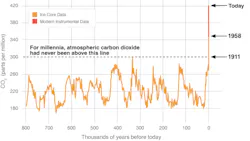
The 1990 Clean Air Act allowed the Environmental Protection Agency to regulate greenhouse gases because they qualify as air pollutants. For those of you who love chemistry and science, climate change or global warming (pick the word group you like)—has been proven beyond any doubt that we have a problem. Burning fossil fuels adds carbon dioxide to the atmosphere.
Twelve states, as well as various cities and organizations, sought to require the Environmental Protection Agency to regulate greenhouse gases, like carbon dioxide, under its authority to regulate pollutants. The lawsuit was based on Section 202(a)(1) of the Clean Air Act, a provision that requires the EPA administrator to set emission standards for air pollutants from motor vehicles.
Responding to that mandate, the EPA had decided that it lacked authority to regulate greenhouse gases for climate change purposes. The case combined the substantive issue of whether the agency had decided correctly on these issues with the procedural question of whether the states, cities, and organizations even had standing to bring such a claim. The issue was based on the loss of coastline to rising sea levels caused by global warming. The Supreme Court said the following.
Majority Opinion
After finding that the states had standing for these types of environmental claims, Justice Stevens wrote, "The Clean Air Act does provide sufficient statutory authority for the agency to regulate greenhouse gases." Stevens pointed out that the law provides a sweeping definition of what constitutes a pollutant, and greenhouse gases clearly fit inside that definition. He sent the case back to the agency for a reconsideration of its decision. While the EPA's current reasoning for not regulating greenhouse gases was insufficient, it would have the chance to find another reasonable basis for that policy. It stated that greenhouse gases had played a key role in global warming. Challenges by states that opposed the ruling didn't survive review by the D.C. Circuit. On April 2, 2007, the case was closed.
The Massachusetts Right to Repair Act
The Massachusetts Right to Repair Acts (2012 and 2020) mandate that automobile manufacturers provide owners and independent repair shops with access to diagnostic and telematics data for modern vehicles. This law allows consumers to choose repair facilities, ensuring competition and preventing dealer monopolies. This law easily passed because if you failed the state's emissions test, you needed to fix your car. You have 60 days.
Key Aspects of the Massachusetts Right to Repair Law
The 2012 law required manufacturers to provide independent shops with the same diagnostic, service, and repair information provided to authorized dealerships for a reasonable fee.
The next law in 2020 includes access to "telematics" data starting with 2022 models. Despite intense challenges from automakers, the 2020 law was upheld by a federal judge in early 2025. The law aims to lower repair costs and increase consumer choices for maintenance, fostering competition in the automotive aftermarket. The law specifically empowers independent shops to compete with dealerships, which is a major victory for consumer choice. (Full disclosure: I own a hybrid–electric technician training center in Massachusetts and, in January 2026, reopened the shop after 22 years specializing in EVs.)
My Involvement
Most shop owners I've known would like the government to stay out of their business and their shops. In 1992, I flew down to Florida to attend a Mitch Schieder management class sponsored by the Broward County Automotive Service Association. Prior to that, I hadn't engaged much with other shop owners. The reason was I owned and worked as a mechanic at a small independent Honda shop and never felt connected to general repair shops. I'd opened my shop as a one-man business in 1977. The Civic was just out of warranty and the Accord was a year old. Fifteen years later, in sunny Florida, I sat with 50 shop owners and their techs and realized what I was missing: being a part of something much bigger—the auto repair industry. This one-day Saturday class was great. I had dinner that night with Mitch and my wife, Deb. Soon after that, I joined ASA. Two years later, with a few Massachusetts shops, we started our own chapter. That was before the internet, free training at lunchtime, OBDII, and electric cars.
Doing my part to improve all shops, I stepped up as president of ASA Massachusetts. There were ASA chapters all over America back then. Today it's very different. In some ways better, but the strong personal connections with peers is limited. Yes, there are big events, but the local chapters are disappearing.
Van Batenburg's Garage and the EPA
I was asked in the mid-1990s to allow a film crew and EPA employees to visit my shop during business hours to see what we were doing to protect the land, air, and water. The document is still on the EPA's website. Here is a part of the EPA study with slight edits.
Case Study: Van Batenburg's Garage, Worcester, Massachusetts
Excerpts from the EPA PDF document: "Craig Van Batenburg owns and operates an auto repair garage in Worcester, Massachusetts, which includes many service features to control fluids and prevent spills. These services include recycling waste oil, antifreeze, and filters through innovative systems. Although the garage is located outside of a wellhead protection area for a backup well for the City of Worcester, the garage owner educates many area automotive technicians about proper fluid and hazardous waste handling operations through a regional automotive repair education association."
The Van Batenburg Garage drains oil filters for 2 to 5 days into a collection system, then crushes the filters and sends them for recycling. Used motor oil from the drained filters is combined with the used oil from automobiles and pumped directly to an on-site oil burner. A technician performs antifreeze recycling after initially testing the antifreeze by directly pumping radiators through a mobile pump station. By directly pumping antifreeze through this system, no spillage occurs. This service procedure is similar to an air conditioning service system.
Fluids Management and Spill Response Evaluation
"Van Batenburg's Garage clearly labels and color-codes all containers for raw and used fluids. By carefully coding containers and training its staff to know about fluid management and proper spill prevention techniques, the garage protects the personal safety of its employees, generates less waste, and protects itself from fire and spills. All fluid containers are labeled by color to ensure employees don't accidentally combine different fluids. To avoid spills, the garage uses direct pumping or drip pans that drain directly to a collection system. Spill cleanup equipment using absorbent materials is available in each service bay for easier response. Absorbent materials (pads, mats, hydrophobic mops, and floor sweeps) are used to remove medium-sized or larger spills. All fluid transfers are conducted within service bay areas, not outside. All Material Safety Data Sheets (MSDS) are located in an accessible location for employees."
Conclusions: Implementing Best Management Practices
"Recycling waste fluids and used lead batteries, clearly color-coding fluid containers, training staff in fluid management and spill prevention strategies, and participating in educational outreach through a regional automotive repair education association, Van Batenburg's Garage works on several fronts to protect groundwater quality in Massachusetts."
Today's Climate
The motor vehicle repair industry has been advancing rapidly in electrification. A year ago, the federal government put the brakes on EVs. Some states have added more incentives to move away from gasoline and diesel. I explain to my customers that I have no issues with the motor vehicles today; it's the fuel in the tank that gets me out of bed each day. As you go back through history, you can see clean air has mattered for a long time. We can't go backwards. Remembering the lessons of the last 70 years will help us predict the future. How we got here will help technicians prepare for their future. Shop owners need to be ready years before the next wave of technology heads to their service bays. I know many shop owners who do just that. EVs didn't just appear out of nowhere. California and Massachusetts have played a big role in recognizing the negative impact of burning fossil fuels and how we can reduce carbon dioxide. Working with the government helps everyone. You can do your part and help your techs, community, and ultimately the planet. It's all up to you.
About the Author
 Craig Van Batenburg
Craig Van Batenburg
Craig Van Batenburg is the CEO of ACDC, a hybrid and plug-in training company based in Worcester, Mass. ACDC has been offering high voltage classes since 2000, when the Honda Insight came to the USA. When EVs were introduced in 2011, ACDC added them to their classes. Reach Craig via email at [email protected] or call him at (508) 826-4546. Find ACDC at www.FIXHYBRID.com.