Diagnosing GM and Ford 10-Speed Transmissions
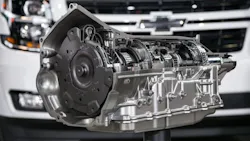
Over the past decade, automatic transmissions have changed more than at any other time in the modern service era. What were once largely hydraulic devices with a handful of electronic inputs are now tightly integrated electro-hydraulic systems where software logic, adaptive learning, valve body design, electrical integrity, and fluid behavior all work together. When everything stays within its intended operating window, modern 10-speed transmissions deliver strong acceleration, smooth drivability, and impressive fuel efficiency. When something drifts outside that window, the resulting complaints are often subtle, inconsistent, and some of the most difficult technicians encounter.
The frustration surrounding modern 10-speed units isn't because they're inherently weak or poorly engineered. The frustration comes from their precision. These transmissions work with little margin for deviation. Slight changes in fluid characteristics, hydraulic sealing, electrical stability, or engine torque delivery can create symptoms that feel significant while leaving little obvious diagnostic evidence behind. What worked as a diagnostic approach on older four-, five-, or even six-speed units often falls short here.
Precision Over Tolerance
Despite the heavy involvement of software, torque flow is still the foundation of automatic transmission operation. Planetary gearsets still route engine torque through multiple clutch elements that must apply and release in carefully timed sequences. What's changed is how tightly those sequences are controlled. Modern 10-speed transmissions routinely manage overlapping clutch events, often under light throttle and low engine load, where fuel-economy targets are most aggressive. The control module assumes that hydraulic pressure rise, clutch friction behavior, and response times will behave exactly as calibrated. When those assumptions are no longer valid, shift quality suffers immediately, often without setting diagnostic trouble codes.
Achieving ten forward ratios in a compact package requires compound planetary gearsets and shared clutch elements. The benefit is closer-ratio spacing, quicker acceleration, and improved efficiency. The trade-off is reduced tolerance for variation. In older four- and five-speed units, small pressure delays or friction changes might go unnoticed. In a 10-speed, those same variations can produce flares, bind-ups, delayed engagements, or harsh shifts that quickly draw attention. As a result, the diagnosis must focus on clutch control accuracy rather than simply confirming that a gear exists.
The Valve Body: The Hydraulic Foundation
Although software commands modern transmissions, the valve body remains the hydraulic foundation of the system. Solenoids depend on clean passages and a predictable pressure response to regulate clutch apply timing accurately. Wear, contamination, or internal leakage can alter pressure delivery just enough to create noticeable drivability complaints. One of the most challenging aspects of diagnosing these issues is that they often don't trigger immediate fault codes. Instead, adaptive strategies compensate by increasing pressure or altering timing. That compensation may mask the underlying problem temporarily, but it also increases stress on components and eventually reaches its limit.
Transmission Fluid: An Active Control Element
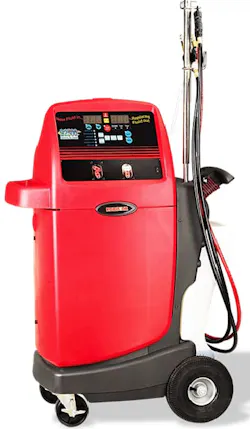
One area that can't be overstated on modern 10-speed automatic transmissions is the role of transmission fluid—not just as a lubricant, but as an active control element. These units depend on extremely specific friction characteristics to achieve the clutch timing and overlap strategies programmed into the control module. When the fluid doesn't behave as expected, the transmission compensates, and those compensations have limits.
Unlike older designs that tolerated a wide range of fluid behavior, modern 10-speeds operate within extremely narrow friction windows. The clutch packs are calibrated around a specific coefficient of friction and a predictable rate of change as pressure is applied. Even small deviations can alter apply timing enough to create harsh shifts, delayed engagements, or light-throttle shudder. This is why “close enough” fluid often works briefly and then fails. The transmission adapts around the new friction behavior, but as the fluid shears, heats, or degrades, those adaptations quickly reach their ceiling.
Using the correct OEM-specified fluid isn't about branding or warranty language. It's about ensuring that the friction curve the software expects actually exists in the transmission. Universal or multi-vehicle fluids may meet viscosity requirements, but they often struggle to maintain long-term friction stability in high-load, high-shift-frequency applications like 10-speeds. Once friction stability is lost, the transmission begins chasing shift quality with pressure, which accelerates wear and increases heat. By the time the complaint becomes consistent, the root cause is often misidentified as a hardware failure. Fluid condition is just as important as fluid type. Extended service intervals, heavy towing, or repeated high-temperature operation can degrade even the correct fluid. As fluid shears and friction modifiers break down, the clutch applies profile changes. The transmission may still function, but shift quality degrades slowly and intermittently. This explains why some vehicles feel acceptable cold and act up hot or behave differently day to day. In these cases, a complete fluid exchange using the correct specification is often the only way to restore a stable baseline before further diagnosis can be trusted.
Ford and GM Differences
The jointly developed Ford–GM 10-speed transmission architecture highlights just how sensitive these systems are. While Ford and General Motors share the same basic hardware design, the transmissions aren't interchangeable in behavior or service approach. Ford's versions, including the 10R80 and 10R140 families, emphasize early upshifts and aggressive torque management. GM's calibrations for the 10L80 and 10L90 place greater emphasis on torque converter clutch modulation and partial lockup strategies. The hardware may look similar, but the control philosophy isn't. As a result, fluid behavior becomes critical, and shortcuts quickly show up as drivability issues. These transmissions operate within extremely narrow control margins. Multiple clutches often transition simultaneously, and the control module assumes a predictable relationship between commanded pressure and torque capacity. When fluid characteristics change due to incorrect fluid, extended service intervals, heat, or shear breakdown, the control module compensates. That compensation works for a time, but once adaptive limits are reached, symptoms become more frequent and more severe.
Common Failure Patterns
What field experience is starting to show is that many of the internal failures on Ford and GM 10-speed transmissions aren't random. The same components tend to fail in the same ways, which lines up with how tightly these units are calibrated and how little tolerance they have for wear or dimensional change. Once a component begins operating outside that window, the transmission doesn't fail immediately. Instead, it compensates, and that compensation often becomes the problem.
Clutch drum and outer shell wear is just one example of this issue. Clutch packs are known to wear grooves into the drum or shell they run against, which interferes with proper apply and release. Once this happens, the clutch may drag, release late, or apply unevenly. The control module reacts by adjusting pressure and timing, but those changes increase heat and load on the remaining components. Over time, the damage accelerates, and what began as a shift quality complaint turns into a hard mechanical failure.
The same pattern shows up with clutch pack movement under load. In high-torque or aggressive shift conditions, clutch packs that no longer fit tightly can begin to move or “hammer” against the drum. Once that movement starts, engagement consistency is lost. The transmission may still shift, but timing becomes unpredictable. No calibration update can adjust for a clutch pack that's no longer mechanically stable in its bore.
These mechanical issues often show up indirectly in scan data rather than as obvious hard faults. Common diagnostic trouble codes associated with early or developing problems include ratio and performance codes such as P0731–P0736, pressure control or solenoid performance codes like P0746, P0747, P0776, and torque converter clutch-related codes such as P0741 or P0742. In some cases, technicians may also see excessive shift time data without an active code, which is often an early indicator that a specific clutch circuit is struggling to apply on time.
What's important to understand is that these codes don't necessarily point to a single failed part. More often, they indicate that the transmission is no longer able to achieve the commanded result within the expected time or pressure range. That can be caused by internal leakage, worn sealing surfaces, degraded fluid, or mechanical wear that the software is trying to manage around.
Hardware Evolution: Ford Redesigns
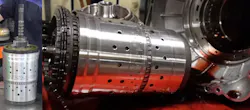
Bushing movement in the CDF drum is something that shows up repeatedly on Ford 10-speed units. The CDF drum is responsible for routing apply pressure to multiple clutch circuits, so when the bushing shifts, sealing surfaces are damaged. Once that happens, pressure starts leaking between circuits, apply pressure drops off, and shift timing becomes inconsistent. Ford revised the drum in late 2022 to address this.
The same issue shows up in Ford's redesign of the 10R140 valve body used in March 2023-and-later units. Externally, it looks much the same, but internally the control strategy changed. The “A” and “B” latch valves were eliminated after wear issues showed up in service. Once those valves began to overstroke or stick, pressure control became inconsistent, which directly affected clutch apply timing and shift quality. Ford addressed this by revising clutch control valve geometry and updating control logic, so latch valves were no longer needed. Additional changes to the torque converter clutch control valve appear aimed at softening apply rates by restricting flow hydraulically rather than relying solely on software. It's a clear example of hardware, hydraulics, and calibration evolving together.
Converter Lockup and Engine Integration
Early torque converter clutch lockup adds another diagnostic challenge. Many 10-speed transmissions apply the converter clutch as early as 16 to 20 mph and operate with extremely low slip, often under 10 rpm. Once the converter is locked, the driveline becomes tightly coupled. Any irregularity in engine torque delivery is transmitted directly through the transmission. Misfires under load, incomplete combustion events, or unstable torque output can feel exactly like converter shudder or clutch problems. This is why engine-related issues are often misdiagnosed as transmission failures on these vehicles. Reviewing misfire monitors and load-related data becomes critical, especially when complaints involve light-throttle shudder or vibration during low-speed cruising.
Software, Relearns, and Electrical Stability
The transmission software version is the other half of this equation. Modern 10-speed transmissions are constantly adapting to wear, fluid behavior, and driving style. Those adaptations are built around the calibration currently installed in the control module. When software is outdated, the transmission may be using pressure targets, shift schedules, or converter clutch strategies that no longer reflect real-world experience or known problem areas. This is why many technical service bulletins address shift quality through calibration updates rather than parts replacement.
Updates usually change clutch fill timing, pressure ramps, and how the converter clutch is applied. In some cases, they also change how quickly the unit adapts and how much correction it allows. Updating software alone may improve shift feel at first, but if fluid condition or hydraulic integrity isn't right, that improvement usually doesn't last.
Relearns are just as important after fluid service, valve body work, or calibration updates. These units don't relearn themselves in a short drive. The control module has to see the same conditions repeatedly to reset clutch fill volumes and timing. When relearns are rushed or interrupted, the transmission often comes back with the same complaint. Most of the time, it wasn't fixed and then failed again—it was never fully relearned in the first place.
Electrical integrity is another commonly overlooked factor. Ten-speed transmissions rely on stable reference voltages to control solenoids precisely. A marginal battery may still crank the engine and avoid setting obvious electrical codes, yet create low-voltage events during cranking or stop-start operation that disrupt solenoid control and adaptive memory. This explains vehicles that shift acceptably after a relearn one day and poorly the next. Without a stable electrical foundation, learned shift strategies can't be kept reliably, regardless of how many times a relearn procedure is performed.
Diagnostic Discipline and Scan Data
Diagnostic discipline matters more than ever with these transmissions. Generic complaints such as “slipping” or “shifting weird” provide little usable information. Load, throttle angle, temperature, and road speed all influence how a 10-speed behaves. Many complaints only occur under light acceleration, during low-speed cruising, or once the transmission is fully warm. Others appear only after extended highway driving. Without duplicating those conditions, it's easy to miss the problem entirely or misinterpret scan data that looks normal in a controlled environment. Modern scan tools provide valuable data, but that data must be interpreted correctly. Shift duration is one of the most useful metrics available. On a unit that's working properly, shift timing stays consistent from gear to gear. When one clutch starts taking noticeably longer to apply than the rest, it usually points back to that circuit rather than a general mechanical problem. Looking at engine load at the same time helps put that into context. High calculated load at light throttle can push shifts later or cause stacked shifts, which often feels like a transmission issue even when the source is elsewhere.
Heat Management and Fluid Condition
Transmission heat management can't be ignored. Ten-speed transmissions are compact, heavily loaded, and shift frequently, all of which generate heat. Elevated temperatures accelerate fluid shear and reduce friction stability, narrowing the margin for accurate clutch control. This is where time-in-failure becomes critical. A vehicle that's been driven for months with a known shift complaint has likely been operating with compromised fluid and elevated temperatures. In those cases, software updates or valve body repairs may no longer be sufficient to restore normal operation.
Transmission pan inspection is still one of the most useful reality checks on these units. Fluid condition and debris tell a story about how long the problem has been developing and whether a limited repair still makes sense. Light clutch material may point to early wear that can be corrected. Heavy debris or a burnt smell usually means the damage has progressed beyond that point. Knowing when a transmission is no longer a practical candidate for a targeted fix avoids setting expectations that can't be met.
Another source of confusion is how differently these transmissions age in the real world. Some run well past 100,000 miles with few complaints, while others develop problems much earlier. That spread often comes down to driving habits and how the unit adapted early in its life. It also explains why shortcuts sometimes seem to work, at least for a while.
Technical Service Bulletins and Software Updates
Technical service bulletins and software updates continue to address specific symptoms, but they rarely tell the entire story. In many cases, updates improve shift feel by altering pressure targets or timing windows, masking underlying hydraulic or friction-related issues. When symptoms return, technicians are often left chasing the same complaint again. Understanding when software is addressing a root cause versus when it's compensating for one is critical to long-term repair success.
Conclusion: Precision Demands Discipline
Modern Ford and GM 10-speed automatic transmissions aren't weak. They're precise. Fluid behavior, hydraulic integrity, electrical stability, engine torque delivery, and software strategy are inseparable. Ignoring any one of those elements leads to misdiagnosis and repeated repairs. For technicians willing to approach these units as integrated systems rather than collections of parts, transmission diagnosis becomes more predictable and far less frustrating. Precision demands discipline, and these transmissions reward it.