Editorial: The Captain Friendly Legacy: How One Shop Turned Roadside Service Into Marketing Gold
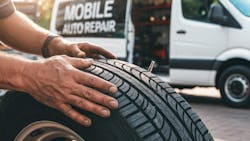
Back in the 1980s, I visited a repair shop and tire dealer in western upstate New York that operated a unique public service that doubled as a powerful marketing tool. They had a dedicated full-size van emblazoned with their store logo and fully equipped to render roadside service for stranded vehicles. Dubbed the "Captain Friendly" van, the vehicle routinely patrolled local highways searching for motorists in distress.
The van's secret weapon was constant radio contact with a local news station that operated a traffic helicopter. During the chopper's news reports on local traffic flow and congestion, when the helicopter's traffic reporter spotted a vehicle in trouble, he contacted the Captain Friendly driver with the location. The van then made its way to the scene.
The van was equipped with spare gasoline, jacks and jack stands, hand and pneumatic tools (including an onboard air compressor), battery chargers, spare drive belts in miscellaneous sizes, engine coolant, engine oil, transmission fluid, and other supplies—whatever might get a troubled vehicle back on the road. And the roadside aid was provided free of charge.
If the vehicle could not be emergency-repaired roadside, Captain Friendly would notify a tow truck and wait with the stranded motorist until it arrived. While there was no requirement for the vehicle to be towed to the parent shop, in the majority of cases, drivers chose that location due to their appreciation for the free roadside help and the technician-driver's professionalism.
There were many breakdowns on busy local highways, especially during harsh winters and heavy congestion. Stranded motorists were extremely grateful for the assistance.
The program earned the service shop substantial favorable publicity and made them a local hero for their generous public service. From a business standpoint, the program generated a significant increase in revenue and customer loyalty from both those who received help and the general public, impressed by the shop's Good Samaritan reputation.
Adapting the Model for Today's Shop
Not all shops can spare a vehicle, technician, and parts inventory to implement such a comprehensive program, but it's worth considering both from a community service standpoint and for generating favorable publicity.
If inspired by the Captain Friendly concept, consider launching a limited service during specific times of year—high summer traffic periods, snowstorm seasons, or major holiday travel weekends. It's a worthwhile investment.
Granted, this predates the cell phone era. Although motorists today can easily call for assistance, this type of program remains valuable. Contact your local news outlets that operate traffic helicopters or traffic monitoring services to explore whether such a cooperative public service arrangement makes sense for your market area.
About the Author
 Mike Mavrigian
Mike Mavrigian
Motor Age Editor
Mike Mavrigian has written thousands of automotive technical magazine articles involving a variety of specialties, from engine building to wheel alignment, and has authored more than a dozen books that crisscross the automotive spectrum. Mike operates Birchwood Automotive, an Ohio shop that builds custom engines and performs vintage vehicle restorations. The shop also features a professional photo studio to document projects and to create images for articles and books.