ToolTech 2026: Increasing complexity reshapes the repair process
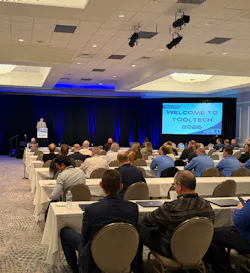
Over two days at ETI ToolTech, one theme remained consistent across general sessions, technical presentations, and shop owner discussions: the repair process is no longer a series of isolated steps. It is a connected workflow, and each part carries more weight than ever before.
As vehicle systems continue to evolve, driven by increased electrification, software, and integrated technologies, the impact is being felt across every stage of service and repair.
“Cars are getting more complex,” says Steve Greenfield, pointing to the growing role of electronics and the downstream effects on diagnostics, tooling, and service procedures. That complexity is not just changing how vehicles are built, it is redefining what it takes to repair them correctly.
ADAS highlights the shift in process
Advanced driver assistance systems remain one of the clearest examples of that shift.
Throughout ToolTech, ADAS was not positioned as a standalone task, but as the outcome of a complete and properly executed repair process. Structural integrity, wheel alignment, and repair planning were repeatedly identified as critical factors leading up to calibration.
“Every ADAS system input and output relies on the structural integrity of the vehicle,” says Jeramy Holloway, Spanesi Americas, during a session alongside Chuck Olsen, AirPro Diagnostics. Even minor misalignment can affect sensor performance, leading to inaccurate readings, failed calibrations, and repeat repairs.
As a result, steps like pre-measurement and verification are becoming standard practice for shops performing these procedures, not optional add-ons.
Tooling gaps continue to challenge shops
Tool access remains a persistent challenge, particularly as new vehicle platforms introduce specialized requirements.
While OEM tools are often necessary, the aftermarket continues to play a critical role in closing gaps. In many cases, shops are relying on a mix of OEM and aftermarket solutions, sourcing tools through multiple channels, or sharing equipment across locations to complete repairs.
For certain applications, especially low-volume or emerging technologies, shops are also turning to alternative solutions to keep vehicles moving through the bay.
Training remains a key differentiator
The technician conversation remains unchanged in one way: demand continues to outpace supply.
Recruiting qualified technicians remains difficult, but retention is increasingly tied to training and shop investment. Shops offering consistent, structured training, particularly during working hours, are seeing stronger engagement and long-term retention.
At the same time, the expectations placed on technicians continue to grow. The ability to diagnose and repair today’s vehicles requires a broader understanding of interconnected systems, rather than specialization in a single area.
Scale influences how shops respond
As these demands increase, shop size and structure are playing a larger role in how businesses respond.
Larger operations are better positioned to distribute the cost of tools, training, and equipment across multiple locations. Smaller shops, while still adapting, are often forced to be more selective in where they invest.
Across the board, however, shops are adjusting workflows, building new processes, and finding ways to operate more efficiently within a more complex repair environment.
ToolTech 2026 reinforced what many in the industry are already experiencing. Complexity is not slowing down, and neither are the expectations placed on the shop. Precision, process, and the ability to connect every step of the repair are becoming essential to getting the job done right.
About the Author
 Nadine Atiya
Nadine Atiya
Editor-in-Chief
Nadine Atiya is the editor-in-chief of Professional Tool & Equipment News (PTEN) and Professional Distributor magazines. She has been covering the automotive aftermarket since 2021, after graduating from Kent State University with a bachelor's degree in journalism and marketing.
Don't miss Atiya's next article. Sign up for PTEN or Professional Distributor's weekly newsletter.