Building a profitable tire and wheel offering

Content brought to you by Professional Distributor. To subscribe, click here.
Tire and wheel service remains one of the most consistent areas of opportunity in the shop, but for distributors, covering the category takes more than offering a tire machine or carrying a few specialty tools. Today’s shops need a full mix of equipment, diagnostics, service tools, and application-specific accessories to keep work moving efficiently and profitably.
That broad need is what makes tire and wheel service such an important category for distributors. It touches nearly every repair environment, from general service shops and tire dealers to fleets and alignment-focused businesses. It also spans a wide range of product types, from high-ticket equipment like tire changers and wheel balancers to everyday items such as tire irons, bead breakers, inflation devices, and lug nut removal tools.
Just as important, tire and wheel service has grown more complex. TPMS remains a source of frustration for many shops. Vehicle applications continue to diversify. Customers expect faster turnaround times, and technicians need tools and equipment that help them get the job done right the first time. For distributors, that means understanding not only what products are available, but how those products fit into the day-to-day realities of the shop.
Insights from independent distributor Curtiss Ryan, as well as manufacturers Coats, Bosch Mobility Aftermarket, and Ken-Tool, point to the same conclusion: supporting tire and wheel service requires a complete approach. Shops need dependable equipment, strong TPMS coverage, everyday service tools that solve common problems, and product recommendations that reflect the actual work being done in the bay.
Building the foundation with equipment
Even with the strength of everyday tool sales, large equipment remains a critical part of tire and wheel service. However, independent distributor Curtiss Ryan notes that these purchases often happen outside of the traditional mobile distribution channel.
“Most large equipment like tire machines and balancers is sold and financed directly,” Ryan says, “which makes it difficult for tool trucks to compete in that space.”
That does not make equipment irrelevant to distributors, but it does change the role they play. Understanding how shops evaluate those purchases can help distributors better support customers, even if they are not directly closing those sales.
Kevin Keefe, director of marketing at Coats, says demand in the category is being shaped by more than sticker price alone.
“We’re seeing a real flight to overall value,” Keefe says, “where maintenance cost, service availability, and uptime are given as much weight as the initial purchase price.”
That reflects a broader shift in how shops think about equipment investment. A machine may represent a major upfront expense, but the true value often comes down to how reliably it performs, how easily technicians can use it, and how much downtime it helps prevent over the life of the product. In tire service, where workflow and throughput directly affect shop profitability, those factors carry weight.
Coats is also seeing shops focus more heavily on repeatability and efficiency. Keefe explains that current conversations around tire changers and wheel balancers are centered on making service more consistent and less prone to error.
“Shops are focused on getting the job done right the first time,” he says, “in the most efficient way possible.”
That emphasis on repeatable service has important implications for distributors. Recommending tire service equipment is not just about matching a customer with a machine. It also means understanding what types of vehicles the shop sees most often and what accessories, adapters, and consumables may be required to support that work.
“It’s critical,” Keefe says, “for a distributor to understand a customer’s shop profile. There is no worse feeling for a customer than to start using a new machine and realize it is not properly equipped for the work they need to do.”
That can mean asking better questions up front. Does the shop handle high-end or customized vehicles? Is its business centered on light trucks or medium duty work? Is it trying to increase tire volume, improve balancing speed, or reduce the risk of wheel damage? Those details can determine not only which equipment model is the best fit, but also which add-ons are essential.
Ease of use, efficiency, and training also continue to influence buying decisions, especially for what Keefe describes as revenue-critical systems.
“All of these factors directly impact a customer’s ability to get the job done right the first time,” he says, “especially when you’re talking about equipment that drives revenue.”
What’s actually moving in the field
While equipment defines the service bay, distributor feedback paints a more grounded picture of what moves consistently.
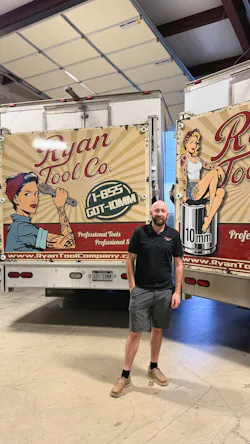
Ryan says demand in the field leans heavily toward everyday service tools, especially products that solve common problems quickly.
“We’re seeing more demand for everyday service tools,” Ryan says, noting that TPMS tools can be harder to move. “Many shops receive them through their sensor suppliers.”
Among the products he sees most often are specialty sockets designed to remove stripped or swollen lug nuts, a frequent issue in tire service.
“We get a lot of requests for those,” Ryan explains, “because swollen lug nuts are a big issue with two-piece designs where corrosion causes the outer cap to expand.”
While large equipment like tire changers and balancers remains essential, Ryan says those purchases often fall outside what mobile distributors can realistically support.
“Most large equipment like tire machines and balancers is sold and financed directly,” he says, “which makes it difficult for tool trucks to compete in that space.”
Instead, distributors are finding opportunities in areas that require more hands-on selling, particularly diagnostics.
“It’s almost impossible to get a shop to spend that kind of money on a scan tool without using it first,” he says.
By offering demo or loaner tools, Ryan has been able to help customers evaluate products before committing, a strategy that continues to drive sales.
TPMS remains a challenge
If there is one area where Ryan consistently sees shops struggle, it is TPMS.
“TPMS continues to be a major challenge,” he says. “Signal strength and compatibility are still common issues, especially with aftermarket wheels.”
Those challenges are not new, but they continue to evolve as vehicle technology changes. Shops are often dealing with outdated tools, limited sensor compatibility, and systems that do not fully support newer applications.
James Latham, product marketing manager at Bosch Mobility Aftermarket, says standalone TPMS reset and relearn tools are seeing strong demand as shops look to upgrade aging equipment.
“Standalone TPMS tools are seeing strong demand,” Latham says, “as shops look to replace outdated tools and increase revenue with something easier to use.”
He adds that related service tools are also gaining traction.
“We’re also seeing demand for tools like inch-pound digital torque wrenches,” he notes, “to properly torque sensors and prevent damage during installation.”
According to Latham, one of the biggest challenges shops still face is keeping pace with evolving technology.
“Older tools might not have the latest model year coverage,” he explains, “and many can’t service newer technologies like Bluetooth or heavy duty sensors.”
Compatibility with aftermarket sensors remains another sticking point. Tools that are limited in what they support can create inefficiencies and restrict shop flexibility.
For distributors, Latham says the recommendation process should focus on three key areas.
“The key points are coverage, compatibility, and support,” he says, emphasizing that shops need tools capable of handling a wide range of vehicle applications and sensor types.
That guidance aligns closely with what Ryan is seeing in the field.
“TPMS continues to be a major challenge,” Ryan says. “Signal strength and compatibility are still common issues, especially with aftermarket wheels.”
Together, those perspectives highlight an important role for distributors. Selling a TPMS tool is not just about the product itself. It is about helping shops understand how that tool will perform across different vehicles, sensors, and service scenarios.
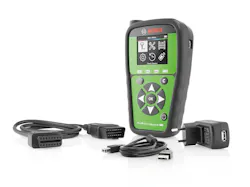
Bosch has recently expanded its offerings in this space, including the Tire Pressure Analyzer 400, designed to support both OEM and aftermarket sensors while covering newer technologies. Additional tools, such as digital torque wrenches and programmable sensor lines, are aimed at addressing common installation and compatibility challenges.
Everyday tools that keep shops moving
While equipment and diagnostics shape the category, everyday service tools remain the most consistent source of demand.
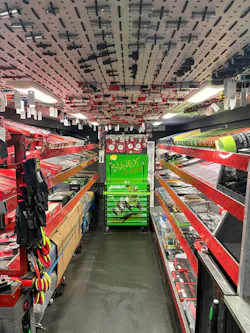
That is exactly what Ryan sees on his truck.
From specialty sockets to service tools used in mounting, demounting, and inflation, these products continue to move because they are tied directly to the work technicians perform every day.
According to Ken-Tool’s VP of Sales and Marketing, Doug Lee, demand remains strong for core service tools.
“Tire irons, bead breakers, and tire spoons continue to see strong demand,” Lee says, “because these are the tools technicians rely on every day.”
He points to a wide range of supporting tools that play a critical role in the workflow.
“Inflation devices, tire cages, and automatic inflators are also key,” Lee explains, along with tire bars, bead keepers, and lubricants.
For distributors, recommending these tools effectively requires understanding the application.
“It really comes down to knowing what type of tires the shop is servicing and the environment they’re working in,” he says.
Temperature, tire size, and construction all influence which tools are needed.
“The application really dictates the tool selection,” Lee adds.
As vehicle use cases expand, so do tool requirements. Smaller, more rigid tires, such as those used in last-mile delivery vehicles, can require specialized tools designed specifically for those applications.
Ken-Tool has also introduced newer products aimed at improving usability, including rotating air chucks, advanced inflation devices, and updated tire spreaders designed to improve access during service.
These types of tools represent a strong opportunity for distributors. They address specific challenges, offer clear benefits, and often require minimal explanation compared to more complex equipment.
A complete approach to the category
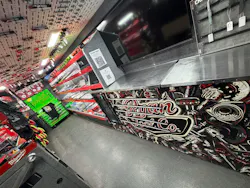
For Ryan, building the right truck inventory is about more than carrying a wide range of products. It is about making sure those products support the full scope of tire and wheel service.
That includes not only the tools used in day-to-day repairs, but also the broader services shops rely on.
“A well-rounded tire and wheel shop needs to be able to perform alignments,” Ryan says. “Alignments are highly profitable, and they’re one of the most important services a shop can offer.”
That perspective reinforces the idea that tire and wheel service does not exist in isolation. It is part of a larger workflow that includes diagnostics, equipment, and related services that drive revenue for the shop.
For distributors, success in the category comes down to understanding that full picture.
From the tools that solve immediate problems to the equipment and diagnostics that support long-term efficiency, each piece plays a role. Distributors who can connect those pieces and align them with their customers’ needs are better positioned to build stronger relationships and drive consistent sales.
For Ryan, that approach is simple.
It starts with understanding what his customers deal with every day and making sure his truck reflects that reality.
About the Author
 Nadine Atiya
Nadine Atiya
Editor-in-Chief
Nadine Atiya is the editor-in-chief of Professional Tool & Equipment News (PTEN) and Professional Distributor magazines. She has been covering the automotive aftermarket since 2021, after graduating from Kent State University with a bachelor's degree in journalism and marketing.
Don't miss Atiya's next article. Sign up for PTEN or Professional Distributor's weekly newsletter.