The ins and outs of buying a new tool truck
Key Highlights
- Compare step vans, cab chassis trucks, and trailers to determine which best suits your route and space requirements.
- Prioritize features like an 'L' shaped desk, sliding doors, wireless remote lift gate controls, and billboard lighting for enhanced functionality and safety.
- Evaluate leasing versus buying based on your business experience and financial situation.
- Choose a reputable up-fitter by researching quality, price, and after-sales service to ensure a durable and reliable tool truck.
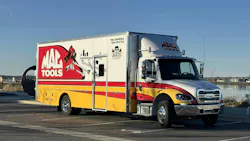
Whether you've outgrown your current truck or perhaps you're simply concerned about the longevity of your older truck, you'll likely be considering purchasing a new tool truck. Buying a new, or new to you, tool truck can be a lengthy journey. There are so many considerations of styles and options. If you're already in business, you probably have a pretty good idea of the options you'd like to have in your new truck. However, if you're looking to purchase your first tool truck to start your new business, it can be very intimidating.
Getting started
Check out tool truck manufacturer websites or resale websites for information on what’s currently available. They are a great place to look at pricing and view all the different styles and options available. I like viewing the interior pictures. These websites are a great tool for looking at all the different interior layouts, styles, and options.
Vehicle type
The most important consideration when buying a new truck is the type of vehicle. The two most common are step van and cab chassis box trucks. There are also some dealers using tool trailers.
Trailers
Trailers are not on the “approved” list of vehicles from most flags. Additionally, the drawback of accessibility in crowded parking lots is a lot of legwork exiting the cab and walking around to the side of the trailer at every stop. You trade a lift gate for a ramp door for loading and unloading toolboxes and equipment. It also requires a generator. On the flip side, the biggest benefit is easily using another tow vehicle should you experience a breakdown. I think every dealer should consider adding a cargo trailer once they can afford the expense. I installed carpeted bunks and “E” track in mine. It makes a great plan B should your truck break down. I also found it to be a great way to pick up used toolboxes.
Step vans and cab chassis box trucks
Step vans, without a doubt, make the best use of space. Nearly every inch of the truck has merchandising space. Most only require two steps from the street to the showroom, compared to three steps on a cab/chassis truck. While it's only one step more, over the course of a day, it adds up. They are easier to maneuver in tight spaces, although I don't like sitting on top of the steer tires when encountering ice, snow, and/or hydroplaning conditions in heavy rain. I also personally don't find step vans as comfortable to drive as cab/chassis trucks. Because of that, I think they're better suited for city routes. I always had rural routes, so I wanted my drive time to be as comfortable as possible. All the glass from the windshield can make them a bigger challenge to cool in the summer, whereas a cab/chassis will have a bulkhead door to separate the cab from the box. Along with that, step vans having all that merchandising area in the cab space are not as easy to secure when leaving at a repair shop for service.
Your truck should fit your needs
I had four different tool trucks in my career. The first didn't have access from the cab to the display box. The difference in my fatigue level between walking around the truck to the display box and stepping into it from the driver's seat was amazing. My second truck had a “pass-thru” from the driver's seat to the display area. At the time, crouching down from the driver's seat wasn't an issue because of my younger age. Then, when I went back on a truck in my late 50s, I quickly outgrew my new 20' truck and ordered another new 24' truck. My “mature” body greatly appreciated having full walk-through cabs on both the 20' and the 24' trucks.
Fuel options
Fuel choice is another important consideration. While diesel trucks cost more and the fuel is considerably more expensive, I still believe they're the best choice for most routes. Diesels are better suited for the heavier payload most trucks carry. I liked the benefit of being able to use an Espar diesel heater for the display area. They are extremely efficient and negate the need for a propane tank. Generators are becoming more common, too, and diesel is an efficient fuel source for that as well.
Lease or purchase?
Many dealers lease their trucks. If you're new to the business, it's the primary way to finance a new tool truck. For lenders to loan on a purchase, you need at least two years of experience. I used a home equity loan to purchase my first truck. Whether it's better to purchase or lease is up to your personal financial situation. My accountant simplified the decision of lease or purchase. It depends largely on the success of your business and other outside money that might be part of the equation. This brings up another important aspect of the tool business. Find an accountant who fully understands the unique aspects of the business. I can not stress that enough.
Top 5 "must-haves"
There's obviously a large list of options available for a custom tool truck build. Here's what I consider the top 5 “must-haves”.
- An “L” shaped desk on the driver's side of the truck. You can face your customers while simultaneously viewing who's entering from the street.
- A window above your “L” shaped desk. You can let fresh air in, see what's going on outside, let light in, and most importantly, keep yourself from feeling like you're locked up in a box all day.
- A sliding side door as opposed to a swing-out door. It would be a deal breaker for me. Swing-out doors are done to save money. You mainly see them on “program” trucks. They work great for the front door on your home, but not for your tool truck.
- A wireless remote control for the lift gate. Not only do you look cool using it, but it's much safer. It's also easy to add to most any tool truck.
- “Billboard lighting.” These are solid white strip lights under the drip molding along the top of the box. It allows the side of your truck to be lit for early morning and evening shops.
Who to buy from
There are at least a half dozen up-fitters building specialty vehicles. All the builders that I'm aware of build a quality product. The decision of whom to purchase from is based mostly on price, personal preference, and service after the sale. Next to a home, it's the largest purchase you'll ever make. Do your research. I've yet to meet a dealer whose business didn't increase from the purchase of a new truck. Nothing builds customer confidence better than reinvesting in your business. It sends the message that you're successful and here to stay.
About the Author
 Brian Fahlgren
Brian Fahlgren
Brian Fahlgren started in the tool business in 1998. Fahlgren has been an employee dealer, franchised dealer, and district manager for two different flags. In 2018, he returned to the driver's seat of his own tool truck. Providing premium service and his continuous "close to perfect" attitude, he achieved his goal of being a Top 10 dealer for Cornwell Quality Tools. He and his wife of over 44 years recently retired, moving from Oregon to the endless summers of Beverly Hills, Florida.