On eve of China tariff exclusion review, relief appears unlikely for the automotive aftermarket
Content brought to you by Aftermarket Business World. To subscribe to the Aftermarket Business World Digital Update, click here.
What you will learn:
• Stiff import duties, meant to protect the American economy and security from Chinese predatory behaviors, have increased consumers' costs for auto parts
• Tariffs have hurt the automotive aftermarket
• Why AASA and the Auto Care Association seek exclusions to these tariffs
“I hope that Washington will lift the tariffs,” said David Barbeau, an independent consultant specializing in the Chinese automotive aftermarket. A handful of executives like Barbeau — and perhaps millions more consumers — are hoping for an expiration of duties on Chinese auto parts later this summer.
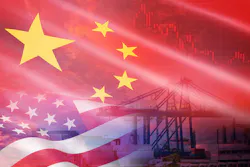
Required by law, starting in July, the United States Trade Representative (USTR) office must reevaluate the effects of the Trump Administration’s tariffs on China for what the administration viewed in 2018 as a breach of American security interests. The latest batch consisting of $34 billion of any items coming from China will face review. Any industry may give reasons to extend the duties, which otherwise would automatically terminate. Three more reviews will follow in the subsequent months.
Given the troubled relations over commerce between the United States and China, and now Beijing’s reluctance to condemn Russia’s invasion of Ukraine, Barbeau feels that a near-term thaw over tariff relief or even scaling those back seems unlikely. A possible extension of tariffs comes at an unprecedented time when the automotive aftermarket is coping with painful price hikes on most product categories, punctuated with order shipment disruptions.
In 2018, the United States levied up to 25 percent tariffs on Chinese imports in what amounted to four rounds of sanctions. First, in April of that year, the USTR imposed $40 billion of steel and aluminum imports on China over the Trump administration’s grievance of the unlawful transfer of technologies and patents. Former lead U.S. trade representative Robert Lighthizer helped design President Trump’s punitive actions on the communist government’s commerce policies. Nearly $350 billion in goods ranging from aircraft parts to semiconductors to steam turbines were subjected to duties over an 18-month period through September 2019.
Stiff import duties, now inherited by President Biden, were meant to protect the American economy and security from Chinese predatory behaviors. But such logic leaves Barbeau unconvinced, because consumers in America and China more than ever are paying more at the parts stores to maintain their vehicles. And as the fourth anniversary nears and untamed inflation has proven to be anything but transitory on aftermarket parts, few wholesalers and manufacturers have seen many gains from the Section 301 tariffs, said Barbeau. “The channel partner is putting a margin on the tariff, so it’s not benefiting the U.S. consumer,” he said.
He told Aftermarket Business World (AMBW) that the federal government went too far with its most prominent supplier of goods imports mostly because the tariffs have hurt U.S. aftermarket companies. He contends that American consumers are shouldering the weight of the 10 percent and 25 percent increases placed on auto parts, and it’s time to remove the value-added taxes because “the consumer will ultimately benefit from the same part at a much lower acquisition cost.”
Giving in to China would further undermine the United States’ economic interests and labor forces, Lighthizer says. Exclusions on specific industries could quickly derail the United States’ long-term prosperity, and those soaring prices have little to do with China, he added. “Rolling back the tariffs would essentially give the adversary a pass to cheat and cost many Americans their jobs,” he wrote in a recent letter to the Wall Street Journal. While Lighthizer acknowledges the gravity of record-high prices tied to fuel, food and autos, he says none of these are caused by the tariffs.
Two opponents to the Trump-era duties, the Automotive Aftermarket Suppliers Association (AASA, a division of the Motor & Equipment Manufacturers Association, MEMA) and the Auto Care Association, the industry’s largest trade associations, have been looking for an opening to make the exclusion clause stick, which they believe will directly help commercial repair shops. AASA/MEMA governmental affairs expert Ann Wilson points out that the Biden Administration must consider feedback from groups seeking to slash duties. “We continue to urge the United State Trade Representative (USTR) to provide broad and immediate China Section 301 tariff relief,” Wilson said to AMBW.
“The situation with tariffs has not changed one bit,” said Kevin Feig, president of Foreign Parts Distributors in Miami, in a radio broadcast. These monthly tariffs induced costs that are paid to the U.S. Treasury, Feig said in that broadcast, previously ranged from $30,000 to $60,000 month. Today, these payments have risen tenfold in the past three years before the wholesaler begins to factor in overseas container rate charges.
If anything, says Feig in an interview with AMBW, the results of the Section 301 tariffs have only damaged the U.S. economy. Part of the plan, he believes, was to give importers an incentive to buy products outside of China and put a dent in the sprawling economy. For Feig, finding reliable suppliers outside of China is a daunting task that carries quality, supply chain, and logistical risks. “It’s far past time that the current administration and USTR put an end to this economic quagmire,” Feig said.
Petitions for extending the tariffs must be received 60 days before the anniversary when the tariffs went into force on July 6 and August 23 in 2018. Industry representatives have an opportunity to explain how their industry benefited from the trade actions.
However, one clause in the four-year review states that if the evidence falls short of the law’s standard, the tariffs will automatically expire. The details about how the rollbacks would go retroactive are vague.
And for that reason, AASA/MEMA insists on keeping the tariff waiver top of mind for its constituency. “MEMA will also continue to push the [Biden] administration to act quickly to re-establish a transparent, effective exclusion process.” Public statements aside, what happens next if the 10 percent and 25 percent duties stay in place remains unclear as to what further action AASA/MEMA would take on behalf of their manufacturing and supplier membership.
About the Author

Alan Segal
Alan R. Segal specializes in project management for suppliers, consultants and retailers. He practiced category management for Sanel Auto Parts Co. and Advance Auto Parts before launching his own firm, Alan R. Segal-Best Business Practitioner. He has worked in the auto care industry since 1991. Connect with Alan on Facebook or LinkedIn.