To live and strive in L.A., competitive demand for error-free service trickles all the way up the supply chain.
With apologies to Liza, Frankie and the Big Apple's vaunted spot as the nation's No. 1 metropolis – automotive parts suppliers in Los Angeles contend that if you can make it here, you can make it anywhere.
Los Angeles is home to a Battleground so vast and ferociously competitive that an effectively executed sales and delivery strategy is likely to be equally effective in other marketplaces.
"If you can build a successful program in Southern California, you can have a successful program anywhere else in North America," says Jim Phillips, marketing director for WORLDPAC. "The customers will love us in Cincinnati because we've done our due diligence in Southern California."
He goes on to observe how this is a Battleground firmly entrenched "at the next level; other areas don't have that same magnitude."
At all levels of the region's auto repair and supply marketing scenario, there are many alternatives in L.A. to choose from if quality, cost or speed is off the mark.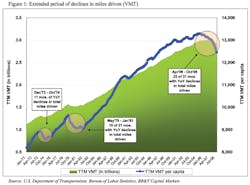
"You're either working hard and doing well or you're out because it's so competitive — more so than any other market I've seen," Phillips reports.
"L.A. is one of the most competitive markets in the United States," concurs Ward Myers, sales director for warehouse distributor San Francisco Imported Auto Parts (SSF), with local sites in Long Beach and Irvine. "Everyone is looking for an edge, whether they're looking for better service or better pricing."
The cost-per-part issue is an especially vexing challenge for WDs facing a strong mass merchant presence, according to David Nunez, vice president of sales and marketing for National Pronto Group member APW (Knox-Seeman Warehouse, Inc.). It has eight outlets in the area. "One of the things we cannot compete on is price at every level. We provide good customer service, and that tends to be worth quite a bit," he says.
"The Southern California market is a real test of your processes, procedures and customer service, because there's no margin for error," explains Phillips, noting how the pressure to perform starts at the bottom with the region's motoring public and works its way up through the ranks of repairers and on to the aftermarket businesses that supply them.
"The repair shop is challenged by the consumer; it has to be perfect. Fix it right and do it quickly at a good price," says Phillips. "And that need trickles all the way through the supply chain."
People here care about their cars, whether the vehicle in question is a luxurious behemoth, zippy runabout, classic showpiece or a downtrodden beater struggling to chug its way along the Pacific Coast Highway.
"It's so ultra competitive at the repair shop level that the shop owners cannot make a mistake, have a part failure or be wrong on price," Phillips observes. "The consumers who live in this area are used to going after the best price and service. If they don't get the best service, they'll go to the repair shop down the street. That's what our (installer) customers tell us, and that's what our customers believe. And the customers can't afford to do business with you if you're not clicking on all cylinders."
Feeling the fear
That sputtering sound you hear, however, is that of an area-wide economic slump that has consumers concerned about what might lie down the road. Although the suppliers we talked to retain a positive, albeit competitive, outlook, repairers are feeling the fear.
Despite opinion polls indicating that Southern Californians remain committed to their classic love affair with all things automotive, technicians and suppliers stationed throughout this Battleground are witnessing a customer base in full retreat — drastically easing-up on miles-driven and delaying maintenance and repairs.
The motoring public's behind-the-wheel presence is down at least 30 percent since gasoline began shooting toward the $4 per gallon mark, according to Ed Burckhardt, proprietor of On Call Auto Service, an industry-specific Internet page provider to some 300 L.A. shops.
"They do have to drive, but they're driving less," he says. "The ones who don't need to drive are cutting down quite a bit."
"As the gas prices go up, expendable resources go down — people are not repairing their cars," says Matt Jonsson, vice president for sales at Inter American Motor Corp., more commonly known as IMC. Based in Torrance, Calif., the company has three satellite locations and a distribution center within the L.A. marketplace.
Less upselling is being accomplished by technicians as consumers on the lower edge of the economic scale feel the pinch. "They question every part of the repair. If the water pump goes bad, it's hard to sell a new fan belt," he points out.
If the exploding cost of gas isn't presenting a big enough volatile challenge, that other loud noise is the popping of the real estate bubble.
"The price of homes has dropped and business is spotty," reports Rocky Khamenian, president of Orange Coast Chapter 50 of the Automotive Service Councils of California (ASC-CA). "The people who had equity in their homes don't have as much anymore, so they're reluctant to spend money on their vehicles."
Routine errands are being consolidated, and discretionary road trips are curbed in a bid to conserve fuel and funds, forcing shop owners to mobilize by emphasizing personalized customer service strategies and implementing targeted marketing campaigns.
"It's all about giving them the fuzzies," quips Khamenian, describing the comfort and the happiness people feel when they patronize a clean, honest repair facility capable of meeting or exceeding their automotive needs in an attentive and friendly manner.
"It's a difficult time for all auto repair shops," notes John Modesti, owner of Modesti's Independent Repair, Inc. in Culver City, Calif. He, too, stresses the necessity of stellar customer service, targeted Internet advertising campaigns and a business model based on efficient operational methods. "In today's marketplace, the shops that have survived are the top shops."
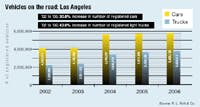
Statewide new car sales are down 7.7 percent over the first half of this year, according to Peter Hoffman, chairman of the California Motor Car Dealers Association (CMCDA). And those who do buy are opting to downsize their choices.
"It appears that there are opportunities in the shift from large SUVs to compact SUVs and in the drift back to cars from trucks," Hoffman says.
If the CMCDA's forecasted sales decline of nearly 4 percent for all of 2007 holds true, the trend also might represent a harbinger of additional business set to come rolling through repairers' bay doors as people decide to keep their older vehicles running.
Attentive alacrity
Casting aside any rosy predictions of future business to come, nobody we talked to in this Battleground seems ready to start relaxing; especially when it comes to retaining a coveted first-call status among the shops.
"You can lose that No. 1 position if you don't execute as close to perfection as possible. There's always someone who can take your spot," says Phillips.
"In other places, people look the other way if you make an error," he continues. "In Southern California, if you make an error, you can be shut out."
WORLDPAC runs a "bus stop-style route delivery system, and we make more stops per truck in Southern California than we do anywhere else," Phillips says. "If you don't get it there quickly they'll refuse the part and get it from somewhere else."
Warehouses are sited at "freeway pinch points where our competitors are located and where our repair shop customers are located. That's the key to having a good rate for deliveries."
The company's speedDial online ordering service, used by 70 percent of its customers, includes photographs of the products. "That visibility really helps to reduce our return rates," according to Phillips.
E-commerce accounts for half of the orders coming into IMC, resulting in a miniscule error-based return rate of less than 3 percent, says Jonsson. It slides higher when considering the impact of "speculative ordering," which is the practice of technicians obtaining extra parts for a particular job and then turning back the unneeded ones.
"We make it easy for them to do business with us," he explains, citing the company's 45-year history that started with an emphasis on Volkswagens and evolved into serving shops catering to higher-priced marques.
And although the L.A. area in general is facing a repairer downturn as less-affluent drivers curb their enthusiasm for road-tripping, "the wholesale side of our business is incredibly strong" based on the upscale clientele it caters to with attentive alacrity, he says.
"We're positioned with all the right brands," Jonsson reports. "We're dealing with an upper-end customer — if the car came in with a Bosch, they want a Bosch put back on it."
"It was a tiny niche 30 years ago when it was just VW, and now it's all about import. We know our market, we know our niche and we stick to what we know."
'An expensive proposition'
At SSF, more than 40 percent of the exclusively wholesale orders come in via the Internet, "and that's going to grow. We expect it to be 50 percent within the next couple of years," says Myers. The site is updated daily, and 80 percent of the products are pictured. He declines to reveal the return rate, although he does report that "we do not have a return problem."
The L.A. marketplace is sophisticated, and Myers says SSF has had few difficulties encouraging the better shops to take advantage of the e-commerce offerings and the hot-shot performance it allows.
"We offer five or six deliveries per day to individual customers," he says, referring to the 40-plus drivers on duty throughout the L.A. region. "It's an expensive proposition, but it's something you have to do to retain your share of the market."
SSF's cost-per-delivery figures are confidential, but Myers notes that if a single delivery costs, say, $20 to execute, it follows that the cash coming in per-order should range from $150 to $200. "It's got to be a very good balance."
Myers cites competitors who, in his view, do too many drop-offs. "They'll deliver eight times a day, every hour on the hour — I don't buy that."
He'd like to see more installers form partnerships that settle on a few primary suppliers rather than taking a scattershot approach among the numerous contenders in the field.
"I don't want to isolate those who are price-shoppers," adds Myers. Yet he's acutely aware that "we have to put greater emphasis on our better customers." A repair shop is best advised to "decide what you are looking for" in regard to the niche you're trying to service, such as complete car care or a particular area of specialization.
"The foundation has always been built on building strong relationships," Myers points out. As with most, if not all, suppliers in the area, the company has sales personnel who speak a variety of languages suitable to L.A.'s melting pot culture. Spanish, Asian and Arabic dialects all are accommodated.
Longevity among the staff is greatly encouraged with a generous sick day/vacation package (providing opportunities for taking advantage of the sunny SoCal climate) and other benefits. "We believe in having a warm, family atmosphere," says Myers, which results in an experienced sales and support force.
The company comprises four outlets in California and one in Arizona, with undisclosed expansion plans inside and outside of the Golden State's borders.
SSF's management retains a sharp inward focus rather than becoming overly concerned over what the other WDs are doing. "We compete graciously with one another on a day-in, day-out basis," says Myers. "But we really like to do things based on our own merit. We're sticking with our mission of providing the best value for our customers in the market."
About the Author

James Guyette
James E. Guyette is a long-time contributing editor to Aftermarket Business World, ABRN and Motor Age magazines.